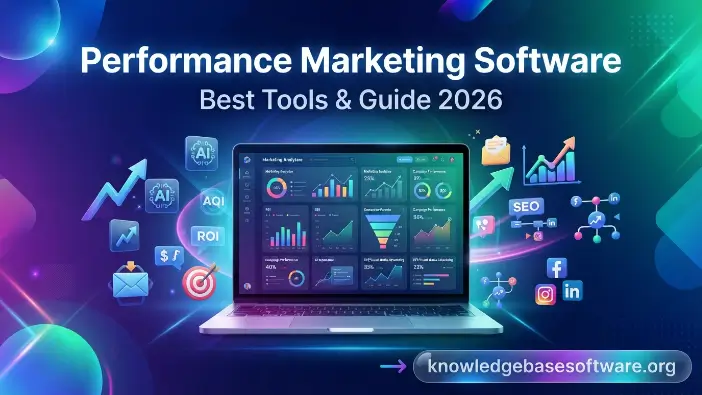
Performance marketing software has become a core part of modern digital advertising, particularly for businesses focused on measurable and data-driven growth. Unlike traditional marketing methods that emphasize impressions or general reach, this approach is centered on accountability, allowing every click, lead, or sale to be monitored and improved. As a result, more companies are adopting tools that offer real-time insights into campaign results and customer behavior.
At its foundation, performance marketing software allows marketers to connect advertising costs with actual outcomes through advanced marketing analytics software, conversion tracking tools, and ROI tracking platforms. These systems help businesses discover which campaigns deliver the strongest returns, reduce unnecessary ad spending, and improve results across multiple channels. As competition in digital advertising continues to grow, using campaign performance analytics and attribution modeling software has become essential for achieving sustainable growth and building scalable marketing strategies.
How Performance Marketing Software Works
The way performance marketing software works centers on tracking, analyzing, and improving each stage of the customer journey through data-driven technology. Rather than making decisions based on assumptions, businesses rely on marketing analytics software and conversion tracking tools to see how users respond to advertisements, websites, and marketing campaigns. This information helps marketers make smarter decisions that can increase ROI, minimize wasted ad spend, and strengthen overall campaign efficiency. The software serves as a centralized platform that brings together different advertising channels, gathers customer behavior data, and converts that information into useful insights for ongoing optimization.
Tracking User Behavior and Conversions
Performance marketing software monitors user activity across multiple touchpoints to determine how effectively marketing campaigns are performing. It uses conversion tracking tools to capture important actions, including clicks, registrations, purchases, and form submissions. This gives businesses a clearer picture of which marketing channels are generating valuable results instead of simply attracting website visitors.
Beyond basic conversion measurement, advanced platforms can evaluate customer journeys across different devices and channels. By combining behavioral information with campaign performance analytics, marketers can recognize patterns in how customers progress through the funnel and identify points where they leave without converting. These insights can support better audience targeting, stronger user experiences, and higher conversion rates.
Attribution Models Explained (First-Click, Last-Click, Multi-Touch)
Attribution is a key feature of performance marketing software because it determines how conversion credit is distributed among the different marketing channels involved in a customer’s journey. Within attribution modeling software, businesses can choose different models based on their objectives and available data. First-click attribution credits the first customer interaction, last-click attribution gives credit to the final interaction before conversion, while multi-touch attribution shares credit among several touchpoints throughout the journey.
Each attribution model offers a different way to evaluate marketing performance. First-click attribution can help businesses understand which channels introduce customers to a brand, while last-click attribution shows which channels are most closely associated with completed conversions. Multi-touch attribution takes a broader view by considering several interactions, helping marketers understand how different campaigns and channels contribute together to a conversion.
Real-Time Campaign Optimization
A major advantage of performance marketing software is real-time campaign optimization, which allows marketers to make rapid adjustments using current performance data. With marketing analytics software, businesses can track important metrics such as cost per acquisition, click-through rates, and conversion rates while campaigns are running.
This immediate visibility supports faster and more informed decisions. Businesses can quickly pause poorly performing ads and expand successful campaigns when new opportunities arise. This helps businesses allocate budgets more effectively and avoid losing opportunities due to delayed reporting. Additionally, advanced platforms can use automation and AI-driven insights to continuously refine bidding strategies, audience targeting, and campaign settings based on changing performance signals.
Read Also: best sms marketing software
Key Features of Performance Marketing Tools
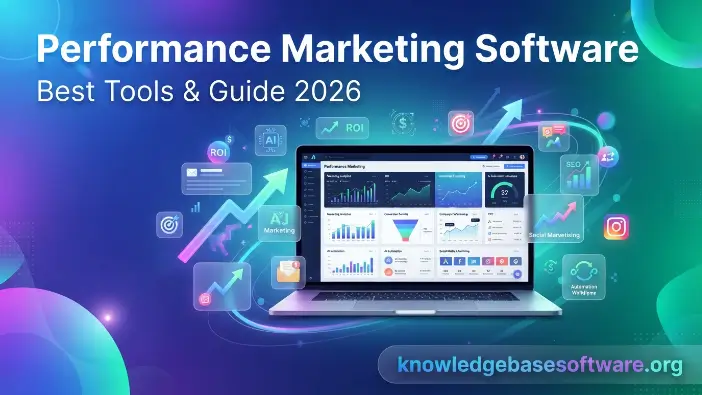
The effectiveness of performance marketing software largely comes from its built-in features that allow marketers to track, evaluate, and optimize campaigns with greater accuracy. Modern platforms combine marketing analytics software with automation and reporting capabilities to provide businesses with a complete view of their marketing performance. These features reduce repetitive manual tasks, speed up decision-making, and help ensure that marketing budgets are used efficiently across different channels.
Conversion Tracking & Analytics
Performance marketing software depends heavily on conversion tracking and analytics to determine how successfully each campaign is performing. With conversion tracking tools, businesses can measure actions such as clicks, registrations, purchases, and other important performance indicators. This information allows marketers to identify campaigns that produce genuine business outcomes instead of simply generating website traffic.
In addition to basic tracking, advanced marketing analytics software offers more detailed insights into customer behavior, funnel activity, and audience engagement. By reviewing this information, businesses can recognize campaign strengths and weaknesses and make data-driven changes that improve ROI and make customer acquisition more efficient.
Campaign Automation
One of the most useful capabilities of performance marketing software is campaign automation, which lowers the amount of manual work required and improves operational efficiency. With campaign automation tools, marketers can automatically modify bids, schedule advertisements, and adjust audience targeting according to real-time campaign data.
Automation also supports greater consistency across different campaigns and advertising platforms. Rather than manually adjusting every ad set, businesses can use predefined rules or AI-powered systems to apply changes quickly. This provides stronger budget control and allows campaigns to respond faster to performance changes, supporting better scalability and results.
Attribution Reporting
Attribution reporting is an important component of performance marketing software because it helps marketers determine how different customer touchpoints contribute to conversions. Using attribution modeling software, businesses can assess whether conversion credit should be associated with the first interaction, final interaction, or several touchpoints throughout the customer journey.
Detailed attribution reporting reduces uncertainty when making marketing decisions. By examining attribution data, companies can distribute budgets more effectively among channels that contribute to conversions. It also provides a clearer way to evaluate individual marketing channels, helping businesses develop more informed long-term strategies.
ROI and Revenue Tracking Dashboards
A major advantage of performance marketing software is its ability to display ROI and revenue data through real-time visual dashboards. Often supported by ROI tracking platforms, these dashboards give marketers a straightforward view of campaign profitability, acquisition costs, and return on ad spend.
Rather than depending on complicated spreadsheets, businesses can review important performance information through simple visual dashboards. This makes it easier to spot successful campaigns and identify areas where spending is inefficient. Real-time revenue tracking also supports faster decisions that can influence profitability, budget allocation, and business growth.
Integration with Ad Platforms (Google Ads, Meta Ads, etc.)
Performance marketing software becomes more useful when it connects with major advertising platforms such as Google Ads, Meta Ads, and other digital channels. These integrations allow information to move smoothly between advertising platforms and analytics systems, supporting more consistent tracking and reporting.
With integrated marketing analytics software, businesses can oversee multiple campaigns through one centralized dashboard. This reduces data silos and promotes consistent measurement across different platforms. As a result, marketers get a broader view of campaign performance and can make more informed cross-channel optimizations to improve overall ROI.
Benefits of Using Performance Marketing Software
Using performance marketing software gives businesses a data-driven way to manage, measure, and optimize digital campaigns more effectively. By combining marketing analytics software with advanced tracking capabilities, companies can make informed decisions, minimize unnecessary ad spending, and improve return on investment across their marketing channels.
Benefits of Using Performance
- Improves ROI by using real-time insights and accurate performance data to optimize advertising budgets across digital marketing channels.
- Improves targeting precision through advanced audience segmentation, helping campaigns reach relevant users with stronger conversion potential.
- Provides real-time campaign monitoring, allowing marketers to respond quickly and adjust underperforming advertisements or strategies.
- Reduces manual work through automation tools that efficiently handle bidding, scheduling, and campaign optimization across platforms.
- Provides greater performance visibility through dashboards showing important metrics such as conversions, CPA, and ROAS.
- Supports better decision-making with data-driven insights from marketing analytics software and comprehensive campaign performance reports.
- Enables cross-channel tracking, helping marketers understand how users interact with campaigns across different platforms and devices.
- Supports business scalability by making it easier to manage multiple campaigns while maintaining control over budgets and results.
- Helps identify successful campaigns quickly, allowing businesses to direct resources toward strategies producing stronger outcomes.
- Improves overall marketing efficiency by reducing guesswork and using accurate conversion tracking tools and analytics for campaign decisions.
Types of Performance Marketing Software
The performance marketing software ecosystem includes various tools created to address specific marketing needs throughout the digital funnel. Although these categories generally focus on improving ROI and campaign efficiency, they vary in their features, data capabilities, and practical applications. Businesses may combine several marketing analytics software solutions to develop a more complete understanding of customer behavior, attribution, and conversions across different channels. Knowing the major types helps marketers build an appropriate technology stack for their objectives, whether they need to manage affiliates, improve paid advertising, study customer journeys, or centralize marketing data. Every category of performance marketing software contributes differently to a scalable, measurable, and data-driven marketing strategy.
Affiliate Marketing Platforms
Affiliate marketing platforms represent an important category of performance marketing software used to manage relationships between advertisers and publishers. These platforms track affiliate referrals, clicks, and conversions through conversion tracking tools. This allows businesses to calculate commissions according to actual performance rather than relying on estimates.
Along with tracking capabilities, these platforms offer reporting dashboards that allow businesses to review affiliate results. Marketers can identify productive partners, adjust commission structures, and expand campaigns that generate conversions. When combined with marketing analytics software, these systems also help companies understand which affiliate relationships contribute significantly to revenue.
Ad Tracking Software
Ad tracking software is another important form of performance marketing software focused on measuring paid advertising activity across different channels. It records information such as clicks, impressions, conversions, and advertising costs through campaign performance analytics systems.
This software helps marketers determine which advertisements, creative variations, and keywords are producing stronger results. By reviewing this information, businesses can refine bidding strategies, stop ineffective ads, and distribute budgets more efficiently. It is an important part of improving advertising ROI and supporting data-based marketing decisions.
Marketing Analytics Tools
Marketing analytics tools are advanced performance marketing software solutions that deliver detailed information about customer behavior and campaign results. They use marketing analytics software capabilities to examine traffic sources, conversion journeys, and engagement patterns across multiple marketing channels.
These tools help businesses see how customers interact with their brand from their first contact through the final conversion. Using advanced reporting and visualization features, marketers can recognize emerging trends, refine campaigns, and make strategic decisions that support long-term performance and more efficient customer acquisition.
Customer Data Platforms (CDPs)
Customer Data Platforms (CDPs) are advanced performance marketing software systems that bring customer information from different sources together within a centralized profile. They use campaign performance analytics to collect and organize behavioral, transactional, and demographic information.
CDPs allow marketers to develop more personalized and targeted campaigns using a broader view of customer data. By connecting with other marketing analytics software, they help businesses strengthen segmentation, improve customer experiences, and increase conversion opportunities through more relevant and data-informed marketing strategies.
Common Mistakes to Avoid
When using performance marketing software, businesses can sometimes experience poor results because of common strategic and operational mistakes. Even sophisticated marketing analytics software and automation features cannot compensate for incorrect configurations, weak tracking, or poor interpretation of data. Recognizing these issues helps marketers improve data accuracy, operational efficiency, and overall campaign performance.
Common Mistakes
- Ignoring proper conversion tracking setup can create inaccurate data and lead to poor marketing decisions across advertising campaigns and channels.
- Depending on only one attribution model can provide an incomplete picture of the customer journey and the factors influencing conversions.
- Failing to establish clear KPIs makes it harder to evaluate campaign success and optimize performance based on reliable data.
- Neglecting audience segmentation can reduce targeting precision and increase wasted spending on irrelevant or low-intent audiences.
- Failing to connect marketing analytics software with advertising platforms can create data silos and lead to inconsistent reporting.
- Overlooking real-time optimization can delay responses to weak campaign performance and cause valuable improvement opportunities to be missed.
- Ignoring mobile user behavior can limit visibility into important conversion journeys and negatively affect overall campaign performance.
- Relying too heavily on automation without human supervision can result in inefficient bidding and poor budget allocation.
- Failing to test creative assets regularly can reduce engagement and make it harder to discover stronger-performing ad variations.
- Misreading analytics data can result in incorrect strategic changes and negatively affect long-term marketing performance.
How to Choose the Best Performance Marketing Software
Choosing suitable performance marketing software is an important decision because it influences how effectively a business can measure, analyze, and improve its digital campaigns. The selected solution should match marketing objectives while providing reliable marketing analytics software capabilities for interpreting data and improving ROI. Because business requirements differ, marketers should carefully consider goals, pricing, integrations, usability, and future scalability before making a decision. A suitable platform can improve campaign management while reducing operational complexity by bringing data from multiple channels into one system. With the right performance marketing software, marketers can simplify decision-making, improve reporting accuracy, and connect marketing activities more effectively with business growth.
Business Goals and Use Cases
Before choosing performance marketing software, businesses should clearly identify their goals and the specific ways they plan to use the platform. Whether the main objective is generating leads, increasing e-commerce sales, gaining app installations, or building brand awareness, the selected marketing analytics software should support those objectives. Since different platforms focus on different outcomes, defining these requirements early can help avoid an unsuitable investment.
A clear understanding of use cases also makes it easier to determine which features are necessary. For instance, an e-commerce company may need detailed conversion tracking and product-level analytics, while a SaaS business may require subscription measurement and customer lifecycle information. Selecting software around actual business requirements can lead to more useful insights and more effective campaign management.
Budget Considerations
Budget is an important consideration when selecting performance marketing software because pricing can range from low-cost solutions for small businesses to advanced enterprise platforms. Companies should determine whether the investment fits their expected ROI and whether the marketing analytics software delivers sufficient value through reporting, automation, and actionable insights.
Businesses should also account for additional expenses, including integration charges, user restrictions, and paid upgrades for advanced features. Evaluating the total cost helps organizations avoid paying for unnecessary capabilities while maintaining access to the essential tools required for campaign optimization and future growth.
Integration Capabilities
Integration is an essential consideration when choosing performance marketing software because modern marketing operations depend on multiple systems exchanging data effectively. Suitable platforms should connect with major advertising networks, CRM systems, and marketing analytics software solutions to support reliable data movement between channels.
Poor integration can create data silos that limit visibility and make reporting less consistent. A well-connected system allows marketers to bring performance information together, improve attribution accuracy, and access the data needed for faster and more informed decisions across marketing activities.
Ease of Use and Reporting Features
Ease of use is an important factor when assessing performance marketing software, particularly for teams that need actionable insights without extensive technical knowledge. An intuitive interface and straightforward dashboard supported by marketing analytics software can make campaign monitoring, data interpretation, and optimization much more efficient.
Reporting capabilities should also provide flexibility and customization so users can analyze results according to different KPIs and business requirements. Visual reports, automated reporting options, and real-time dashboards can reduce repetitive work while making important performance information easier to understand and act upon.
Scalability and Support
Scalability allows performance marketing software to continue supporting a business as its marketing activities expand. As campaign numbers and data volumes grow, the platform should be capable of handling larger datasets and more advanced marketing analytics software requirements without major limitations in speed or accuracy.
Customer support is equally important because technical problems can affect campaign tracking and reporting. Responsive support, detailed documentation, and useful training resources help teams understand the platform and make better use of its capabilities over the long term, supporting sustainable marketing operations and growth.
Best Use Cases Across Industries
Performance marketing software is used across many industries because businesses increasingly depend on measurable and data-driven approaches to growth. Whether an organization is measuring sales, generating leads, or controlling customer acquisition costs, marketing analytics software helps teams evaluate performance throughout the marketing funnel. The way these tools are used varies according to each industry’s business model, customer journey, and revenue structure. From product-focused companies to service providers, performance marketing software supports detailed campaign measurement and helps businesses understand which channels are producing meaningful results.
E-commerce
For e-commerce businesses, performance marketing software is commonly used to measure product performance, customer activity, and conversion rates across multiple channels. With conversion tracking tools, retailers can determine which products generate sales and which marketing campaigns contribute most directly to revenue.
E-commerce companies also use marketing analytics software to improve shopping funnels, address cart abandonment, and strengthen customer retention. By reviewing customer activity in real time, online stores can make informed adjustments to promotions, advertising budgets, and other marketing activities to support profitability and store performance.
SaaS Companies
For SaaS companies, performance marketing software helps measure the customer lifecycle from initial trial registration through paid subscription. These organizations use marketing analytics software to monitor important metrics such as customer acquisition cost (CAC), churn rate, and lifetime value (LTV).
SaaS companies can also apply advanced attribution methods to understand which marketing channels contribute to valuable customers over time. This information helps them manage marketing budgets, refine onboarding experiences, and improve retention by concentrating on acquisition strategies that produce meaningful customer outcomes.
Digital Agencies
Digital agencies use performance marketing software to organize, monitor, and optimize campaigns for multiple clients from centralized platforms. Through marketing analytics software, agencies can efficiently review performance across different industries, advertising channels, and client accounts.
This centralized system allows agencies to prepare detailed performance reports, show clients how campaigns are performing, and provide data-based recommendations. It can also simplify daily workflows by automating campaign tracking, reporting, and performance analysis across the accounts they manage.
Startups
Startups use performance marketing software to make efficient use of limited marketing budgets while working toward growth. With conversion tracking tools, they can identify acquisition channels that provide useful results and reduce unnecessary spending during the early stages of development.
Real-time insights from marketing analytics software also allow startups to respond quickly when campaign results change. This flexibility can help them test and validate marketing approaches, adjust budgets, and expand campaigns as they gather more performance data while competing with larger businesses.
Future Trends in Performance Marketing Software
The future of performance marketing software continues to develop as businesses increasingly adopt automation, artificial intelligence, and advanced marketing analytics software for more efficient advertising decisions. Platforms are becoming increasingly predictive, connected, and privacy-conscious, helping marketers respond to changing digital environments while gaining deeper insights into customer behavior and campaign performance.
Future Trends
- AI-driven optimization will automate more campaign decisions, supporting improved targeting and more efficient budget use across digital marketing channels.
- Predictive analytics will estimate future campaign trends, allowing marketers to make proactive changes to budgets and strategies before performance shifts significantly.
- Cookieless tracking solutions will become increasingly important as businesses move away from third-party cookies while maintaining privacy-conscious methods of measuring user behavior.
- Unified attribution models will offer broader insights into customer journeys across devices, channels, and multiple marketing touchpoints.
- Real-time personalization will support more relevant advertising by using current user behavior and available intent signals.
- Voice and visual search integration will create additional data sources for performance measurement and audience targeting strategies.
- Cross-channel marketing automation will bring campaign management across social, search, and display advertising platforms into more unified workflows.
- Stronger data privacy requirements will influence how marketing analytics software gathers, stores, and processes customer information securely.
- Advanced customer journey mapping will provide deeper insight into conversion paths and patterns in customer decision-making.
- Blockchain-based advertising verification may support greater transparency and help address fraud-related challenges within digital advertising ecosystems.
Frequently Asked Questions
What is performance marketing software used for?
Performance marketing software is used to track, measure, and optimize digital marketing campaigns based on real outcomes such as clicks, leads, and sales. It helps businesses improve ROI using marketing analytics software and conversion tracking systems.
How does performance marketing software improve ROI?
It improves ROI by identifying high-performing campaigns and eliminating wasted ad spend. With real-time data and conversion tracking tools, marketers can allocate budgets more efficiently and focus on channels that generate the best results.
Is performance marketing software suitable for small businesses?
Yes, small businesses benefit significantly because performance marketing software allows them to optimize limited budgets. Using campaign performance analytics, they can identify cost-effective channels and scale gradually without overspending.
What features should I look for in performance marketing tools?
Key features include conversion tracking, attribution reporting, automation, integration with ad platforms, and ROI dashboards. Strong marketing analytics software capabilities are also essential for accurate decision-making.
What is the difference between performance marketing and traditional marketing?
Traditional marketing focuses on brand visibility, while performance marketing software focuses on measurable actions like conversions and sales. It uses ROI tracking platforms to ensure every marketing effort is performance-based and accountable.
Conclusion
Performance marketing software has become an essential part of modern digital marketing because it enables businesses to move beyond assumptions and rely on measurable, data-driven outcomes. With the help of marketing analytics software and advanced tracking systems, companies can accurately measure campaign performance, optimize budgets, and improve return on investment across all channels.
In today’s competitive environment, success depends on how effectively businesses can track, analyze, and act on data in real time. Performance marketing software provides this advantage by combining automation, attribution, and analytics into one powerful system. Whether for startups or large enterprises, adopting the right platform ensures smarter decisions, reduced ad waste, and long-term sustainable growth.