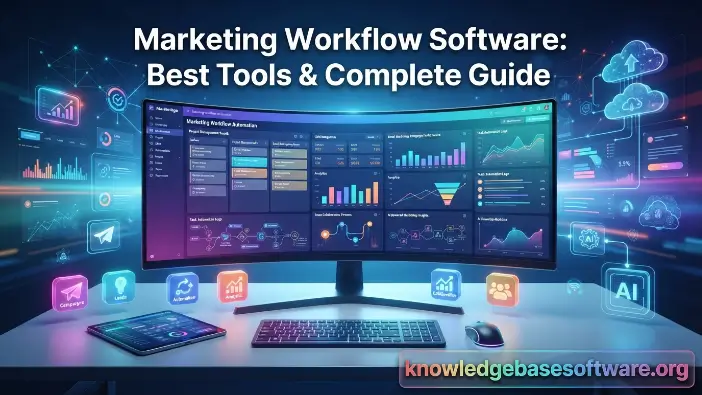
Welcome to knowledgebasesoftware. Modern marketing teams operate in an increasingly complex digital ecosystem where campaigns run across multiple platforms, channels, and customer touchpoints at the same time. Without a structured system to manage these activities, teams often face delays, miscommunication, and inconsistent execution. This is why marketing workflow software has become a foundational tool for modern marketing operations, helping organizations bring order, clarity, and efficiency to their entire marketing process.
At its core, marketing workflow software is designed to streamline how tasks move from planning to execution using structured systems and automation. By leveraging marketing automation tools and workflow automation software, businesses can eliminate repetitive manual work, improve collaboration, and ensure every campaign follows a clear, predictable path. This not only increases productivity but also allows marketing teams to focus more on strategy, creativity, and performance optimization rather than operational chaos.
What Is Marketing Workflow Software?
Marketing workflow software is a structured digital system designed to plan, organize, automate, and manage marketing activities across teams and channels. It acts as a central hub where all marketing tasks, such as content creation, campaign execution, approvals, and performance tracking, are coordinated in a streamlined and transparent way. Instead of relying on disconnected tools like spreadsheets, emails, or chat threads, this software ensures that every task follows a defined workflow from start to finish. It helps marketing teams maintain consistency, reduce errors, and improve overall operational efficiency.
Definition and Core Concept
At its core, marketing workflow software is built to standardize how marketing work moves through different stages of completion. It provides a visual and structured way to map out processes such as planning, drafting, reviewing, approving, and publishing marketing assets. By doing so, it eliminates confusion about responsibilities and ensures that every team member knows exactly what needs to be done and when.
The core concept revolves around creating repeatable systems that improve productivity and accountability. With marketing automation tools integrated into these workflows, businesses can automate repetitive actions like task assignments, notifications, and scheduling. This allows teams to focus more on strategic decision-making and creative execution rather than manual coordination.
How Marketing Workflows Work
Marketing workflows operate through a step-by-step process that guides tasks from initiation to completion. A campaign typically begins with an idea or request, which is then assigned to relevant team members. From there, tasks move through structured stages such as content creation, internal review, approval, and final deployment across marketing channels.
Each stage is tracked within the system, ensuring transparency and accountability throughout the process. Using workflow automation software, transitions between stages can be automated, reducing delays and eliminating bottlenecks. This ensures that marketing campaigns progress smoothly without constant manual follow-ups or status checks.
Why Businesses Use Workflow Software
Businesses adopt marketing workflow software to improve coordination, efficiency, and scalability in their marketing operations. As teams grow and campaigns become more complex, managing tasks manually becomes increasingly difficult and error-prone. Workflow software provides a centralized system where all marketing activities can be monitored and controlled in real time.
Additionally, companies rely on marketing automation tools and structured workflows to reduce operational costs and improve campaign performance. These systems help ensure that deadlines are met, approvals are streamlined, and marketing strategies are executed consistently across all channels.
Read Also: performance marketing software.
Key Features of Marketing Workflow Software

Marketing workflow software comes with a wide range of features designed to simplify complex marketing operations and improve team efficiency. These features work together to help businesses plan, execute, and monitor campaigns in a structured and automated environment. By centralizing tasks and communication, the software reduces manual effort, minimizes errors, and ensures that marketing activities progress smoothly from planning to execution. Most modern platforms also integrate advanced automation and reporting capabilities, making them essential for scalable marketing operations.
Task Automation and Scheduling
Task automation is one of the most powerful capabilities of marketing workflow software, allowing teams to eliminate repetitive manual work. It enables users to automatically assign tasks, set deadlines, send reminders, and trigger actions based on predefined conditions. This ensures that workflows continue moving forward without constant human intervention.
With the help of marketing automation tools, scheduling becomes more efficient and reliable. Campaigns, social media posts, and email sequences can be planned and executed automatically at the right time. This not only improves consistency but also helps marketing teams focus on higher-value strategic work.
Campaign Management Tools
Marketing workflow software includes campaign management tools that allow teams to plan, organize, and track marketing campaigns in one centralized dashboard. These tools provide visibility into every stage of a campaign, from ideation and content creation to launch and performance analysis.
By using workflow automation software, marketers can ensure that each campaign follows a structured timeline with clearly defined responsibilities. This reduces confusion, improves coordination, and helps teams deliver campaigns on time while maintaining quality and alignment with business goals.
Approval and Review Systems
Approval and review systems within marketing workflow software ensure that all marketing content goes through the necessary checks before being published. This structured process helps maintain brand consistency, legal compliance, and content quality across all marketing channels.
With marketing automation tools, approval workflows can be automated so that content moves seamlessly from one reviewer to another. Notifications and status updates ensure that stakeholders are always informed, reducing delays and eliminating bottlenecks in the review process.
Collaboration and Communication Features
Marketing workflow software enhances team collaboration by providing built-in communication tools that reduce the need for external messaging platforms. Teams can comment directly on tasks, share files, and provide real-time feedback within the workflow system.
Using workflow automation software, communication becomes more structured and transparent. Every update is recorded within the system, ensuring that all stakeholders stay aligned and informed throughout the campaign lifecycle. This improves accountability and reduces miscommunication.
Integration with Marketing Tools (CRM, Email, Ads)
One of the most valuable aspects of marketing workflow software is its ability to integrate with other essential marketing tools such as CRM systems, email platforms, and advertising networks. These integrations create a seamless flow of data across all marketing channels.
Through marketing automation tools, businesses can synchronize customer data, campaign performance, and engagement metrics in real time. This unified approach allows teams to make data-driven decisions, optimize campaigns faster, and improve overall marketing effectiveness.
Benefits of Using Marketing Workflow Software
Marketing workflow software helps organizations streamline marketing operations, improve collaboration, and execute campaigns more efficiently through automation and structured processes. It reduces manual effort, increases transparency, and enables teams to manage complex marketing activities with greater accuracy and consistency across all channels.
Benefits of Using Marketing
- Improves productivity by automating repetitive tasks and freeing teams to focus on strategic marketing activities and creative execution
- Enhances collaboration by centralizing communication, task management, and feedback within a single unified marketing platform
- Reduces human errors by standardizing workflows and ensuring consistent execution across all marketing campaigns and channels
- Accelerates campaign delivery by eliminating bottlenecks and enabling faster movement through planning, approval, and publishing stages
- Provides real-time visibility into project progress, helping managers track performance and make informed marketing decisions quickly
- Strengthens accountability by clearly defining roles, responsibilities, deadlines, and ownership for every marketing task and activity
- Optimizes resource allocation by helping teams balance workloads effectively and prioritize high-impact marketing initiatives strategically
- Improves consistency across campaigns by enforcing structured workflows and standardized processes for all marketing outputs and deliverables
- Supports scalability by allowing growing teams to manage increasing workloads without losing efficiency or operational control
- Enables better performance tracking through integrated analytics that measure campaign success and identify areas for continuous improvement
Types of Marketing Workflow Software
Marketing workflow software comes in different types, each designed to support specific business needs, team sizes, and levels of marketing complexity. Some platforms focus on end-to-end campaign management, while others specialize in task coordination, automation, or enterprise-level marketing operations. Choosing the right type depends on how structured your marketing processes are and how much automation or scalability your team requires.
All-in-One Marketing Platforms
All-in-one platforms of marketing workflow software combine multiple marketing functions, such as campaign planning, execution, automation, and analytics, into a single system. These tools are designed to reduce the need for multiple disconnected applications by centralizing all marketing activities in one place.
They are especially useful for businesses that want a unified environment to manage everything from content creation to performance tracking. With marketing automation tools integrated, teams can streamline workflows, improve efficiency, and maintain consistency across all marketing channels without switching between platforms.
Project Management Tools for Marketing
Project management-focused marketing workflow software is designed to help teams organize tasks, assign responsibilities, and track progress across marketing projects. These tools are widely used for content calendars, campaign planning, and cross-team collaboration.
By leveraging workflow automation software, marketing teams can structure workflows into clear stages and ensure that deadlines are met efficiently. While they may not offer deep marketing-specific features, they provide strong visibility and control over daily operations and task management.
Automation-Focused Platforms
Automation-focused marketing workflow software is built to reduce manual effort by automating repetitive marketing tasks such as email sequences, social media posting, and lead nurturing. These platforms are ideal for performance-driven teams looking to scale campaigns efficiently.
With marketing automation tools, businesses can create trigger-based workflows that respond to customer behavior or predefined conditions. This improves speed, consistency, and personalization across marketing campaigns while reducing operational workload.
Enterprise Marketing Operations Systems
Enterprise-grade marketing workflow software is designed for large organizations with complex marketing structures, multiple teams, and global campaigns. These systems offer advanced governance, security, and reporting features to manage large-scale operations effectively.
They often include powerful workflow automation software capabilities that support cross-departmental collaboration, compliance management, and advanced analytics. This ensures that enterprise marketing teams can maintain control, consistency, and performance across all regions and channels.
Best Marketing Workflow Software Tools
Marketing workflow software plays a crucial role in helping businesses select the right tools that match their operational needs, budget, and marketing complexity. The market is filled with diverse platforms offering different levels of automation, collaboration, and analytics capabilities. Understanding what to compare, how tools differ, and which pricing models fit your organization is essential for making a smart investment that improves long-term marketing efficiency and scalability.
Features to Compare Before Choosing
When evaluating marketing workflow software, it is important to focus on features that directly impact productivity and campaign performance. Key factors include automation capabilities, ease of use, collaboration tools, integration options, and reporting functionality.
Using marketing automation tools effectively depends on how well the platform supports your existing marketing stack and workflow structure. Businesses should also assess customization options, scalability, and user experience to ensure the tool aligns with both current and future needs.
Popular Tools in the Market (general comparison)
The market for marketing workflow software includes a wide range of platforms designed for different business sizes and use cases. Some tools focus on all-in-one marketing management, while others specialize in task coordination or automation-driven marketing execution.
Many teams rely on workflow automation software that integrates campaign planning, content scheduling, and performance tracking into a single dashboard. While some platforms are built for small teams seeking simplicity, others offer enterprise-grade capabilities for managing complex, multi-channel marketing operations.
Pricing Models and Budget Considerations
Pricing for marketing workflow software varies significantly depending on features, scalability, and vendor positioning. Most platforms follow subscription-based pricing models, either per user, per feature tier, or based on enterprise customization.
When using marketing automation tools, businesses should consider not only the upfront cost but also long-term ROI, including time savings, productivity improvements, and reduced operational overhead. Selecting a pricing model that aligns with team size and growth plans is essential for sustainable investment.
Free vs Paid Solutions
Free versions of marketing workflow software are often suitable for small teams or startups that need basic task management and collaboration features. These tools typically offer limited automation, fewer integrations, and restricted reporting capabilities.
Paid solutions provide advanced workflow automation software features such as complex automation rules, detailed analytics, multi-user collaboration, and enterprise-level security. Investing in paid tools becomes necessary when businesses require scalability, deeper integrations, and more robust marketing performance management.
Common Mistakes to Avoid
Marketing workflow software can significantly improve efficiency and campaign performance, but many teams fail to achieve full value due to poor implementation, unclear processes, or wrong tool selection. Understanding common mistakes helps businesses avoid inefficiencies, reduce costs, and ensure smoother adoption of workflow systems across marketing teams.
Common Mistake
- Choosing software without clearly defining marketing goals leads to misalignment, wasted budget, and inefficient workflow implementation across teams.
- Overcomplicating workflows with unnecessary steps creates delays, confusion, and reduces overall productivity in marketing campaign execution processes.
- Ignoring integration capabilities results in disconnected tools, data silos, and inefficient communication between marketing platforms and systems
- Failing to train team members properly leads to low adoption rates and ineffective use of marketing workflow software features.s
- Selecting tools based only on price often compromises functionality, scalability, and long-term marketing operational efficiency across campaigns
- Not standardizing processes causes inconsistent workflows, errors, and a lack of accountability within marketing teams and project execution.
- Over-relying on automation without human oversight leads to quality issues, poor messaging, and inconsistent marketing campaign outcomes.
- Ignoring analytics and reporting features prevents data-driven decisions and reduces the ability to optimize marketing performance effectively over time.
- Lack of workflow updates over time results in outdated processes that do not match evolving marketing strategies and business needs
- Poor role assignment within workflows creates confusion, missed deadlines, and reduced efficiency in collaborative marketing team environments overall.
Implementation Guide: Setting Up Workflow Software
Marketing workflow software delivers maximum value only when it is implemented with a clear structure, defined processes, and proper team alignment. A successful setup ensures that marketing operations become more efficient, automated, and scalable rather than adding complexity to existing workflows. By following a step-by-step implementation approach, businesses can reduce resistance, improve adoption, and build a system that supports long-term marketing growth and performance.
Step 1: Map Your Current Marketing Workflow
The first step in implementing marketing workflow software is understanding how your current marketing processes operate. This involves documenting every stage of your workflow, from idea generation and content creation to approvals, publishing, and performance tracking. Mapping your workflow helps identify bottlenecks, inefficiencies, and repetitive tasks that can be improved through automation.
By analyzing existing processes, teams can better align them with workflow automation software capabilities. This ensures that the new system is built around real operational needs rather than assumptions, making the transition smoother and more effective for all stakeholders involved.
Step 2: Choose the Right Tool
Selecting the right marketing workflow software is critical for successful implementation. Businesses should evaluate tools based on features, scalability, integration options, and ease of use. The chosen platform should align with team size, marketing goals, and existing technology stack to avoid future limitations.
When comparing marketing automation tools, it is important to consider how well each option supports your specific workflows, such as campaign management, content approval, or multi-channel coordination. A well-matched tool ensures higher adoption rates and better long-term efficiency.
Step 3: Build Automation Rules
Once the tool is selected, the next step is configuring automation within marketing workflow software. This includes setting up rules for task assignments, deadline reminders, approval sequences, and campaign triggers. Proper automation reduces manual workload and ensures consistent execution across all marketing activities.
Using workflow automation software, teams can eliminate repetitive processes and create structured flows that move tasks automatically from one stage to another. This improves speed, accuracy, and reliability in marketing operations while minimizing human intervention.
Step 4: Train Your Team
Effective use of marketing workflow software depends heavily on how well the team understands and adopts the system. Training should cover core features, workflow structures, automation rules, and collaboration practices to ensure smooth usage across all departments.
With proper guidance on marketing automation tools, employees can quickly adapt to new processes and avoid common mistakes. Continuous learning and support also help increase engagement and ensure the platform is used to its full potential.
Step 5: Optimize and Scale
After implementation, marketing workflow software should be continuously optimized based on performance data and team feedback. This involves refining workflows, adjusting automation rules, and improving process efficiency over time.
By leveraging insights from workflow automation software, businesses can scale their marketing operations effectively as they grow. Regular optimization ensures that the system remains aligned with evolving business goals and continues to deliver maximum value.
Future of Marketing Workflow Software
Marketing workflow software is rapidly evolving as businesses demand faster, smarter, and more automated marketing operations. The future of these platforms will be shaped by artificial intelligence, deeper integrations, and no-code technologies that allow teams to build and optimize workflows with minimal technical effort. As competition increases, companies will rely more heavily on intelligent systems that improve decision-making, reduce manual work, and enhance overall marketing performance across all channels.
Future of Marketing
- AI-powered automation will handle complex marketing decisions, optimizing campaigns, workflows, and customer targeting with minimal human intervention required.
- Predictive analytics will help marketers forecast campaign performance and adjust strategies proactively for improved results and efficiency.
- No-code workflow builders will enable non-technical users to design and manage complex marketing processes without developer support.
- Deeper CRM integration will unify customer data and marketing workflows for more personalized and effective campaign execution strategies.
- Real-time data syncing will improve decision-making by providing instant updates across all connected marketing platforms and channels.
- Hyper-personalization will become standard, enabling tailored content delivery based on user behavior and advanced segmentation models.
- Enhanced collaboration tools will improve cross-team communication and streamline approval processes within distributed marketing teams globally.
- Voice and natural language interfaces will simplify workflow creation and automation setup for faster marketing operations management overall.
- Advanced reporting dashboards will provide deeper insights into ROI, attribution, and multi-channel marketing performance metrics for optimization.
- Greater automation scalability will allow businesses to manage larger, more complex marketing ecosystems without increasing operational workload significantly.
Frequently Asked Questions
What is marketing workflow software used for?
Marketing workflow software is used to plan, organize, automate, and manage marketing tasks and campaigns in a structured system. It helps teams streamline processes from idea creation to execution and performance tracking. It also improves coordination by ensuring every task follows a clear workflow, reducing confusion and increasing efficiency across marketing teams of all sizes.
How does marketing workflow software improve productivity?
Marketing workflow software improves productivity by automating repetitive tasks such as assignments, reminders, approvals, and reporting. This reduces manual effort and allows teams to focus on strategic and creative work. It also centralizes communication and task tracking, which minimizes delays and improves overall workflow efficiency across campaigns.
Is marketing workflow software suitable for small businesses?
Yes, marketing workflow software is highly beneficial for small businesses because it helps them stay organized, manage limited resources effectively, and avoid operational chaos . Even basic workflow automation software can significantly improve task management, collaboration, and campaign consistency for small teams.
What features should I look for in marketing workflow software?
Key features of marketing workflow software include automation capabilities, task management, collaboration tools, integrations, and reporting dashboards. Businesses should also evaluate scalability, ease of use, and compatibility with existing marketing automation tools to ensure long-term efficiency and smooth adoption.
What is the difference between marketing workflow software and marketing automation tools?
Marketing workflow software focuses on managing and structuring the entire marketing process, including tasks, approvals, and collaboration. In contrast, marketing automation tools focus more on automating specific marketing actions like email campaigns, lead nurturing, and customer engagement.
Conclusion
Marketing workflow software has become an essential solution for modern marketing teams that need structure, efficiency, and scalability in their daily operations. By centralizing tasks, automating repetitive processes, and improving collaboration, it allows businesses to execute campaigns more smoothly and with greater accuracy across multiple channels.
As organizations continue to adopt workflow automation software and advanced marketing automation tools, the importance of streamlined workflows will only increase. Companies that invest in the right system today will be better positioned to improve productivity, reduce operational errors, and achieve consistent, high-performing marketing results in the future.