
Welcome to knowledgebasesoftware. In today’s highly competitive digital advertising landscape, businesses are no longer relying on guesswork to acquire customers. Instead, they depend on data-driven systems that can optimize every click, impression, and conversion. This is exactly where the best search engine marketing software becomes a critical asset for marketers and businesses aiming to scale efficiently. At its core, search engine marketing software is designed to streamline and enhance paid advertising campaigns across platforms like Google and Microsoft Ads.
Rather than manually managing bids, keywords, and budgets, marketers can use SEM tools to automate these processes while improving accuracy and performance. This shift not only saves time but also significantly reduces wasted ad spend. Modern PPC management software goes far beyond basic campaign control. It integrates advanced analytics, artificial intelligence, and predictive modeling to help advertisers understand user behavior, identify high-performing keywords, and adjust bidding strategies in real time. As competition increases in paid search auctions, these tools play a vital role in maintaining profitability and achieving consistent return on ad spend.
What Is Search Engine Marketing Software?
Search engine marketing software is a category of digital marketing tools designed to help businesses create, manage, optimize, and analyze paid advertising campaigns across search engines such as Google and Microsoft Bing. These platforms are built to simplify complex advertising workflows that would otherwise require manual monitoring of bids, keywords, budgets, and performance data. At a fundamental level, SEM software allows marketers to run highly targeted ads based on user search intent. It combines automation, analytics, and optimization features to ensure that advertising budgets are spent efficiently while maximizing conversions and return on investment.
Difference Between SEM, SEO, and PPC Tools
Although these terms are closely related, they serve different roles in digital marketing:
- SEM (Search Engine Marketing) tools focus on managing paid search campaigns and optimizing visibility through ads on search engines.
- SEO tools are designed to improve organic (non-paid) rankings by optimizing website content, backlinks, and technical performance.
- PPC tools specifically manage pay-per-click advertising campaigns, focusing on bid management, keyword targeting, and ad performance optimization.
In simple terms:
- SEO = Organic growth
- PPC = Paid clicks
- SEM = Broader system that includes PPC and paid search strategy management
How SEM Platforms Improve Paid Advertising Performance
Modern SEM platforms significantly improve advertising performance by introducing automation, precision targeting, and advanced analytics.
Key improvements include:
- Automated bid adjustments based on competition and user behavior
- Smarter keyword selection using performance data
- Real-time campaign optimization to reduce wasted spend
- Conversion tracking to measure actual business outcomes
- AI-driven recommendations for improving ad copy and targeting
These capabilities allow businesses to scale campaigns efficiently while maintaining control over cost per acquisition and return on ad spend.
SEM vs PPC vs SEO Tools
To understand how these tools differ in function and purpose, here is a clear comparison of their focus areas and strengths:
From this comparison, it becomes clear that:
- SEM tools offer a balanced approach, combining strong paid advertising capabilities with keyword intelligence and moderate strategic insights.
- PPC tools are highly specialized in managing paid campaigns, focusing heavily on bidding and ad performance rather than organic visibility.
- SEO tools prioritize long-term organic growth, focusing on rankings, backlinks, and content optimization rather than paid advertising.
In practice, most businesses use a combination of all three tool types to build a complete digital marketing strategy. SEM platforms often act as the central hub, connecting paid advertising efforts with keyword insights derived from SEO data and PPC performance analytics.
Key Features of SEM Software
Search engine marketing software is built to simplify and enhance every stage of paid advertising campaigns. Instead of manually managing ads across platforms, marketers rely on automation, data insights, and optimization tools to improve efficiency and maximize ROI.
Below are the core features that define modern SEM platforms:
Keyword Research and Tracking
One of the most important functions of SEM software is identifying high-performing keywords. These tools analyze search volume, competition, and cost-per-click to help marketers target the most profitable search terms. They also continuously track keyword performance, allowing businesses to refine their campaigns based on real-time data and user behavior trends.
Bid Management Automation
Managing bids manually can be time-consuming and inefficient, especially in competitive industries. SEM tools automate this process by adjusting bids based on performance metrics, competition levels, and conversion probability. This ensures that advertisers spend their budget more efficiently while maintaining visibility in search results.
Campaign Optimization
SEM platforms continuously monitor campaign performance and suggest improvements. This includes adjusting ad placements, refining targeting options, and reallocating budgets to higher-performing ads. By using data-driven optimization, businesses can improve click-through rates and reduce wasted ad spend.
A/B Testing Tools
A/B testing allows marketers to compare different versions of ads to see which performs better. SEM software makes it easy to test variations of headlines, descriptions, keywords, and landing pages. Over time, this leads to higher engagement rates and better conversion performance.
Conversion Tracking
Conversion tracking helps businesses measure the actual outcomes of their campaigns, such as purchases, sign-ups, or leads. By connecting ads to real business results, marketers can understand which strategies are driving revenue and which need improvement.
Reporting and Analytics Dashboards
Modern SEM tools provide detailed dashboards that visualize campaign performance in real time. These reports typically include impressions, clicks, cost-per-click, conversions, and return on ad spend. Clear data visualization helps marketers make faster and more informed decisions.
Automation and AI in SEM Tools
Automation and artificial intelligence have transformed SEM platforms into highly intelligent systems that optimize campaigns with minimal manual input.
Smart Bidding and AI Optimization
AI-powered smart bidding automatically adjusts bids based on user intent, device type, location, and browsing behavior. Instead of relying on fixed bid strategies, the system predicts the likelihood of conversion and optimizes accordingly.
This leads to:
- Lower acquisition costs
- Higher conversion rates
- Better budget allocation
- Real-time performance improvements
Machine learning models also analyze historical campaign data to predict future performance trends, helping marketers stay ahead of the competition.
Reporting and ROI Tracking
Accurate reporting is essential for understanding the effectiveness of SEM campaigns. Modern tools go beyond basic metrics and provide deep insights into customer journeys and conversion paths.
Data Visualization and Attribution Models
SEM software uses advanced data visualization dashboards to make complex performance data easy to understand. These dashboards often include graphs, heatmaps, and funnel reports that show how users interact with ads before converting. Attribution models further enhance reporting by identifying which touchpoints contribute most to conversions. For example, a customer may click multiple ads before making a purchase, and attribution modeling assigns value to each interaction.
This helps marketers:
- Understand the full customer journey
- Identify high-performing channels
- Optimize budget allocation
- Improve overall ROI accuracy
Read Also: white label marketing software
Best Search Engine Marketing Software in 2026
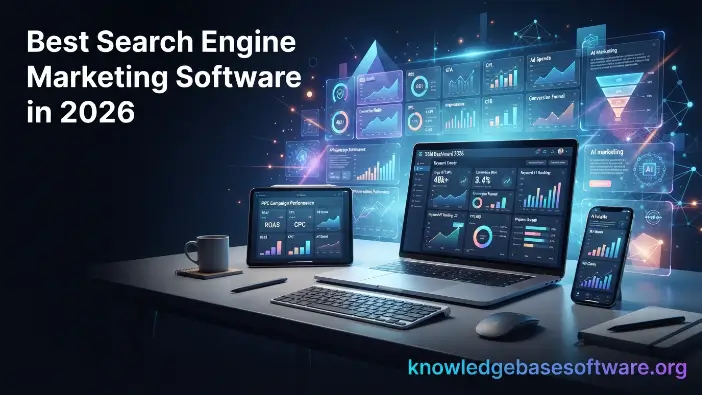
The landscape of the best search engine marketing software in 2026 is highly competitive, with platforms offering increasingly advanced automation, AI-driven optimization, and deep analytics capabilities. Businesses today rely on paid search management tools not only to run ads but also to gain insights into user behavior, improve targeting precision, and maximize return on ad spend. From global advertising giants to specialized PPC optimization platforms, each tool serves a different strategic purpose depending on business size, budget, and marketing goals. Choosing the right SEM platforms depends on factors such as campaign complexity, level of automation required, and integration with analytics systems. Some tools focus on broad reach and ad delivery, while others specialize in competitor analysis, keyword intelligence, or automated bid optimization.
Google Ads (Most widely used SEM platform)
Google Ads remains the dominant force in search engine marketing software, offering unmatched reach across Google Search, YouTube, and partner networks. Its strength lies in its massive audience base and highly sophisticated targeting options, allowing advertisers to reach users based on intent, demographics, and behavior. With tools like Smart Bidding and Performance Max, it has become a core solution for businesses running PPC advertising campaigns at scale.
However, while Google Ads delivers powerful capabilities, it also comes with challenges. High competition in popular industries can significantly increase cost-per-click, making budget management critical. Additionally, its complexity requires continuous optimization and learning, especially for beginners who may struggle with advanced campaign structures and bidding strategies.
Microsoft Advertising
Microsoft Advertising provides access to the Bing, Yahoo, and partner search ecosystem, making it a strong alternative within search advertising platforms. One of its biggest advantages is lower competition compared to Google, which often results in reduced cost-per-click and improved ad efficiency for many industries.
Another key benefit is its strong reach among professional and desktop users, particularly in B2B markets. Additionally, advertisers can easily import campaigns from Google Ads, simplifying setup and management while expanding reach across multiple search engines without rebuilding campaigns from scratch.
SEMrush Advertising Toolkit
SEMrush is widely recognized for its SEO capabilities, but its Advertising Toolkit also makes it a powerful PPC management software. It provides deep keyword research, competitor ad analysis, and insights into ad copy strategies used by competitors in real-time markets.
This tool is especially valuable for strategic planning. Marketers can identify profitable keywords, analyze gaps in competitor campaigns, and refine messaging to improve click-through rates. Its data-driven approach makes it ideal for building highly optimized paid search strategies before launching campaigns.
Ahrefs PPC Tools
Ahrefs is primarily known for SEO, but its keyword and traffic intelligence features also support strong SEM optimization workflows. It helps advertisers understand keyword difficulty, search volume trends, and competitor traffic sources, which are essential for building effective PPC campaigns.
While it is not a dedicated ad management platform, Ahrefs excels in providing deep competitive insights. Marketers use it to discover untapped keyword opportunities and evaluate the potential profitability of different search terms before investing in paid campaigns.
SpyFu
SpyFu is a specialized competitor research tool designed to uncover PPC strategies used by other advertisers. It allows users to see which keywords competitors are bidding on, how much they are spending, and which ads have historically performed best.
This makes SpyFu particularly useful for reverse-engineering successful paid advertising strategies. By analyzing competitor data, marketers can refine their own campaigns, avoid ineffective keywords, and identify proven opportunities with higher conversion potential.
WordStream Advisor
WordStream Advisor is built for small and medium-sized businesses that need simplified PPC campaign management. It offers automated recommendations, budget alerts, and performance scoring to help users improve campaigns without requiring deep technical expertise.
Its biggest strength is usability. Instead of overwhelming users with complex data, WordStream provides clear action steps to improve search engine marketing performance. This makes it especially useful for businesses that want efficiency and automation without hiring dedicated PPC specialists.
Optmyzr
Optmyzr is an advanced PPC optimization platform designed for agencies and enterprise advertisers managing large-scale campaigns. It focuses heavily on automation, allowing users to create custom rules for bid adjustments, reporting, and campaign optimization.
In addition to automation, Optmyzr provides advanced reporting and workflow tools that help streamline complex SEM operations. Agencies particularly benefit from its ability to manage multiple accounts efficiently while maintaining granular control over performance optimization strategies.
SEM Software Comparison Table
Below is a clear comparison of the most widely used best search engine marketing software options in 2026, highlighting their strengths, automation level, and ideal use cases.
| Tool | Primary Strength | Best For | Automation Level | Cost Level |
| Google Ads | Massive reach & AI bidding | All business sizes | High | Medium–High |
| Microsoft Advertising | Lower CPC & B2B reach | Budget-conscious advertisers | Medium | Low–Medium |
| SEMrush Advertising Toolkit | Keyword + competitor analysis | Strategy & research | Medium | Medium |
| Ahrefs PPC Tools | Keyword intelligence & insights | Data-driven marketers | Low–Medium | Medium–High |
| SpyFu | Competitor PPC tracking | Competitive research | Low | Low–Medium |
| WordStream Advisor | Simplified PPC management | Small businesses | High | Medium |
| Optmyzr | Advanced automation & scaling | Agencies & enterprises | Very High | High |
This comparison shows that while some SEM platforms focus heavily on automation and scalability, others are better suited for research, competitor analysis, or cost-efficient campaign management. Choosing the right tool depends on whether your priority is paid search optimization, budget control, or advanced campaign automation.
How to Choose the Best SEM Software
Choosing the best search engine marketing software requires careful evaluation of several important factors that directly impact campaign performance and return on investment. Businesses must consider elements such as budget considerations, business size, automation needs, reporting requirements, and integration with Google Ads / CRM tools before selecting the right solution. Each of these factors determines how effectively a platform can support long-term paid search marketing goals and overall advertising efficiency. When evaluated properly, the right SEM tools can significantly improve targeting accuracy, reduce wasted ad spend, and streamline campaign management. However, the wrong choice may lead to unnecessary complexity or limited scalability. Below are the key criteria and use-case-based recommendations to help you make an informed decision.
- Budget considerations
- Business size
- Automation needs
- Reporting requirements
- Integration with Google Ads / CRM tools
For Small Businesses
For small businesses, selecting the best search engine marketing software should focus on simplicity, affordability, and ease of use. Most small teams do not have dedicated PPC experts, so they need user-friendly SEM platforms that offer automation, guided optimization, and clear reporting dashboards without overwhelming complexity.
Tools like WordStream or Microsoft Advertising are often ideal because they provide built-in recommendations and cost-effective PPC campaign management. Small businesses should prioritize solutions that reduce manual work, help control budgets, and offer quick setup for search advertising campaigns without requiring advanced technical knowledge.
For Agencies
For agencies, the best search engine marketing software must support multi-client management, advanced reporting, and scalable automation. Agencies typically handle multiple campaigns across different industries, so they need powerful SEM management tools that can streamline workflows and provide detailed performance insights for each client.
Platforms like Optmyzr and SEMrush are particularly useful because they offer bulk campaign editing, competitor analysis, and customizable dashboards. Agencies also benefit from strong data integration capabilities, allowing them to combine PPC performance with CRM and analytics tools for more strategic decision-making.
For Enterprises
For enterprises, the best search engine marketing software should deliver maximum scalability, advanced automation, and deep integration with existing marketing ecosystems. Large organizations require enterprise-level SEM solutions that can manage high-budget campaigns across multiple regions and channels.
Google Ads, combined with advanced optimization tools, is often the preferred choice due to its global reach and AI-powered bidding systems. Enterprises also prioritize platforms that integrate seamlessly with CRM systems, attribution models, and marketing analytics tools to ensure complete visibility into customer journeys and ROI performance.
SEM Optimization Strategies Using These Tools
Using the best search engine marketing software, businesses can significantly improve campaign performance by applying structured optimization techniques that enhance targeting, reduce wasted ad spend, and increase overall return on investment. These strategies leverage PPC optimization tools, automation, and data-driven insights to continuously refine campaign performance across different platforms and audiences.
SEM Optimization Strategies
- Focus on high-intent keywords using keyword research tools for better conversion rates and lower acquisition costs.
- Use smart bidding strategies to automatically adjust bids based on user behavior, device, and location signals in real time.
- Regularly analyze competitor campaigns using competitive intelligence tools to identify gaps and opportunities for improvement.
- Continuously test ad variations with A/B testing tools to determine which messaging drives higher click-through and conversions.
- Optimize landing pages using conversion rate optimization insights to improve user experience and reduce bounce rates effectively.
- Segment audiences using advanced targeting features to deliver personalized ads that increase engagement and relevance significantly.
- Monitor performance dashboards daily using reporting tools to quickly identify underperforming campaigns and adjust strategy accordingly.
- Implement negative keywords using PPC management platforms to eliminate irrelevant traffic and improve overall ad efficiency.
- Allocate budgets dynamically using automation tools to shift spending toward the highest-performing campaigns for maximum ROI.
- Use attribution modeling with analytics tools to understand the full customer journey and improve long-term marketing decisions accurately.
Frequently Asked Questions
What is search engine marketing software?
Search engine marketing software is a digital tool that helps businesses create, manage, and optimize paid ads on search engines like Google and Bing using PPC management systems and automation features.
What is the difference between SEM and SEO tools?
SEM tools focus on managing paid advertising campaigns, while SEO tools focus on improving organic rankings using keyword optimization strategies and content improvements.
Which is the best SEM software for beginners?
For beginners, tools like WordStream and Microsoft Advertising are ideal because they offer simple dashboards, automation features, and guided campaign optimization tools.
Is Google Ads enough for SEM campaigns?
Yes, Google Ads is powerful enough for most campaigns, but combining it with analytics tools and competitor research platforms improves performance significantly.
How do SEM tools improve ROI?
SEM tools improve ROI by using bid automation, keyword targeting, and performance tracking to reduce wasted ad spend and increase conversions efficiently.
Conclusion
The best search engine marketing software plays a crucial role in helping businesses manage, optimize, and scale their paid advertising efforts effectively. By using advanced PPC management tools, companies can streamline campaign execution, improve targeting accuracy, and maximize return on ad spend across competitive search platforms.
Ultimately, success in search engine marketing depends on choosing the right combination of tools based on business goals, budget, and level of automation required. Whether it is Google Ads for maximum reach, SEMrush for strategic insights, or Optmyzr for advanced automation, each platform offers unique strengths that support different stages of growth. With the right SEM optimization strategy and consistent performance tracking, businesses can achieve sustainable results and long-term digital advertising success.