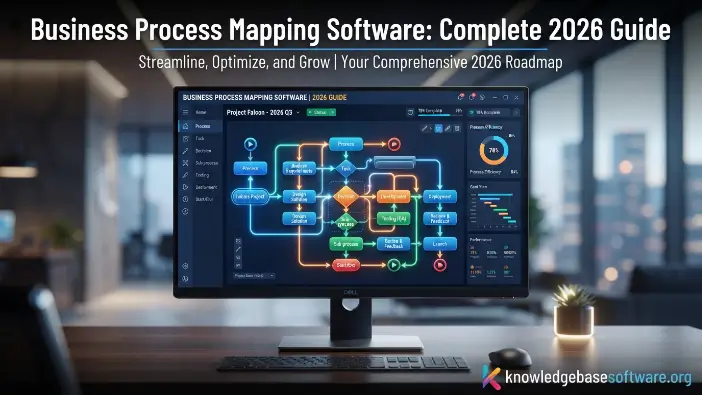
Welcome to knowledgebasesoftware. In today’s highly competitive business environment, organizations are constantly looking for ways to streamline operations, reduce inefficiencies, and improve overall productivity. One of the most effective ways to achieve these goals is by understanding how work flows across departments, teams, and systems. This is where business process mapping software becomes invaluable. These tools help companies visualize, document, and analyze their workflows, making it easier to identify bottlenecks, eliminate redundant tasks, and create standardized procedures that support long-term growth. Whether you’re a small business seeking operational clarity or a large enterprise pursuing digital transformation, process mapping software provides a structured approach to understanding and optimizing business operations.
Modern organizations manage increasingly complex workflows involving multiple stakeholders, technologies, and approval processes. Without clear visibility into these workflows, inefficiencies often go unnoticed, leading to delays, increased costs, and inconsistent outcomes. By using business process mapping software, businesses can create detailed visual representations of their operations through flowcharts, BPMN diagrams, and process models. These visual tools enable teams to collaborate more effectively while supporting workflow mapping software initiatives, process documentation efforts, and business process analysis projects. As a result, organizations gain valuable insights that help improve decision-making, enhance compliance,
What Is Business Process Mapping Software?
Business process mapping software is a specialized digital solution that helps organizations visualize, document, analyze, and improve the way work is performed across departments and teams. By transforming complex workflows into easy-to-understand diagrams and models, these tools provide businesses with greater visibility into their operations. Companies use business process mapping software to identify inefficiencies, standardize procedures, improve collaboration, and support continuous improvement initiatives. As organizations increasingly focus on operational excellence and digital transformation, process mapping tools have become essential for creating structured, scalable, and efficient business processes.
Definitiēon and Purpose
At its core, business process mapping software is designed to create visual representations of workflows, showing how tasks, decisions, inputs, and outputs move through a process. These visual diagrams help stakeholders understand the sequence of activities involved in completing a business objective, whether it is customer onboarding, procurement management, employee recruitment, or order fulfillment.
The primary purpose of these tools is to improve transparency and operational efficiency. Through detailed process documentation, businesses can establish standardized procedures that reduce confusion, improve employee training, and ensure consistency across teams. In addition, many organizations use workflow mapping software to uncover bottlenecks, eliminate redundant tasks, and support strategic decision-making.
How Process Mapping Software Works
Business process mapping software typically uses a drag-and-drop interface that allows users to create flowcharts, process diagrams, and workflow models without requiring advanced technical expertise. Users begin by identifying the process they want to map and then add various elements such as tasks, decision points, connectors, and responsibilities.
Modern platforms go beyond simple diagram creation by offering advanced capabilities such as workflow visualization, collaboration tools, reporting dashboards, and automation features. Teams can work together in real time, provide feedback directly within process maps, and monitor workflow performance through analytics. Many solutions also support process modeling standards such as BPMN, allowing organizations to create professional, universally understood process diagrams that can be shared across departments and business units.
Business Process Mapping vs Business Process Management (BPM)
Although the terms are often used interchangeably, business process mapping and Business Process Management (BPM) are not the same. Business process mapping focuses specifically on documenting and visualizing workflows. The primary goal is to create a clear picture of how work is performed so that inefficiencies, risks, and improvement opportunities can be identified. Process maps serve as valuable reference documents that help employees understand responsibilities and ensure consistency in execution.
Business Process Management, on the other hand, is a broader discipline that encompasses the design, execution, monitoring, optimization, and governance of business processes. While process mapping is an important component of BPM, BPM software provides additional functionality such as workflow automation, performance monitoring, compliance management, and continuous improvement capabilities.
Read Also: Best Free Business Management Software for Small Teams
Why Businesses Use Process Mapping Software
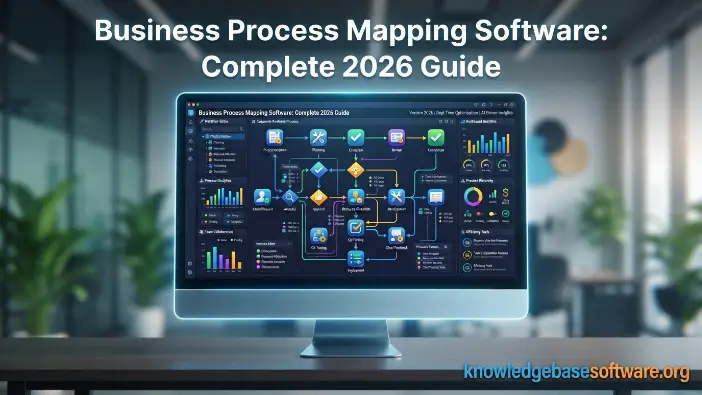
Organizations of all sizes rely on business process mapping software to gain greater visibility into their operations and improve overall performance. As workflows become more complex and involve multiple departments, technologies, and stakeholders, it becomes increasingly difficult to identify inefficiencies without a clear visual representation of how work is performed. By documenting and analyzing workflows, businesses can make data-driven decisions, improve collaboration, and create standardized procedures that support growth. From increasing productivity to supporting compliance initiatives, business process mapping software provides a foundation for continuous improvement and long-term operational success.
Improve Operational Efficiency
One of the primary reasons businesses invest in business process mapping software is to improve productivity and streamline operations. Process maps provide a visual overview of every step within a workflow, making it easier to identify unnecessary activities, duplicated efforts, and delays that impact performance. When organizations understand how work moves through a process, they can eliminate inefficiencies and create smoother workflows that save time and resources.
In addition, effective workflow optimization helps businesses reduce operational costs while increasing output. Teams can identify opportunities to automate repetitive tasks, simplify approval chains, and improve communication between departments. As a result, employees spend less time managing manual processes and more time focusing on strategic initiatives that contribute to business growth and customer satisfaction.
Standardize Business Processes
Consistency is essential for maintaining quality and delivering reliable results across an organization. Business process mapping software enables companies to document workflows in a structured format, ensuring that employees follow the same procedures regardless of department or location. Standardized processes reduce confusion, improve accountability, and help maintain service quality across the business.
Well-documented workflows also support effective training and onboarding programs. New employees can quickly understand their responsibilities by reviewing visual process maps rather than relying solely on verbal instructions. This structured approach contributes to operational excellence by ensuring that best practices are consistently applied throughout the organization and that processes remain aligned with business objectives.
Reduce Errors and Bottlenecks
Business processes often contain hidden inefficiencies that are difficult to detect without visual analysis. Business process mapping software allows organizations to examine workflows step by step, making it easier to identify bottlenecks, unnecessary approvals, communication gaps, and areas where errors frequently occur. By understanding where problems originate, businesses can implement targeted solutions that improve workflow performance.
Reducing errors not only improves productivity but also enhances customer satisfaction and employee effectiveness. Through continuous process improvement, organizations can refine workflows to eliminate recurring issues and reduce the risk of costly mistakes. This proactive approach helps teams operate more efficiently while maintaining higher levels of accuracy and consistency across critical business functions.
Support Compliance and Audits
Many industries operate under strict regulatory requirements that demand accurate documentation and process transparency. Business process mapping software helps organizations maintain detailed records of how work is performed, providing clear evidence of compliance procedures and internal controls. Process maps serve as valuable documentation during audits, inspections, and certification reviews by demonstrating that established procedures are consistently followed.
Additionally, having documented workflows simplifies compliance management and reduces the risk of regulatory violations. Businesses can quickly update process maps when regulations change and ensure that employees follow the latest requirements. This level of visibility and control contributes to stronger governance practices while protecting the organization from potential legal and financial risks.
Enable Digital Transformation
Successful digital transformation begins with a clear understanding of existing business processes. Business process mapping software helps organizations analyze current workflows before implementing new technologies, ensuring that automation and digital initiatives are built on a solid foundation. Without a clear picture of how processes function, businesses risk automating inefficient workflows rather than improving them.
By supporting business efficiency initiatives, process mapping tools play a critical role in modernization efforts. Organizations can identify opportunities for automation, system integration, and workflow redesign while aligning technology investments with strategic goals. As a result, businesses become more agile, adaptable, and capable of responding to changing market conditions while maintaining a competitive advantage in an increasingly digital economy.
Key Features to Look for in Business Process Mapping Software
Selecting the right business process mapping software requires more than simply choosing a tool that can create flowcharts. Modern organizations need solutions that support collaboration, process analysis, workflow optimization, and long-term scalability. The best platforms not only help visualize processes but also provide capabilities for automation, governance, and continuous improvement. Understanding the most important features can help businesses choose software that aligns with their operational goals and supports future growth.
BPMN 2.0 Support
One of the most important features to look for in business process mapping software is support for Business Process Model and Notation (BPMN) 2.0. BPMN is the internationally recognized standard for process mapping and allows organizations to create consistent, professional diagrams that can be understood across departments, industries, and software platforms. By using standardized symbols and notation, businesses improve communication and reduce misunderstandings when documenting complex workflows.
Strong BPMN modeling capabilities are particularly valuable for organizations that manage detailed operational processes or collaborate with external partners. Standardized process diagrams make it easier to analyze workflows, identify inefficiencies, and ensure that process documentation remains clear and scalable as the organization grows.
Drag-and-Drop Process Design
Ease of use is a critical factor when evaluating business process mapping software. Drag-and-drop process design allows users to create diagrams quickly without requiring technical expertise or specialized training. Users can simply select workflow elements, place them onto a canvas, and connect them visually to represent business processes.
An intuitive interface encourages wider adoption across the organization because employees from different departments can contribute to process mapping initiatives. This accessibility improves collaboration and helps businesses maintain accurate process documentation while reducing the time and effort needed to create and update workflow diagrams.
Swimlane Diagrams
Swimlane diagrams are a valuable feature that helps organizations clearly define responsibilities within a process. By separating activities into distinct lanes representing departments, teams, or individuals, swimlane diagrams make it easy to understand who is responsible for each task and how work flows between stakeholders.
For businesses managing cross-functional workflows, swimlane diagrams improve visibility and accountability. They help identify communication gaps, handoff delays, and overlapping responsibilities that may impact performance. As a result, organizations can create more efficient workflows and improve coordination between teams involved in complex business operations.
Real-Time Collaboration
Modern workplaces often include remote employees, distributed teams, and cross-departmental projects. Real-time collaboration features within business process mapping software allow multiple users to work on process diagrams simultaneously, ensuring that everyone stays aligned and informed throughout the mapping process.
Collaborative tools such as comments, shared workspaces, notifications, and version tracking make it easier for stakeholders to provide feedback and contribute expertise. This collaborative approach improves the accuracy of process maps and ensures that documented workflows reflect how work is actually performed across the organization.
Workflow Automation
Many modern platforms extend beyond visualization by offering workflow automation capabilities. These features allow businesses to automate repetitive tasks, approval processes, notifications, and data transfers directly from mapped workflows. Automation reduces manual effort while improving consistency and efficiency throughout the organization.
Organizations that combine process mapping with automation can significantly accelerate operations and reduce the likelihood of human error. By transforming documented workflows into automated processes, businesses can improve productivity, shorten cycle times, and create more scalable operational systems that support long-term growth.
Reporting and Analytics
Creating process maps is only the first step toward improvement. Effective business process mapping software should also provide robust reporting and analytics capabilities that help organizations measure workflow performance and identify opportunities for optimization. Performance data enables leaders to make informed decisions based on actual process outcomes rather than assumptions.
Advanced process analytics features can reveal bottlenecks, delays, resource constraints, and performance trends. By monitoring key metrics such as cycle time, completion rates, and task efficiency, businesses gain valuable insights that support continuous improvement and help maximize operational performance.
Version Control and Governance
Business processes evolve, making version control an essential feature for maintaining accurate documentation. Business process mapping software with strong governance capabilities allows organizations to track changes, manage approvals, and maintain historical records of process updates.
Proper governance ensures that employees always access the most current version of a process map while preserving previous versions for auditing and reference purposes. This level of control is particularly important for organizations operating in regulated industries where process documentation must remain accurate, consistent, and compliant with industry standards.
Integrations with Existing Systems
Businesses rely on a wide range of software applications to manage daily operations. The best business process mapping software integrates seamlessly with existing systems such as customer relationship management platforms, enterprise resource planning solutions, project management tools, and communication applications.
Integration capabilities eliminate information silos and improve workflow visibility across the organization. When process mapping tools connect with operational systems, businesses can create more accurate process models, automate data exchange, and ensure that workflows remain aligned with real-world business activities.
AI-Assisted Process Mapping
Artificial intelligence is rapidly transforming the way organizations manage and optimize workflows. Many leading business process mapping software platforms now offer AI-powered features that help users generate process maps, identify inefficiencies, and recommend improvements based on historical data and workflow patterns.
AI-assisted functionality reduces the time required to document processes while providing deeper insights into operational performance. As business workflow software continues to evolve, artificial intelligence will play an increasingly important role in helping organizations discover optimization opportunities, predict workflow issues, and support data-driven decision-making across the enterprise.
Best Business Process Mapping Software in 2026
Choosing the right business process mapping software in 2026 depends on your organization’s size, workflow complexity, collaboration needs, and automation requirements. Modern tools go far beyond simple diagram creation and now include capabilities like real-time collaboration, workflow automation, process analytics, and enterprise-grade governance. Below is a detailed breakdown of the top tools used by businesses worldwide to design, visualize, and optimize workflows efficiently.
Lucidchart
Lucidchart is one of the most widely used business process mapping software tools for teams that need a simple yet powerful diagramming solution. It is especially popular for its clean interface, cloud-based accessibility, and strong collaboration features that allow teams to build and edit process maps in real time. Many organizations use it for everything from basic flowcharts to advanced BPMN diagrams.
Lucidchart also integrates with major platforms like Google Workspace, Microsoft 365, and Slack, making it easy to incorporate into existing workflows. Its flexibility makes it suitable for both small teams and large enterprises that need scalable business workflow software with a minimal learning curve.
Best For
Lucidchart is best for general business users, teams needing fast diagram creation, and organizations that prioritize collaboration over advanced technical modeling.
Key Features
Key features include drag-and-drop diagramming, BPMN support, real-time collaboration, templates, and cloud-based storage.
Pros and Cons
Pros include ease of use and strong integrations, while cons include limited advanced process automation features.
Pricing Overview
Lucidchart offers a free plan with basic features and premium plans for advanced collaboration and enterprise functionality.
Miro
Miro is a visual collaboration platform widely used as business process mapping software for remote and hybrid teams. It provides an infinite canvas that allows teams to design workflows, brainstorm processes, and collaborate visually in real time. It is particularly effective for workshops and agile process design sessions.
While Miro is not strictly a BPM tool, it supports workflow visualization and process design through templates and interactive boards. Its flexibility makes it a popular choice for early-stage process mapping and collaborative planning.
Best For
Miro is best for remote teams, brainstorming sessions, and collaborative workflow design.
Key Features
Key features include infinite canvas, templates, real-time collaboration, and interactive workshops.
Pros and Cons
Pros include excellent collaboration tools, while cons include limited BPMN modeling depth.
Pricing Overview
Miro offers a free version and paid plans based on team size and advanced features.
Bizagi Modeler
Bizagi Modeler is a dedicated business process mapping software designed specifically for BPMN modeling. It is widely used in enterprises that require standardized and detailed process documentation. The platform is known for its strong adherence to BPMN 2.0 standards.
It also allows users to simulate processes and analyze performance before implementation, making it a powerful tool for organizations focused on process modeling and optimization.
Best For
Bizagi Modeler is best for BPM professionals and organizations requiring strict BPMN compliance.
Key Features
Key features include BPMN 2.0 modeling, process simulation, and documentation tools.
Pros and Cons
Pros include strong BPM capabilities; cons include a steeper learning curve.
Pricing Overview
Bizagi offers a free modeling tool with enterprise pricing for advanced features.
Microsoft Visio
Microsoft Visio is a long-standing diagramming solution often used as business process mapping software within Microsoft-centric organizations. It provides a wide range of templates for flowcharts, organizational charts, and process diagrams.
Its deep integration with Microsoft 365 makes it a natural choice for companies already using Excel, Word, and Teams for operational workflows.
Best For
Microsoft Visio is best for enterprises using Microsoft ecosystems.
Key Features
Key features include professional diagramming tools, templates, and Microsoft integration.
Pros and Cons
Pros include familiarity and enterprise reliability; cons include subscription cost.
Pricing Overview
Visio is available through Microsoft subscription plans.
Signavio
Signavio is an enterprise-grade business process mapping software focused on process intelligence and transformation. It is widely used by large organizations for managing complex business architectures and improving operational efficiency.
It also includes advanced analytics and process analytics capabilities that help businesses understand performance and optimize workflows at scale.
Best For
Signavio is best for large enterprises focused on process transformation.
Key Features
Key features include process modeling, analytics, governance, and collaboration tools.
Pros and Cons
Pros include powerful enterprise features; cons include high cost.
Pricing Overview
Signavio offers custom enterprise pricing.
ARIS
ARIS is a comprehensive business process mapping software platform designed for enterprise-level process governance and architecture management. It is often used by organizations with complex regulatory and operational requirements.
It supports advanced workflow automation and process optimization initiatives, making it suitable for large-scale business environments.
Best For
ARIS is best for large enterprises requiring process governance and risk management.
Key Features
Key features include process governance, risk management, and architecture modeling.
Pros and Cons
Pros include depth and scalability; cons include complexity and implementation time.
Pricing Overview
ARIS uses enterprise-based pricing models.
Visual Paradigm
Visual Paradigm is a modeling tool used as business process mapping software by technical teams and software architects. It supports BPMN, UML, and enterprise architecture modeling.
It is especially useful for teams that require both system design and process modeling within a single platform.
Best For
Visual Paradigm is best for technical teams and system architects.
Key Features
Key features include BPMN modeling, UML diagrams, and system design tools.
Pros and Cons
Pros include powerful modeling capabilities; cons include complexity for non-technical users.
Pricing Overview
Visual Paradigm offers tiered licensing plans.
Camunda Modeler
Camunda Modeler is a developer-focused business process mapping software tool designed for workflow automation and orchestration. It is widely used in software development environments where processes need to be executed as code-driven workflows.
It integrates closely with automation engines, making it ideal for organizations prioritizing workflow automation at scale.
Best For
Camunda Modeler is best for developers and automation-focused teams.
Key Features
Key features include BPMN modeling, workflow execution, and automation integration.
Pros and Cons
Pros include strong automation support; cons include technical complexity.
Pricing Overview
Camunda offers free and enterprise versions.
Draw.io (diagrams.net)
Draw.io is a free and lightweight business process mapping software tool used for quick diagram creation. It is widely adopted by startups, educators, and small businesses due to its accessibility and zero-cost model.
Despite being simple, it supports a wide range of diagram types and integrates with cloud storage platforms.
Best For
Draw.io is best for small businesses and users needing free diagramming tools.
Key Features
Key features include free diagramming, cloud integration, and basic templates.
Pros and Cons
Pros include being free and easy to use; cons include limited advanced features.
Pricing Overview
Draw.io is completely free.
Nintex Process Platform
Nintex is a powerful business process mapping software platform focused on workflow automation and digital process management. It allows organizations to map, automate, and optimize complex business workflows in a single environment.
It is widely used in enterprises that want to combine process mapping with end-to-end automation and document generation capabilities.
Best For
Nintex is best for organizations focused on automation and digital workflow transformation.
Key Features
Key features include process mapping, workflow automation, and document automation.
Pros and Cons
Pros include strong automation capabilities; cons include premium pricing.
Pricing Overview
Nintex offers custom enterprise pricing based on requirements.
Business Process Mapping Software Comparison Table
A clear comparison of business process mapping software helps organizations quickly evaluate which tool best fits their needs based on usability, collaboration, automation capabilities, and pricing. Since each platform serves different business sizes and use cases, this table highlights the most important decision-making factors, including support for workflow automation, process modeling, and business workflow software capabilities.
| Software | Best For | BPMN Support | Collaboration | Automation | Pricing |
| Lucidchart | General teams | Yes | High | Medium | Freemium / Paid |
| Miro | Remote collaboration | Partial | Very High | Low | Freemium / Paid |
| Bizagi Modeler | BPM professionals | Yes | Medium | Medium | Free / Enterprise |
| Microsoft Visio | Enterprise users | Yes | Medium | Medium | Paid |
| Signavio | Large enterprises | Yes | High | High | Enterprise |
| ARIS | Process governance | Yes | High | High | Enterprise |
| Visual Paradigm | Technical teams | Yes | Medium | Medium | Paid |
| Camunda Modeler | Developers | Yes | Medium | Very High | Free / Enterprise |
| Draw.io (diagrams.net) | Small businesses | Basic | Medium | Low | Free |
| Nintex Process Platform | Automation-focused enterprises | Yes | High | Very High | Enterprise |
This comparison shows that while tools like Draw.io and Miro are ideal for simplicity and collaboration, platforms like Camunda, Nintex, and Signavio excel in advanced automation and enterprise-scale process management. On the other hand, Lucidchart and Visio offer balanced solutions for general business use, making them strong all-around options depending on organizational requirements. When selecting the right business process mapping software, businesses should prioritize not only features but also scalability, integration capabilities, and long-term alignment with their digital transformation goals.
Common Business Process Mapping Mistakes to Avoid
When working with business process mapping software, organizations often make critical mistakes that reduce the effectiveness of their workflows and limit the value of process improvement efforts. Avoiding these errors is essential for ensuring accurate documentation, better collaboration, and successful process optimization initiatives. Below are the most common mistakes businesses should watch out for:
- Overcomplicating process maps with unnecessary details that make workflows difficult to understand and maintain.
- Failing to clearly define the scope of the process before starting the mapping exercise.
- Ignoring input from employees who actually perform the tasks within the workflow.
- Using inconsistent symbols, formats, or standards instead of following structured BPMN modeling practices.
- Treating process mapping as a one-time task rather than an ongoing improvement activity.
- Not aligning process maps with real-world operations, leads to inaccurate representations.
- Overlooking bottlenecks and inefficiencies during analysis stages.
- Lack of version control, confusing when multiple outdated process maps exist.
- Neglecting integration with workflow automation tools and existing systems.
- Creating process maps without clear goals for process improvement or measurable outcomes.
Step-by-Step Guide to Mapping a Business Process
Mapping a workflow using business process mapping software helps organizations clearly understand how tasks move from one stage to another, where delays occur, and how improvements can be made. A structured approach ensures that processes are accurately documented, optimized, and aligned with business goals. By following a step-by-step method, teams can turn complex operations into clear, actionable visual workflows that support efficiency, accountability, and continuous improvement.
Identify the Process
The first step in using business process mapping software is selecting the process you want to analyze. This could be anything from customer onboarding and order fulfillment to employee onboarding or procurement workflows. Choosing a clearly defined process ensures that the mapping exercise remains focused and delivers actionable insights.
At this stage, it is important to understand the purpose of the process and what outcomes you expect to achieve. Defining the scope helps avoid unnecessary complexity and ensures that the process map remains practical and aligned with business objectives. Clear identification sets the foundation for effective analysis and improvement.
Gather Stakeholders
Once the process is identified, the next step is to involve all relevant stakeholders who participate in or manage the workflow. These individuals provide valuable insights into how the process actually operates in real-world conditions, which may differ from documented procedures.
Engaging stakeholders early ensures accuracy and builds alignment across teams. Their input helps uncover hidden inefficiencies, communication gaps, and practical challenges that may not be visible at a managerial level. Collaboration at this stage improves the reliability of the final process map created using business process mapping software.
Document Process Steps
After gathering input, the next step is to document every action, decision point, input, and output involved in the workflow. This creates a detailed breakdown of how the process currently functions from start to finish.
Accurate documentation is essential for identifying inefficiencies and opportunities for process modeling. At this stage, businesses often use workflow mapping software to ensure that every step is captured visually and logically, making the process easier to analyze and optimize later.
Create the Workflow Diagram
With all steps documented, you can now use business process mapping software to create a visual representation of the workflow. This typically involves drag-and-drop tools that allow you to connect tasks, decisions, and responsibilities in a structured diagram.
A well-designed workflow diagram improves workflow visualization and makes it easier for stakeholders to understand how the process flows. Visual representation also helps identify redundancies, unnecessary steps, and opportunities for simplification or automation.
Analyze Bottlenecks
Once the process map is created, the next step is to analyze it for inefficiencies. Bottlenecks often occur where tasks pile up, approvals are delayed, or communication breaks down between teams. Identifying these issues is essential for improving performance.
Using business process mapping software, teams can visually trace delays and inefficiencies to their root causes. This analysis supports better decision-making and helps organizations prioritize improvements that will have the greatest impact on productivity and workflow optimization.
Implement Improvements
After identifying bottlenecks, businesses can begin redesigning the workflow to eliminate inefficiencies. This may include removing unnecessary steps, automating repetitive tasks, or restructuring approval processes.
The goal of process improvement is to create a more efficient and effective workflow that enhances productivity and reduces operational costs. With insights gained from business process mapping software, organizations can implement changes that support long-term business efficiency and operational success.
Monitor and Update
The final step is to continuously monitor the process and update it as needed. Business processes are not static—they evolve as organizations grow, adopt new technologies, and respond to market changes.
Regular updates ensure that the process map remains accurate and relevant. By continuously refining workflows through business process mapping software, organizations maintain high performance levels and sustain operational excellence over time, ensuring that improvements remain effective and aligned with business goals.
Future Trends in Business Process Mapping Software
The evolution of business process mapping software is being shaped by rapid advancements in automation, artificial intelligence, and digital transformation. As organizations demand smarter, faster, and more integrated ways to manage workflows, process mapping tools are shifting from simple visualization platforms to intelligent systems that actively guide decision-making and operational efficiency. These emerging trends highlight how workflow automation, process analytics, and business workflow software will redefine the way businesses design and optimize processes in the coming years.
Future Trends in Business Mapping Software
- Increased adoption of AI-powered process discovery that automatically maps workflows from system data and user activity.
- Expansion of workflow automation features that allow end-to-end execution of processes directly from diagrams.
- Greater use of process analytics for real-time monitoring and performance optimization of business operations.
- Integration of predictive analytics to forecast bottlenecks and inefficiencies before they occur.
- Growth of low-code and no-code platforms enabling non-technical users to build and modify workflows easily.
- Wider adoption of cloud-based business process mapping software for remote and hybrid team collaboration.
- Stronger integration between process mapping tools and enterprise systems like ERP and CRM platforms.
- Enhanced use of digital twins to simulate and test real-world business processes virtually.
- Improved standardization through advanced BPMN modeling and universal process frameworks.
- Shift toward fully intelligent business workflow software that recommends optimizations automatically based on historical data.
Frequently Asked Questions
What is business process mapping software used for?
Business process mapping software is used to visualize, document, and analyze business workflows. It helps organizations understand how tasks move through different stages, identify inefficiencies, and improve overall operational performance through better process documentation and workflow clarity.
Is business process mapping software only for large enterprises?
No, business process mapping software is useful for businesses of all sizes. Small businesses use it to improve efficiency and standardize operations, while large enterprises use it for complex workflow management, governance, and advanced workflow optimization across multiple departments.
What is the difference between BPM and process mapping?
Process mapping focuses on visually documenting workflows, while Business Process Management (BPM) is a broader discipline that includes execution, monitoring, and continuous improvement of processes. BPM uses process modeling and automation tools to manage workflows end-to-end, whereas mapping is mainly about visualization.
Do I need technical skills to use process mapping tools?
Most modern business process mapping software tools are designed with user-friendly drag-and-drop interfaces, meaning no advanced technical skills are required. However, understanding basic workflow concepts and BPMN modeling can help create more structured and professional diagrams.
Can process mapping software improve business efficiency?
Yes, it significantly improves business efficiency by identifying bottlenecks, eliminating redundant steps, and supporting process improvement initiatives. This leads to faster operations, reduced costs, and more consistent outcomes across business processes.
Conclusion
In today’s competitive and fast-changing business environment, business process mapping software plays a critical role in helping organizations gain clarity, improve efficiency, and streamline operations. By visually representing workflows, businesses can better understand how work is performed, where delays occur, and what improvements are needed to achieve consistent results. This structured visibility is essential for driving long-term growth and maintaining control over complex operations.
Beyond simple visualization, modern business process mapping software enables companies to support workflow optimization, enhance process documentation, and implement meaningful process improvement strategies across departments. When combined with automation, analytics, and collaboration features, these tools become powerful systems for achieving operational excellence and improving business efficiency at every level of the organization.