Welcome to KnowledgeBaseSoftware. Running a successful spa involves managing appointments, customer records, payments, staff schedules, and daily operations. For small spa owners, handling these tasks manually can take considerable time and increase the risk of errors.
Spa software for small businesses helps simplify these responsibilities by bringing essential tools into one platform. Features such as spa management software, spa booking software, and appointment scheduling software allow owners to organize reservations, automate reminders, manage client information, and process payments efficiently. These tools help reduce administrative work, improve customer satisfaction, and make daily spa operations easier to manage.
What Is Spa Software for Small Business?
Spa software for small businesses is a digital solution that helps spa owners manage appointments, customer information, staff schedules, payments, and other essential business activities from one centralized platform. Instead of relying on paper records and separate applications, owners can organize their operations more efficiently, reduce scheduling errors, and keep important business information accessible.
By using spa management software, spa booking software, and appointment scheduling software, small spas can automate routine tasks, manage customer bookings, track service history, and improve payment processing. These capabilities help businesses save time, maintain organized records, and provide a more consistent experience for their clients.
Definition and Core Purpose
The primary purpose of spa software for small businesses is to simplify daily operations through automation and centralized management. It replaces manual appointment books, telephone reservations, and scattered spreadsheets with a digital system that helps spa owners manage bookings, customer records, and staff schedules more effectively.
Many platforms also include customer relationship management (CRM), payment processing, and automated marketing features. These tools help maintain client profiles, send appointment reminders, manage transactions, and encourage repeat bookings while reducing administrative workload.
Who Should Use Spa Management Software?
Spa software for small businesses is suitable for different types of spa and wellness businesses that need efficient appointment management and customer recordkeeping. It is particularly useful for:
- Day spas: Manage treatment bookings, employee schedules, and walk-in appointments while reducing scheduling conflicts.
- Mobile spas: Organize appointments across different locations and maintain communication with customers while providing mobile services.
- Solo therapists: Manage bookings, payments, and client records in one system without spending excessive time on administration.
- Wellness centers: Coordinate multiple services, practitioners, and appointment schedules through a centralized platform.
- Medical spas: Organize client information, treatment appointments, and service records while supporting appropriate data security practices.
- Boutique spas: Store customer preferences and treatment histories to provide more personalized services.
These businesses can benefit from spa management software by simplifying administrative tasks, organizing appointments, and improving the overall efficiency of daily operations.
How Spa Software Differs From Generic Business Software
The main difference between spa software for small businesses and generic business software is that spa-specific platforms are designed around the needs of appointment-based spa services. They provide tools for managing treatments, booking appointments, maintaining customer profiles, and coordinating staff, whereas general business applications may not offer these specialized capabilities.
Unlike basic scheduling tools, spa booking software can include automated reminders, treatment duration settings, staff assignment options, and membership package management. These features help prevent booking conflicts, organize staff availability, and ensure that appointments are scheduled according to each treatment’s requirements.
Read Also: Best Lawn Care Business Software to Streamline Operations in 2026
Key Features Every Small Spa Should Look For
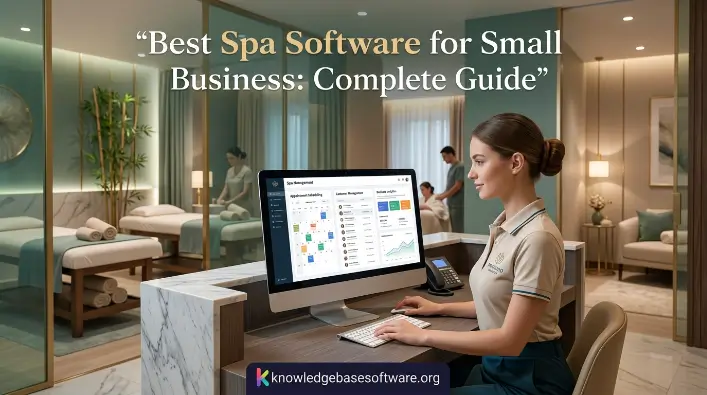
When selecting spa software for a small business, understanding the essential features helps spa owners choose a system that improves daily operations, customer satisfaction, and business efficiency. A suitable platform combines tools such as appointment booking software, customer management, and payment processing to reduce manual work and simplify administration. Features like online scheduling software, automated reminders, and reporting tools help small spas manage bookings, organize staff, and monitor business performance.
Online Booking and Appointment Scheduling
Online booking is a key feature of spa software for small businesses because it allows customers to schedule appointments at any time without calling the spa. Clients can view available time slots, select treatments, and book services online, reducing the workload on reception staff and minimizing scheduling conflicts.
With online scheduling software, spa owners can automate booking confirmations, cancellations, and appointment reminders. These tools help reduce missed appointments and make reservations more convenient across desktop and mobile devices.
Client Management (CRM)
Client management is an essential feature of spa software for small businesses that keeps customer information organized in one place. Records can include contact details, appointment history, treatment preferences, and notes that help staff provide personalized services.
Using customer management tools, spa owners can identify returning clients, monitor booking patterns, and create targeted offers. A well-organized CRM system supports stronger customer relationships, better retention, and more consistent service.
Point-of-Sale (POS) and Payment Processing
A point-of-sale system within spa software for small businesses helps manage customer payments and sales transactions efficiently. Depending on the platform, spas can accept credit cards, digital wallets, and cash while generating receipts and maintaining accurate transaction records.
A modern spa POS system may also support retail product sales, discounts, and tax calculations. Integrated payment processing simplifies checkout, reduces manual errors, and helps spa owners maintain organized financial records.
Staff Scheduling and Payroll Tracking
Staff scheduling features in spa software for small businesses help owners assign employees according to availability, treatment requirements, and customer demand. Organized schedules reduce booking conflicts and help ensure that the right staff members are available during busy periods.
Payroll tracking tools can record working hours, service commissions, and other relevant payroll information. These features reduce administrative effort, support accurate compensation calculations, and improve staff management.
Inventory Management
Inventory management helps spa software for small businesses track skincare products, retail items, and supplies used during treatments. Monitoring stock levels allows spa owners to identify low-stock items, prevent shortages, and avoid purchasing more products than necessary.
Automated stock alerts and product tracking make inventory control easier and help maintain appropriate stock levels. Effective management supports cost control, reduces waste, and helps ensure that essential spa products remain available.
Marketing Automation
Marketing automation in spa software for small businesses helps spa owners communicate with customers without managing every campaign manually. Depending on the platform, businesses can send promotional emails, appointment reminders, special offers, and seasonal messages.
By combining appointment booking software with marketing tools, spas can encourage repeat bookings and maintain regular customer engagement. Targeted campaigns based on appointment history and customer preferences can improve retention and support revenue growth.
Membership and Loyalty Programs
Membership and loyalty features in spa software for small businesses help encourage repeat visits and reward regular customers. Spas can offer membership packages, discounts, reward points, or exclusive service benefits, depending on the software’s capabilities.
These programs give customers incentives to return while helping spa owners build long-term relationships. Tracking memberships and rewards digitally also makes it easier to manage benefits and monitor customer participation.
Reporting and Analytics
Reporting and analytics tools in spa software for small businesses help owners evaluate business performance using information about revenue, appointments, customer behavior, and staff productivity. These reports make it easier to understand which services perform well and where improvements may be needed.
Data from online scheduling software can reveal busy appointment periods, booking patterns, and customer retention trends. Spa owners can use these insights to adjust schedules, assess promotions, and make better-informed business decisions.
Benefits of Using Spa Management Software
Spa software for small businesses helps spa owners organize daily operations, improve customer service, and manage business performance through automation and centralized tools. By combining spa management software, appointment booking, and CRM features, businesses can reduce manual tasks, improve record accuracy, and coordinate staff more effectively. These capabilities also support customer retention, streamlined payments, and informed decision-making as the business grows.
Key Benefits
- Reduces administrative work by automating appointment bookings, reminders, and customer record management.
- Improves customer experience through convenient reservations, personalized services, and consistent communication.
- Reduces missed appointments with automated SMS and email reminders.
- Improves staff productivity by organizing schedules and simplifying task allocation.
- Supports revenue growth by optimizing appointment availability and encouraging repeat bookings through loyalty programs.
- Centralizes bookings, payments, CRM, and reporting in one management platform.
- Provides business insights through reports on revenue, customer activity, and appointment trends.
- Strengthens customer relationships through service history tracking and targeted marketing campaigns.
- Simplifies transactions with integrated POS systems and supported payment methods.
- Supports business expansion with scalable tools for additional staff, services, and locations.
Best Spa Software Options for Small Businesses
Choosing the right spa software for a small business involves comparing features, pricing, usability, and scalability. Different spa management software platforms offer tools for online booking software, customer management, payments, and marketing. The most suitable option depends on the spa’s size, budget, services, and operational requirements.
Comparison table
| Software Name | Best For | Key Features | Pricing Type | Ease of Use |
|---|---|---|---|---|
| Zenoti | Large & growing spas | CRM, POS, analytics, automation | Premium subscription | Medium |
| Phorest | Customer engagement | Marketing, loyalty, booking | Mid-range subscription | Easy |
| Fresha | Budget-friendly spas | Booking, POS, CRM | Freemium model | Very easy |
| Vagaro | Small businesses | Scheduling, payments, marketing | Monthly subscription | Easy |
| Mindbody | Wellness centers | Class scheduling, CRM, reporting | Premium subscription | Medium |
| Booker | Salon & spa management | Booking, POS, staff tools | Subscription | Easy |
How to Choose the Right Spa Software
Selecting spa software for a small business requires evaluating the features, pricing, and usability that best match your spa’s daily operations. The right system should support essential functions such as spa management software, appointment scheduling, and customer relationship management while accommodating future growth. Comparing available options carefully helps spa owners avoid unnecessary expenses and choose tools that simplify bookings, payments, and reporting.
Define Your Business Needs
Before choosing spa software for a small business, identify your essential operational requirements. Consider the services you provide, the number of employees, your appointment volume, and the challenges you experience when managing bookings and customer records.
Determine whether you need basic appointment booking software or a more comprehensive platform with CRM, POS, and marketing automation. Defining these priorities helps you select software that meets your current needs and supports future expansion.
Evaluate Ease of Use
Ease of use is important when selecting spa software for a small business because employees need to manage appointments, payments, and customer information without unnecessary complications. An intuitive interface can reduce training time and help staff complete routine tasks more efficiently.
Choose spa management software with straightforward navigation and accessible scheduling tools. Mobile compatibility is also useful for owners and employees who need to review appointments or manage operations away from the front desk.
Check Integrations
Integration capabilities help spa software for small businesses connect essential business tools within a coordinated workflow. Depending on the platform, these integrations may include payment gateways, accounting applications, marketing services, and digital calendars.
Compatible online booking software can reduce duplicate data entry and keep appointment information synchronized across connected systems. Before purchasing, confirm which integrations are supported and whether additional fees apply.
Review Pricing Models
Pricing is an important consideration when selecting spa software for a small business, as subscription costs vary according to features, users, and service plans. Some providers charge a fixed monthly fee, while others offer different tiers or per-user pricing.
Compare the features included in each spa management software plan and check for additional charges related to payments, integrations, or premium tools. Evaluating overall value rather than price alone helps ensure that the software fits your budget and operational needs.
Assess Customer Support
Reliable customer support is essential when using spa software for a small business because technical problems can affect bookings and payments. Responsive assistance helps resolve issues and minimize interruptions to daily operations.
When evaluating appointment booking software, check the availability of support through email, phone, live chat, or help documentation. Training materials and onboarding assistance can also make implementation easier for spa owners and employees.
Request a Free Trial or Demo
Testing spa software for a small business through a free trial or demonstration helps determine whether its features match your requirements. It also provides an opportunity to evaluate the interface, booking process, and overall usability before committing to a subscription.
Using spa management software firsthand allows you to test common tasks, including appointment creation, customer record management, and payment processing where available. This evaluation helps identify limitations and reduces the risk of choosing an unsuitable platform.
Common Mistakes When Buying Spa Software
Choosing spa software for a small business without evaluating its features and suitability can lead to unnecessary expenses and inefficient workflows. Spa owners should compare spa management software options carefully, considering usability, pricing, integrations, and future requirements before making a decision. Avoiding common mistakes helps ensure that the selected platform supports reliable operations and a positive customer experience.
Common Mistakes
- Choosing software based only on price without assessing features, scalability, and overall value.
- Overlooking essential booking, CRM, and reporting tools that support daily spa operations.
- Selecting a complicated interface that makes staff training and software adoption more difficult.
- Failing to check integrations with payment processors, accounting systems, and marketing platforms.
- Ignoring scalability requirements when planning to add services, employees, or locations.
- Skipping free trials or demonstrations that could reveal usability problems before purchase.
- Overlooking customer support quality, potentially causing delays when technical issues arise.
- Using disconnected applications that create duplicate records and inconsistent business information.
- Ignoring mobile accessibility, which can limit remote access to schedules and customer records.
- Failing to review additional costs, including premium features, upgrades, and transaction fees.
Implementation Tips for a Smooth Transition
Successfully implementing spa software for a small business requires careful planning, accurate data migration, and employee training. A structured transition helps ensure that spa management software supports existing workflows for appointments, payments, customer records, and staff scheduling. Preparing employees and configuring essential features before launch can reduce disruption and improve adoption.
Migrating Customer Data
Migrating customer data is an important step when introducing spa software for a small business. It involves transferring client contact details, appointment histories, treatment preferences, and other relevant records from existing systems into the new platform. Accurate migration helps preserve essential information and maintain continuity in customer service.
Using the customer management features of the new system, spa owners can organize client records and remove duplicate or outdated entries before transferring the data. Reviewing the imported information helps identify errors and ensures that employees can access accurate customer details after implementation.
Training Staff
Staff training helps ensure that spa software for small businesses is used correctly and consistently. Employees should understand how to manage bookings, update customer records, process payments, and perform the tasks required for their roles.
Many spa management software providers offer tutorials, onboarding assistance, and training resources. Practical exercises and regular guidance help employees become familiar with the system, reduce avoidable errors, and improve day-to-day efficiency.
Automating Appointment Reminders
Automated reminders in spa software for small businesses help customers remember upcoming appointments and reduce missed visits. Depending on the platform, reminders can be delivered through SMS, email, or app notifications at scheduled intervals.
With online scheduling software, spa owners can configure automatic notifications for upcoming appointments, confirmations, and booking changes. These messages keep clients informed while reducing the need for staff to contact each customer manually.
Measuring ROI After Launch
Measuring return on investment (ROI) after implementing spa software for a small business helps owners determine whether the platform is delivering meaningful results. Useful indicators include changes in administrative time, appointment attendance, revenue, customer retention, and operating costs.
Using analytics from appointment booking software, spa owners can compare performance before and after implementation. Reviewing these results helps identify improvements, evaluate software costs, and determine which processes may need further optimization.
Future Trends in Spa Management Software
Spa software for small businesses is evolving as new technologies improve appointment management, customer communication, and operational efficiency. Modern spa management software increasingly focuses on automation, mobile access, data analysis, and personalized customer experiences. These developments can help spa owners manage their businesses more efficiently while adapting to changing customer expectations.
Future Trends
- AI-powered scheduling helps organize appointments, reduce booking gaps, and improve staff utilization.
- Advanced appointment booking software provides real-time availability and convenient self-service reservations.
- Mobile-first spa management software allows owners to manage bookings, payments, and staff schedules through smartphones.
- Predictive analytics helps estimate appointment demand, identify busy periods, and support revenue planning.
- Automated marketing tools deliver personalized promotions and reminders based on customer preferences and booking history.
- Cloud-based online scheduling software supports remote access and synchronized updates across compatible devices.
- Integrated wellness platforms connect spa booking and management with related fitness and wellness services.
- Voice-assisted booking tools can allow customers to schedule appointments through compatible voice assistants.
- Improved cybersecurity measures help protect customer records, payment information, and business systems.
- AI-enhanced CRM tools help personalize customer communication and identify patterns in booking behavior.
Frequently Asked Questions
What is spa software for a small business?
Spa software for small businesses is a digital tool that helps spa owners manage bookings, customers, payments, staff schedules, and daily operations in one system. It replaces manual processes with automated workflows, improving efficiency and customer experience.
How does spa management software improve business operations?
Spa management software improves operations by automating appointment scheduling, reducing no-shows, tracking customer data, and simplifying payments. It allows spa owners to focus more on service quality instead of administrative tasks.
Is spa software suitable for small or solo spa owners?
Yes, spa software for small businesses is ideal for solo practitioners and small spas because it simplifies booking, client management, and payments. It helps reduce workload and makes operations more organized and professional.
What features should I look for in spa booking software?
Good spa booking software should include online scheduling, CRM tools, payment processing, automated reminders, reporting, and staff management. These features ensure smooth operations and better customer satisfaction.
Can spa software help increase customer retention?
Yes, spa software improves customer retention by using CRM tools, loyalty programs, and automated marketing. It helps personalize communication and encourages repeat bookings through consistent engagement.
Conclusion
Choosing the right spa software for a small business is a strategic decision that directly influences efficiency, customer satisfaction, and long-term profitability. Throughout this guide, we explored how modern spa management software brings together essential functions like booking, CRM, payments, marketing, and analytics into one streamlined system. By replacing manual processes with automation, spa owners can significantly reduce workload while improving service quality and operational control.
Ultimately, the success of any spa depends on how well it manages its clients, staff, and resources. Investing in reliable spa booking software ensures smoother daily operations, fewer errors, and better customer experiences. As the spa industry continues to evolve, businesses that adopt smart, scalable, and user-friendly software solutions will be better positioned for sustainable growth and competitive advantage in the future.