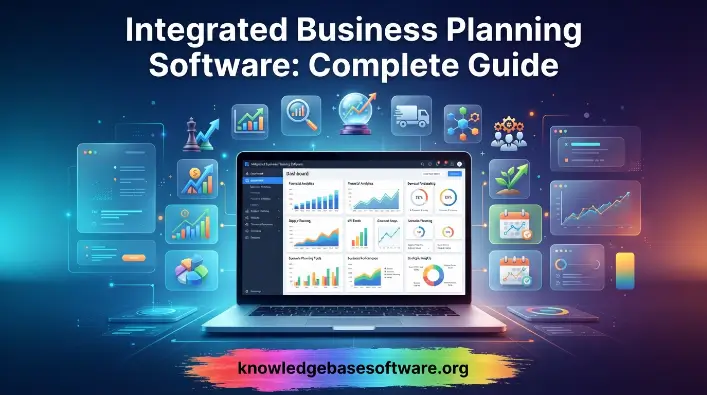
Welcome to knowledgebasesoftware. Integrated business planning software has become one of the most important tools for modern enterprises that want to unify strategy, operations, and financial planning into a single, connected system. In traditional organizations, departments often work in isolation, sales teams forecast demand separately, finance builds budgets independently, and supply chain teams plan inventory without real-time coordination. This disconnected approach leads to inefficiencies, inaccurate forecasting, and missed business opportunities. With the rise of digital transformation, companies are shifting toward more intelligent planning systems that combine all business functions into one ecosystem.
This is where integrated business planning software plays a critical role by connecting financial planning and analysis (FP&A), supply chain planning, and sales and operations planning (S&OP) into a unified framework. Instead of relying on static spreadsheets or fragmented tools, businesses can now use real-time data to align decisions across every department. Modern markets demand speed, accuracy, and adaptability. Organizations must respond quickly to changes in demand, supply disruptions, and financial pressures. By using integrated business planning software, companies gain a centralized view of performance and future projections, enabling leaders to make smarter, data-driven decisions. This not only improves operational efficiency but also strengthens long-term strategic planning and risk management.
What Is Integrated Business Planning (IBP)?
Integrated business planning software represents a modern approach that connects all major business functions into a single, unified planning system. It goes beyond traditional planning methods by combining strategy, finance, supply chain, and operations into one coordinated framework. The main goal is to ensure that every department works with the same data, assumptions, and objectives, reducing misalignment and improving decision-making accuracy across the organization. At its core, integrated business planning software enables businesses to move from fragmented planning models to a continuous, data-driven system. This shift is supported by enterprise planning systems and business forecasting tools that help organizations align short-term execution with long-term strategic goals.
Definition and Core Concept
The core concept of Integrated Business Planning (IBP) is to create a single source of truth for all planning activities within an organization. Instead of separate plans for sales, finance, and operations, IBP combines them into one integrated model. This ensures that every decision is evaluated based on its impact across the entire business.
In practical terms, integrated business planning software acts as the central platform that connects data, processes, and people. It allows organizations to simulate different scenarios, track performance in real time, and adjust plans quickly. This is closely supported by financial planning and analysis (FP&A) systems that link operational decisions with financial outcomes.
Evolution from S&OP to IBP
The evolution from Sales and Operations Planning (S&OP) to Integrated Business Planning (IBP) marks a major shift in how businesses manage planning processes. Traditional S&OP mainly focused on balancing supply and demand, often within limited operational boundaries. While effective to some extent, it lacked financial and strategic integration.
With the introduction of integrated business planning software, organizations expanded this model to include finance, strategy, and advanced analytics. This evolution allows businesses to move beyond basic coordination and adopt a fully aligned planning structure supported by demand forecasting software and real-time analytics tools.
Role in Digital Business Transformation
In the era of digital transformation, IBP plays a critical role in helping organizations become more agile, data-driven, and responsive. Integrated business planning software enables companies to unify data from multiple systems and transform it into actionable insights for faster decision-making.
This transformation is powered by technologies such as AI, cloud computing, and automation. By integrating supply chain planning and enterprise resource systems, businesses can continuously update forecasts, improve accuracy, and reduce operational risks, making IBP a core pillar of modern digital enterprises.
Read Also: Business Operations Software: Features, Benefits & Complete Guide
Key Features of Integrated Business Planning Software
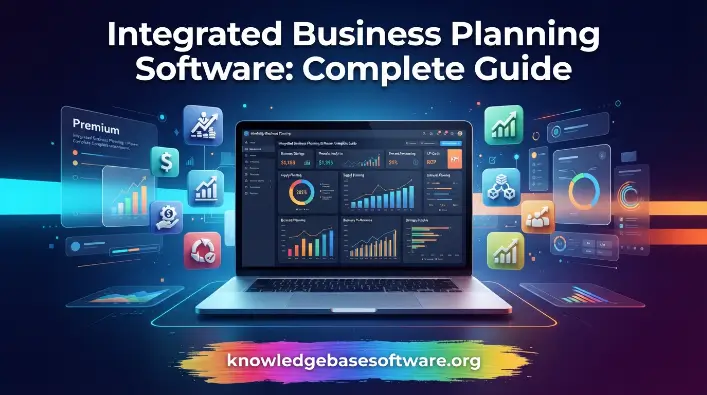
Integrated business planning software provides a comprehensive set of features designed to unify business operations, improve forecasting accuracy, and enable data-driven decision-making across all departments. It connects finance, supply chain, sales, and operations into a single system, ensuring that every function works with consistent and real-time information. This integration allows organizations to move away from fragmented planning tools and adopt a more strategic and coordinated approach to business management. At its core, integrated business planning software is powered by advanced analytics, automation, and real-time data processing.
Demand Forecasting and Planning
Demand forecasting is one of the most critical features of integrated business planning software, as it helps organizations predict future customer demand using historical data, market trends, and AI-driven models. This ensures businesses can prepare in advance for changes in demand and avoid issues like overstocking or stock shortages.
In addition, the system continuously updates forecasts based on real-time inputs, making predictions more accurate over time. With the support of demand forecasting software, companies can better align production, inventory, and sales strategies to meet customer needs efficiently.
Financial Planning and Analysis (FP&A) Integration
One of the strongest advantages of integrated business planning software is its ability to integrate financial planning and analysis directly with operational planning. This ensures that every business decision is evaluated based on its financial impact, including revenue, costs, and profitability.
By connecting operational data with financial planning and analysis (FP&A) systems, organizations gain a clear view of how strategic decisions affect overall financial performance. This integration improves budgeting accuracy, enhances forecasting reliability, and supports better long-term financial planning.
Supply Chain Synchronization
Supply chain synchronization ensures that procurement, production, inventory, and distribution processes work together seamlessly within integrated business planning software. This helps eliminate inefficiencies caused by misaligned planning across departments.
With the help of supply chain planning tools, businesses can optimize inventory levels, reduce delays, and improve delivery performance. This feature ensures that supply chain operations remain aligned with demand forecasts and financial objectives at all times.
Scenario and What-If Analysis
Scenario and what-if analysis allow businesses to simulate different planning outcomes using integrated business planning software. Organizations can test multiple variables, such as demand spikes, supply disruptions, or cost changes,s before making final decisions.
This feature helps companies prepare for uncertainty by evaluating risks and opportunities in advance. Supported by enterprise planning systems, scenario modeling improves strategic flexibility and enables leaders to make more confident and informed decisions.
Real-Time Data Integration
Real-time data integration is a key feature that allows integrated business planning software to continuously collect and process data from multiple sources across the organization. This ensures that all departments are working with the most up-to-date information.
By leveraging business forecasting tools, companies can respond quickly to market changes and operational challenges. Real-time integration enhances visibility, improves coordination, and supports faster decision-making across all business functions.
Benefits of Using Integrated Business Planning (IBP) Software
Integrated Business Planning (IBP) software helps organizations unify strategy, finance, supply chain, and operations within a single planning framework. By connecting data, processes, and teams, it improves forecasting accuracy, enhances collaboration, and supports faster decision-making. Businesses gain greater visibility into performance, reduce operational inefficiencies, and respond more effectively to market changes. With advanced analytics and real-time insights, IBP software enables organizations to achieve sustainable growth and maintain a competitive advantage.
Key Benefits
- Improves decision-making accuracy through real-time visibility into financial, operational, and sales data across the entire organization.
- Enhances forecast accuracy using AI-powered analytics, historical trends, and predictive modeling to anticipate future business demands.
- Strengthens collaboration by aligning departments around shared goals, unified data sources, and coordinated planning processes.
- Reduces operational costs by eliminating inefficiencies, streamlining workflows, and optimizing resource allocation across business functions.
- Increases supply chain efficiency through synchronized planning of procurement, production, inventory management, and distribution activities.
- Improves financial visibility by integrating budgeting, forecasting, performance monitoring, and profitability analysis into one platform.
- Enables faster scenario planning by evaluating potential outcomes, risks, and opportunities before implementing strategic decisions.
- Boosts organizational agility by allowing rapid adjustments to plans based on changing market conditions and customer demand.
- Supports data-driven strategies through advanced analytics, predictive insights, and comprehensive reporting dashboards for leadership teams.
- Promotes long-term growth by aligning operational execution with strategic objectives through continuous planning and performance tracking.
How Integrated Business Planning Software Works
Integrated business planning software works by connecting all major business functions into a single, unified system that continuously collects, processes, and analyzes data to support better decision-making. Instead of operating in isolated departments, organizations use this system to align finance, sales, supply chain, and operations under one planning model. This ensures that every decision is based on consistent and real-time information, reducing errors and improving overall business performance. At its core, integrated business planning software relies on automation, data integration, and advanced analytics to create a continuous flow of insights across the organization.
Data Collection Across Departments
The first step in how integrated business planning software works is collecting data from multiple departments, such as sales, finance, operations, and supply chain. Each department contributes real-time and historical data that forms the foundation of the planning process. This ensures that all business decisions are based on complete and accurate information. These collected data are then standardized and processed to remove inconsistencies and duplication. With the help of financial planning and analysis (FP&A) systems, organizations can ensure that operational and financial data are properly aligned for better forecasting and reporting accuracy.
Centralized Planning Model
A centralized planning model is a core component of integrated business planning software, where all business data and planning activities are managed in one unified platform. This eliminates the need for separate spreadsheets and disconnected tools across departments.
By centralizing planning, organizations gain a single source of truth that improves coordination and transparency. Supported by supply chain planning systems, this model ensures that all teams work with the same assumptions, targets, and performance metrics.
AI and Predictive Analytics Role
Artificial intelligence plays a major role in integrated business planning software by analyzing large volumes of data to identify patterns, trends, and potential risks. These AI-driven insights help organizations make more accurate forecasts and informed strategic decisions.
Predictive analytics further enhances planning by simulating future scenarios based on historical data and market behavior. With business forecasting tools, companies can anticipate demand changes, optimize resources, and improve overall operational efficiency.
Continuous Planning Cycle
The continuous planning cycle is what makes integrated business planning software more advanced than traditional static planning systems. Instead of updating plans periodically, the system constantly refreshes data and adjusts forecasts in real time.
This ongoing cycle ensures that businesses remain agile and responsive to changes in the market. Using enterprise planning systems, organizations can continuously monitor performance, update strategies, and align operations with evolving business conditions.
IBP Software vs Traditional Planning Systems
Integrated Business Planning (IBP) software provides a modern and connected approach to business planning by integrating finance, sales, operations, and supply chain activities into a single platform. It uses real-time data, advanced analytics, and automation to improve forecasting accuracy, enhance collaboration, and support faster decision-making. Organizations using IBP software benefit from greater visibility across departments, enabling them to respond quickly to market changes and align operational activities with strategic business goals.
In contrast, traditional planning systems often rely on spreadsheets, manual processes, and disconnected tools that create data silos and limit collaboration. These systems typically use periodic planning cycles, making it difficult to adapt to changing business conditions in real time. As a result, forecasting accuracy may decrease, decision-making can become slower, and operational inefficiencies are more likely to occur. IBP software overcomes these limitations by providing a centralized, agile, and data-driven planning environment.
| Feature | Integrated Business Planning Software | Traditional Planning Systems |
| Data Integration | Connects all departments in real time through a unified platform | Uses separate spreadsheets and disconnected tools |
| Planning Approach | Continuous and dynamic planning process | Static and periodic planning cycles |
| Accuracy | High accuracy due to real-time data and analytics | Lower accuracy due to manual updates and outdated data |
| Collaboration | Strong cross-department collaboration with shared data | Limited collaboration between departments |
| Forecasting | AI-driven forecasting and predictive analytics | Basic forecasting based on historical data only |
| Decision-Making | Fast, data-driven, and centralized decisions | Slow and often based on fragmented information |
| Flexibility | Highly adaptable to market changes and disruptions | Rigid and slow to adjust to changes |
| Scalability | Easily scalable for large enterprises and complex operations | Limited scalability due to manual processes |
| Risk Management | Advanced scenario analysis and risk prediction tools | Minimal risk analysis capabilities |
| Technology Base | Cloud-based, AI-enabled, and automated systems | Manual, legacy, or basic digital tools |
Use Cases of Integrated Business Planning Software
Integrated business planning software is widely used across multiple industries because it helps organizations unify planning, forecasting, and execution in a single system. It enables businesses to align operations with financial goals, improve demand visibility, and respond quickly to market changes. This makes it a valuable solution for companies dealing with complex processes and large volumes of data across different departments. By integrating enterprise planning systems and business forecasting tools, integrated business planning software supports industry-specific requirements while maintaining a consistent planning framework. Whether in manufacturing, retail, logistics, or financial services, it helps organizations improve efficiency, reduce risks, and make more informed decisions.
Manufacturing Industry
In the manufacturing industry, integrated business planning software is used to manage production schedules, raw material planning, and demand forecasting. It helps manufacturers ensure that production aligns with customer demand while minimizing waste and inventory costs. This leads to more efficient use of resources and improved operational performance.
Manufacturers also rely on supply chain planning capabilities to coordinate suppliers, production units, and distribution channels. This ensures that disruptions are minimized and production timelines are maintained even during fluctuating market conditions.
Retail and E-commerce
In retail and e-commerce, integrated business planning software helps businesses forecast customer demand, manage inventory levels, and optimize pricing strategies. It ensures that products are available at the right time and in the right quantity, improving customer satisfaction and reducing stockouts.
Using demand forecasting software, retailers can analyze buying patterns, seasonal trends, and market behavior to plan promotions and stock replenishment more effectively. This improves sales performance and reduces excess inventory costs.
Supply Chain and Logistics
Supply chain and logistics companies use integrated business planning software to improve visibility across procurement, warehousing, and distribution processes. It helps organizations coordinate activities across the entire supply chain network to ensure timely deliveries and reduced operational delays.
With the help of enterprise planning systems, logistics providers can optimize routes, manage inventory flow, and respond quickly to disruptions. This leads to improved efficiency and better service levels across the supply chain.
Financial Service
In the financial services industry, integrated business planning software is used for budgeting, forecasting, and risk management. It helps financial institutions align operational performance with strategic financial goals while ensuring regulatory compliance and accuracy in reporting.
Through financial planning and analysis (FP&A) integration, organizations can improve financial visibility, evaluate investment opportunities, and strengthen long-term financial planning strategies.
Challenges in Implementing IBP Software
Integrated business planning software offers significant advantages, but implementing it successfully can be challenging for many organizations due to technical, financial, and organizational barriers. Companies often face difficulties when trying to align existing systems, processes, and teams into a unified planning environment. These challenges can slow down adoption and reduce the overall effectiveness of the solution if not managed properly. Despite these challenges, integrated business planning software remains a powerful solution for modern enterprises seeking better coordination and forecasting accuracy.
Data Integration Issues
One of the most common challenges in integrated business planning software implementation is integrating data from multiple sources, such as ERP systems, CRM platforms, and legacy databases. These systems often use different formats and standards, making it difficult to create a unified data structure.
Without proper data integration, organizations may experience inconsistencies, duplication, or delays in reporting. This can reduce the accuracy of financial planning and analysis (FP&A) and weaken overall decision-making capabilities.
High Implementation Costs
Implementing integrated business planning software can require significant investment in software licenses, infrastructure, and system customization. For large enterprises, these costs can be substantial, especially when migrating from legacy systems.
In addition to upfront costs, ongoing maintenance, updates, and training expenses can increase the total cost of ownership. Organizations must carefully evaluate ROI using enterprise planning systems to justify long-term financial benefits.
Change Management Resistance
Employee resistance to change is another major challenge when adopting integrated business planning software. Teams accustomed to traditional tools like spreadsheets may find it difficult to transition to a centralized digital platform.
This resistance can slow down adoption and reduce productivity in the short term. Effective communication and leadership support are essential to align teams with business forecasting tools and encourage acceptance of new processes.
Training and Adoption Barriers
Proper training is essential for the successful use of integrated business planning software, but many organizations underestimate its importance. Without adequate training, users may struggle to understand system features and workflows.
Limited adoption can lead to underutilization of the platform’s capabilities. By investing in structured training programs and continuous learning, companies can improve efficiency and maximize the value of enterprise planning systems.
How to Choose the Right IBP Software
Choosing the right integrated business planning software is a critical decision for any organization that wants to improve forecasting, align departments, and enhance strategic decision-making. The right solution should not only support current business needs but also scale with future growth and increasing operational complexity. Businesses must carefully evaluate features, integration options, and long-term value before investing. A well-selected integrated business planning software solution can significantly improve efficiency and decision accuracy across the organization. By leveraging enterprise planning systems and business forecasting tools, companies can ensure that their planning environment remains flexible, intelligent, and aligned with long-term strategic goals.
Scalability and Flexibility
Scalability is one of the most important factors when selecting integrated business planning software, as businesses need a system that can grow alongside their operations. A scalable solution ensures that increasing data volumes, users, and processes do not affect system performance.
Flexibility is equally important because organizations often have unique planning requirements. A flexible system allows customization of workflows, dashboards, and reporting structures to better support enterprise planning systems and evolving business models.
Integration Capabilities
Strong integration capabilities are essential in integrated business planning software because it must connect with existing systems like ERP, CRM, and financial platforms. Seamless integration ensures smooth data flow across all departments.
Without proper integration, organizations may face data silos and inconsistent reporting. Advanced business forecasting tools rely on accurate and unified data sources to generate reliable insights and forecasts.
AI and Analytics Features
Artificial intelligence and analytics play a key role in modern integrated business planning software by enabling smarter forecasting and data-driven decision-making. AI algorithms analyze historical data and market trends to identify patterns and opportunities.
Advanced analytics tools help organizations perform scenario modeling and predictive analysis. This strengthens enterprise planning systems by improving accuracy, reducing uncertainty, and supporting proactive business strategies.
Vendor Support and Pricing
Vendor support is a crucial consideration when implementing integrated business planning software, as ongoing assistance is needed for maintenance, upgrades, and troubleshooting. Reliable support ensures smooth system performance and minimal downtime.
Pricing is another important factor, as organizations must balance cost with functionality and long-term value. Evaluating business forecasting tools based on total cost of ownership helps businesses choose a solution that fits both budget and strategic needs.
Future Trends in Integrated Business Planning
Integrated Business Planning (IBP) software continues to evolve as organizations seek more intelligent, connected, and agile planning solutions. Emerging technologies such as artificial intelligence, automation, cloud computing, and predictive analytics are transforming how businesses forecast demand, manage operations, and make strategic decisions. Future IBP platforms will focus on real-time adaptability, enhanced collaboration, and deeper integration across enterprise systems, enabling organizations to improve efficiency, reduce risks, and maintain long-term competitiveness.
Key Future Trends
- AI-driven forecasting will improve planning accuracy by analyzing real-time data patterns, customer behavior, and market trends effectively.
- Cloud-based IBP platforms will enhance scalability, accessibility, and collaboration for globally distributed teams and business operations.
- Real-time adaptive planning will enable organizations to continuously adjust strategies based on changing business conditions and insights.
- Automation will streamline repetitive planning tasks, reducing manual effort, improving productivity, and minimizing operational errors significantly.
- Advanced predictive analytics will help organizations anticipate risks, opportunities, and demand fluctuations with greater confidence and precision.
- Integration with IoT technologies will provide real-time operational data, improving supply chain visibility and decision-making capabilities.
- Mobile-first planning solutions will allow executives to access dashboards, reports, and insights from anywhere instantly.
- Enhanced scenario modeling will support better risk management by evaluating multiple future outcomes before strategic decisions.
- Stronger cybersecurity frameworks will protect sensitive planning data while ensuring compliance with evolving security regulations.
- Deeper ERP integration will create seamless information flow between financial, operational, and strategic planning functions enterprise-wide.
Frequently Asked Questions Section
What is integrated business planning software used for?
Integrated business planning software is used to unify financial, operational, and supply chain planning into one system, improving forecasting accuracy, coordination, and strategic decision-making across all departments in organizations.
How is IBP different from S&OP?
IBP expands beyond S&OP by integrating finance, strategy, and operations into one model. It provides deeper insights, better forecasting, and stronger alignment across all business functions and organizational goals.
What industries benefit most from IBP software?
Industries like manufacturing, retail, e-commerce, logistics, and financial services benefit most. These sectors require accurate forecasting, demand planning, and cross-functional coordination for efficient operations and improved decision-making outcomes.
Is IBP software suitable for small businesses?
Yes, but it is more commonly used by medium and large enterprises. Small businesses may adopt simpler versions depending on budget, complexity, and need for advanced planning capabilities.
Does IBP software use AI for forecasting?
Yes, many modern integrated business planning software solutions use AI and machine learning to analyze data patterns, improve demand forecasting accuracy, and support predictive scenario modeling for better planning decisions.
Conclusion
Integrated business planning software has become an essential solution for modern organizations that want to align strategy, finance, operations, and supply chain management within a single unified system. By replacing fragmented tools and disconnected processes, it enables businesses to achieve greater accuracy, efficiency, and collaboration across all departments. This leads to more reliable forecasting, improved decision-making, and stronger overall performance.
As markets continue to evolve rapidly, companies must adopt smarter and more adaptive planning approaches. Integrated business planning software supports this need by combining real-time data, advanced analytics, and coordinated workflows into one powerful platform. With the help of enterprise planning systems and business forecasting tools, organizations can stay competitive, reduce risks, and build a more resilient and future-ready business structure.