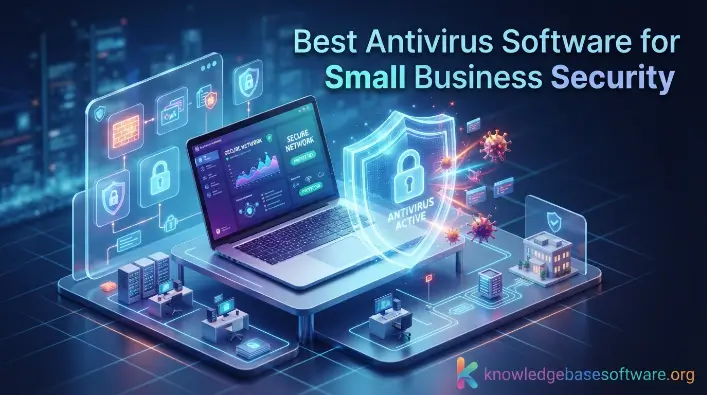
Welcome to knowledgebasesoftware. In today’s digital world, small businesses are increasingly targeted by cyberattacks due to limited security resources. Malware, ransomware, and phishing attacks can disrupt operations, expose customer data, and cause significant financial losses. This makes antivirus software for small businesses an essential investment, offering malware detection, ransomware protection, endpoint security, and phishing protection.
As businesses adopt cloud applications, remote work, and digital payment systems, security risks continue to increase. Employees use multiple devices and access company data from different locations, making reliable cybersecurity software essential for protecting sensitive information and preventing malicious activity.
What is Antivirus Software for Small Business?
Antivirus software for small businesses is a specialized security solution designed to protect company computers, servers, mobile devices, and networks from cyber threats such as viruses, malware, ransomware, and phishing attacks. Unlike consumer security products, business antivirus solutions offer advanced features that help organizations manage security across multiple devices from a single platform. Modern solutions combine endpoint protection, malware detection, and cybersecurity management tools to help businesses reduce risks, protect sensitive data, and maintain uninterrupted operations.
Basic Definition and Function
At its core, antivirus software works by continuously monitoring systems for malicious activities and identifying files or programs that may harm business operations. It uses technologies such as signature-based detection, behavioral analysis, and artificial intelligence to recognize both known and emerging threats. This proactive approach helps companies avoid data breaches and costly downtime.
Modern antivirus software for small businesses goes far beyond traditional virus removal. Today’s solutions provide real-time protection, threat intelligence, and automated security updates that keep businesses protected against constantly evolving cyber risks. By scanning files, applications, and network activity, antivirus software creates a strong first line of defense for organizations of all sizes.
- How antivirus software works: The software scans files and programs, compares them with known threat databases, and analyzes suspicious behavior to identify and block malicious activities.
- Real-time scanning and threat detection: Continuous monitoring allows the antivirus system to detect threats instantly and prevent malware from infecting devices or spreading across the network.
Difference Between Personal and Business Antivirus
Personal antivirus products are designed for individual users and usually focus on protecting a single device or a small number of computers. Business antivirus solutions, however, are built to secure entire organizations by offering centralized administration, advanced reporting, and policy management capabilities. This makes them far more suitable for companies with multiple employees and connected devices.
Another important difference is scalability. Antivirus software for small businesses can easily grow alongside a company, allowing administrators to add devices, manage user permissions, and monitor security from one location. These solutions often include additional network security, cloud management, and device control features that are rarely available in standard consumer antivirus products.
- Multi-device management: Business antivirus allows companies to protect and monitor multiple computers, servers, smartphones, and tablets from a single security platform.
- Centralized control panel: Administrators can manage updates, deploy security policies, review reports, and respond to threats across all company devices through one dashboard.
Read Also: Best Collaboration Software for Small Business Tools
Why Small Businesses Need Antivirus Software
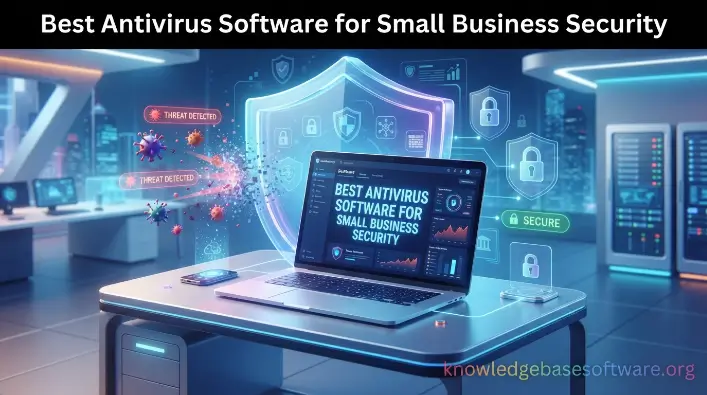
The digital landscape has become increasingly dangerous for organizations of every size, and small businesses are no exception. Cybercriminals often target smaller companies because they typically have fewer security resources and weaker defenses than large enterprises. Investing in antivirus software for small businesses is essential for protecting sensitive information, maintaining daily operations, and reducing the risk of costly cyber incidents. Modern solutions provide malware protection, endpoint security, and ransomware protection that help businesses defend themselves against constantly evolving threats.
Increasing Cyber Attacks on SMBs
Small and medium-sized businesses (SMBs) have become attractive targets for cybercriminals because many lack dedicated IT teams and advanced security tools. Attackers frequently use automated methods to identify vulnerable systems, making even the smallest company a potential victim of malware infections, data theft, or network breaches.
The rise of remote work and cloud-based applications has also expanded the number of potential entry points for cyberattacks. Without proper cybersecurity software and real-time threat detection, businesses may struggle to identify and stop attacks before significant damage occurs. This is why antivirus software for small businesses plays a crucial role in preventing cyber threats and securing company data.
- Ransomware trends: Ransomware attacks continue to increase, with criminals encrypting business files and demanding payment in exchange for restoring access.
- Phishing attacks: Cybercriminals use deceptive emails and messages to trick employees into revealing passwords, financial information, or downloading malicious software.
Financial and Data Protection Risks
A successful cyberattack can have serious financial consequences for small businesses. The costs associated with system recovery, business downtime, and lost productivity can quickly add up and put significant pressure on company resources. In some cases, businesses may also lose valuable customer information or intellectual property.
Data protection has become a major concern as organizations collect and store increasing amounts of digital information. Effective antivirus software for small businesses helps reduce these risks by providing data security, threat monitoring, and proactive defense mechanisms that prevent unauthorized access to sensitive information.
- Data loss prevention: Security tools help prevent accidental deletion, theft, or corruption of important business files and customer records.
- Compliance and legal risks: Businesses that fail to protect sensitive data may face regulatory penalties, legal action, and costly compliance violations.
Business Continuity and Trust
Cybersecurity incidents can disrupt daily operations and make it difficult for companies to serve customers effectively. System outages, lost data, or compromised accounts can result in significant downtime and reduced productivity. Implementing antivirus software for small businesses helps ensure that critical systems remain secure and operational.
Customer trust is one of the most valuable assets any business can have. Clients expect companies to protect their personal and financial information. By using strong network security and endpoint protection measures, businesses can demonstrate their commitment to safeguarding customer data and maintaining a positive reputation.
- Customer data protection: Antivirus solutions help secure confidential customer information from unauthorized access, theft, and cyberattacks.
- Reputation management: Strong cybersecurity practices help businesses maintain customer confidence and avoid reputational damage caused by data breaches or security incidents.
Key Features of Antivirus Software
Modern antivirus software for small businesses offers much more than traditional virus detection. Today’s security solutions are designed to protect organizations from a wide range of cyber threats, including ransomware, phishing scams, and network attacks. Businesses need comprehensive security tools that can monitor systems, detect suspicious activity, and respond to threats in real time. Advanced features such as endpoint protection, malware detection, network security, and threat intelligence help companies build a strong defense against evolving cyber risks while ensuring business continuity and data protection.
Real-Time Threat Protection
Real-time threat protection is one of the most important features of any business antivirus solution. It continuously monitors files, applications, and system activities to identify malicious behavior before it can cause damage. Instead of waiting for scheduled scans, the software actively examines everything that enters or runs on the device.
For small businesses, this feature significantly reduces the risk of infections spreading across multiple systems. Modern antivirus software for small businesses uses real-time protection and behavioral analysis to stop threats immediately, minimizing downtime and protecting valuable business data from cybercriminals.
Firewall and Network Security
A firewall acts as a barrier between a company’s internal network and external threats. It monitors incoming and outgoing traffic and blocks unauthorized access attempts that could compromise business systems. This layer of protection is essential because many cyberattacks begin by exploiting network vulnerabilities.
In addition to traditional firewalls, many antivirus solutions include advanced network security tools that identify suspicious connections and monitor unusual activity. These capabilities help businesses prevent hackers from gaining access to sensitive information and reduce the likelihood of costly security breaches.
Ransomware Protection Tools
Ransomware has become one of the most dangerous cyber threats facing small businesses today. These attacks encrypt files and demand payment in exchange for restoring access, often causing severe financial and operational damage. Standard antivirus protection alone may not be enough to stop sophisticated ransomware attacks.
Modern antivirus software for small businesses includes dedicated ransomware protection features that monitor file behavior and block suspicious encryption attempts. Some solutions also provide secure backup options and file recovery tools, helping businesses recover quickly if an attack occurs.
Email and Phishing Protection
Email remains one of the primary methods cybercriminals use to target businesses. Employees may unknowingly click on malicious links, download infected attachments, or share sensitive information with attackers posing as trusted contacts. A single phishing email can compromise an entire network.
Advanced antivirus solutions include email security and phishing protection technologies that scan incoming messages, identify dangerous attachments, and block fraudulent websites. These tools help businesses reduce human error and create a safer communication environment for employees.
Cloud-Based Security Management
Cloud-based security management has become increasingly important as businesses adopt remote work and digital collaboration tools. Instead of managing security separately on each device, administrators can monitor and control protection from a centralized online dashboard.
This feature makes antivirus software for small businesses easier to deploy, update, and maintain. Through cloud management platforms, businesses can apply security policies, monitor threats in real time, and manage multiple devices from any location, improving efficiency while strengthening overall cybersecurity.
Types of Antivirus Solutions for Small Businesses
Choosing the right antivirus software for small businesses depends on a company’s size, security requirements, and IT resources. Modern businesses can select from several types of antivirus solutions, each offering different features and management capabilities. From cloud-based platforms to advanced AI-driven tools, every solution is designed to address specific cybersecurity challenges. Understanding these options helps organizations choose the right combination of endpoint protection, malware prevention, and network security to safeguard their digital assets.
Cloud-Based Antivirus Solutions
Cloud-based antivirus solutions are managed through an online platform rather than being installed and controlled entirely on local servers. These systems automatically update security databases and allow administrators to monitor devices remotely through a centralized dashboard. This approach reduces the need for extensive IT infrastructure and simplifies security management.
For small businesses, cloud-based solutions offer flexibility and scalability. As companies grow, they can easily add new devices and users without making significant hardware investments. Modern antivirus software for small businesses often includes cloud security features that provide real-time monitoring, automated updates, and remote threat management from virtually any location.
On-Premise Security Systems
On-premise security systems are installed and managed directly within a company’s own network and servers. Businesses have complete control over configuration settings, security policies, and data management processes. This type of solution is often preferred by organizations that have strict compliance requirements or sensitive information that must remain within their internal infrastructure.
Although on-premise systems provide greater control, they also require dedicated IT resources and ongoing maintenance. Businesses are responsible for managing updates, backups, and security monitoring. Even so, many organizations choose this type of antivirus software for small businesses because it offers enhanced customization and stronger control over data security and network protection.
Endpoint Security Platforms
Endpoint security platforms are designed to protect every device connected to a business network, including desktops, laptops, smartphones, tablets, and servers. Since employees often work from multiple locations and devices, endpoint protection has become an essential component of modern cybersecurity strategies.
These platforms provide centralized visibility and allow administrators to monitor threats across all connected devices. Advanced antivirus software for small businesses integrates endpoint security tools that detect suspicious behavior, isolate compromised devices, and prevent malware from spreading throughout the organization. This comprehensive approach significantly improves overall business security.
AI-Powered Antivirus Tools
Artificial intelligence has transformed the way antivirus software detects and responds to cyber threats. Traditional antivirus solutions primarily rely on known malware signatures, but AI-powered systems analyze behavior patterns and identify unusual activities that may indicate new or previously unknown threats.
AI-driven antivirus software for small businesses offers faster and more accurate threat detection by continuously learning from emerging attack methods. These solutions use threat intelligence and behavioral analysis to identify sophisticated cyberattacks before they cause damage. As cyber threats become increasingly complex, AI-powered tools are becoming an essential part of modern business cybersecurity strategies.
How to Choose the Best Antivirus Software
Selecting the right antivirus software for a small business requires more than simply choosing the most popular product on the market. Every business has unique security needs based on its size, industry, budget, and technology infrastructure. The ideal solution should provide comprehensive protection while remaining easy to manage and cost-effective. By carefully evaluating factors such as device requirements, pricing, security capabilities, and support services, businesses can invest in a solution that delivers strong cybersecurity protection, endpoint security, and long-term value.
Business Size and Device Count
The size of your business plays an important role in determining the type of antivirus solution you need. A small company with a few employees may require only basic protection for several computers, while a growing organization with remote workers and multiple locations may need advanced security management and centralized administration.
It is also important to consider the number and types of devices that require protection. Modern antivirus software for small businesses should be able to secure desktops, laptops, smartphones, tablets, and servers without affecting performance. Choosing a scalable solution ensures that your security system can grow alongside your business and continue providing effective device protection and network security.
Budget and Pricing Plans
Budget is often one of the biggest considerations for small businesses when purchasing security software. Antivirus providers offer various pricing models, including monthly subscriptions, annual plans, and per-device licensing. Understanding your company’s financial limitations can help narrow down the available options.
However, focusing solely on price can be a costly mistake. Low-cost solutions may lack advanced features such as ransomware protection, cloud management, or dedicated customer support. Investing in high-quality antivirus software for a small business can prevent expensive security incidents and provide better long-term value than choosing the cheapest option available.
Security Features Required
Different businesses face different cybersecurity risks, so it is important to identify the features that are most relevant to your organization. Some companies may need advanced email protection and anti-phishing tools, while others may prioritize firewall management or secure remote access capabilities.
Before making a decision, create a list of essential security requirements and compare them with the features offered by different providers. Effective antivirus software for small businesses should include real-time protection, malware detection, endpoint protection, and comprehensive threat monitoring to ensure complete security coverage.
Ease of Use and Support
Even the most advanced security solution can become ineffective if it is difficult to use or manage. Small businesses often have limited IT resources, making it essential to choose software with an intuitive dashboard and simple administration tools. Easy deployment and automated updates can significantly reduce management time and improve efficiency.
Customer support is equally important when dealing with cybersecurity issues. Reliable antivirus software for small businesses should provide access to technical assistance, knowledge bases, and troubleshooting resources. Strong vendor support ensures that businesses can quickly resolve security concerns and maintain effective cybersecurity management without unnecessary disruptions.
Best Practices for Antivirus Security
Installing antivirus software for small businesses is only the first step toward building a strong cybersecurity strategy. To maximize protection, businesses must combine antivirus tools with effective security practices and employee awareness programs. Cyber threats continue to evolve, and relying solely on software is rarely enough to prevent every attack. By following proven security practices and implementing proper cybersecurity management, data protection, and endpoint security measures, businesses can significantly reduce their risk of becoming victims of cybercrime.
Regular Software Updates
Keeping software up to date is one of the simplest yet most effective ways to improve cybersecurity. Software developers regularly release updates and security patches to fix vulnerabilities that hackers may exploit. Outdated operating systems, applications, and antivirus programs can leave businesses exposed to malware and other cyber threats.
Modern antivirus software for small businesses usually includes automatic updates to ensure that the latest virus definitions and security improvements are installed immediately. Businesses should also establish a routine for updating all devices and applications to maintain strong malware protection and reduce potential security risks.
Employee Cybersecurity Training
Employees are often the first line of defense against cyberattacks, but they can also be one of the biggest security risks if they are not properly trained. Many successful attacks begin with human errors, such as clicking suspicious links, opening malicious email attachments, or sharing confidential information with unauthorized individuals.
Regular training helps employees recognize threats and respond appropriately to suspicious activities. Businesses using antivirus software for small businesses should complement their security tools with ongoing cybersecurity awareness programs that teach staff how to identify phishing scams, practice safe browsing habits, and follow company security policies.
Strong Password Policies
Weak passwords remain one of the most common causes of security breaches. Cybercriminals often use automated tools to guess simple passwords or exploit reused credentials across multiple accounts. Implementing strong password policies can significantly reduce the chances of unauthorized access.
Businesses should require employees to create complex passwords, change them periodically, and avoid reusing credentials on different platforms. Combining antivirus software for small businesses with identity protection measures such as password managers and multi-factor authentication creates an additional layer of security that helps protect sensitive business information.
Backup and Recovery Planning
No security system is completely immune to cyber threats, which is why businesses should always prepare for worst-case scenarios. Hardware failures, ransomware attacks, and accidental data deletion can all lead to the loss of critical information if proper backup systems are not in place.
A comprehensive backup and recovery strategy ensures that important files can be restored quickly after an incident. Businesses should maintain regular backups and test recovery procedures frequently. When combined with antivirus software for small businesses, effective data recovery and business continuity planning can minimize downtime and help organizations recover from cyber incidents more efficiently.
Common Mistakes Small Businesses Make
Many small businesses invest in security tools but still leave themselves vulnerable because of poor cybersecurity practices and a lack of planning. Even the best antivirus software for small businesses cannot provide complete protection if organizations ignore basic security measures. Common mistakes such as neglecting updates, using weak passwords, and failing to train employees can significantly increase the risk of cyberattacks. By understanding these errors and implementing stronger cybersecurity practices and data protection strategies, businesses can build a more secure and resilient environment.
Common Mistakes
- Using free antivirus software without advanced security features leaves businesses vulnerable to sophisticated cyber threats and ransomware attacks.
- Ignoring software updates creates security gaps that hackers can exploit to gain unauthorized access to business systems.
- Reusing weak passwords across multiple accounts significantly increases the risk of credential theft and data breaches.
- Failing to train employees on cybersecurity awareness makes phishing attacks and social engineering attempts more successful.
- Not enabling multi-factor authentication leaves business accounts easier for cybercriminals to compromise and misuse.
- Storing important business data without backups can result in permanent information loss after ransomware incidents.
- Allowing employees unrestricted access to sensitive information increases the chances of accidental or intentional data exposure.
- Ignoring suspicious emails and security alerts can allow malware infections to spread throughout company networks.
- Using outdated operating systems and applications exposes devices to known vulnerabilities and unpatched security weaknesses.
- Assuming small businesses are not targeted by hackers often leads to inadequate security investments and poor preparedness.
Antivirus Software Pricing Overview
The cost of antivirus software for small businesses can vary significantly depending on the provider, the number of devices, and the security features included in the package. Some businesses only require basic protection for a few computers, while others need advanced tools for managing multiple devices and preventing sophisticated cyber threats. Understanding different pricing structures helps companies choose a solution that fits their budget while still providing effective cybersecurity protection, endpoint security, and malware prevention.
Free vs Paid Plans
Free antivirus solutions can provide basic protection against common threats such as viruses and malware. They are often suitable for individual users or very small businesses with minimal security requirements and limited budgets.
However, paid solutions typically offer far more comprehensive protection. Premium antivirus software for small businesses includes features such as ransomware protection, centralized management, email security, and dedicated customer support, making it a better long-term investment for growing companies.
Subscription-Based Pricing Models
Most business antivirus providers use subscription-based pricing, allowing companies to pay monthly or annually for their security services. Pricing usually depends on the number of users, devices, and additional security features included in the plan.
Subscription models offer flexibility because businesses can easily upgrade or downgrade their plans as their needs change. This approach makes antivirus software for small businesses more affordable and ensures access to the latest security updates and threat protection technologies.
Enterprise-Level Features Cost
Advanced security capabilities generally come at a higher price because they include additional tools and management features. Enterprise-level solutions often provide advanced threat detection, compliance reporting, and extensive device management capabilities.
Although these solutions require a larger investment, they can deliver significant value for businesses with complex security needs. Investing in antivirus software for small businesses that includes threat intelligence, cloud management, and advanced monitoring features can help prevent costly cyber incidents and improve overall security.
Frequently Asked Questions
What is the best antivirus software for small businesses?
The best antivirus software for small businesses depends on needs, but top choices include Bitdefender, Norton, McAfee, and ESET due to strong protection, centralized control, and advanced threat detection features.
Do small businesses really need antivirus protection?
Yes, small businesses need antivirus protection because they are frequent cyberattack targets. It helps prevent malware infections, data theft, phishing attacks, and financial losses caused by security breaches and downtime.
How much does antivirus software cost for SMBs?
Antivirus software for SMBs typically costs between monthly per-device subscriptions and annual plans. Pricing depends on features, the number of devices, and the level of protection included in the security package.
Can antivirus software stop ransomware attacks?
Modern antivirus software can block many ransomware attacks using behavioral detection, real-time monitoring, and file protection features. However, combining it with backups increases overall protection and recovery chances.
Is cloud-based antivirus better for small businesses?
Cloud-based antivirus is often better for small businesses because it offers remote management, automatic updates, lower maintenance, and scalable protection across multiple devices without requiring heavy IT infrastructure.
Conclusion
In today’s rapidly evolving digital environment, antivirus software for small businesses is no longer optional; it is a critical requirement for protecting operations, customers, and sensitive data. Small businesses face the same cyber threats as large enterprises, including malware, phishing, and ransomware, but often with fewer resources to defend themselves. This makes strong cybersecurity protection and endpoint security essential for maintaining stability and trust.
Choosing the right antivirus solution and combining it with best practices such as regular updates, employee training, and secure backup systems creates a powerful defense against modern cyber threats. Ultimately, investing in reliable antivirus software for small businesses helps ensure long-term business continuity, financial safety, and a stronger digital reputation in an increasingly connected world.