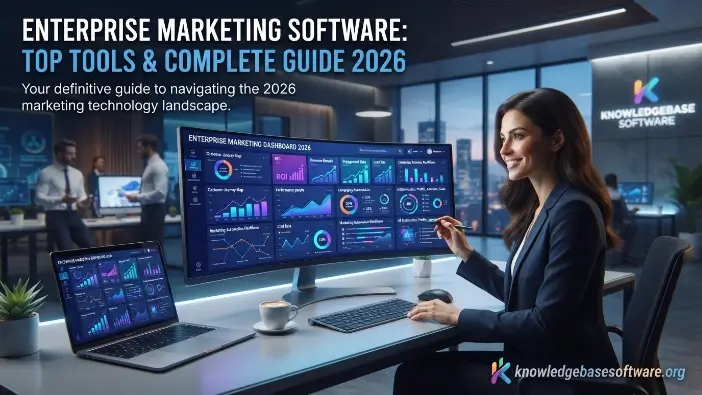
Enterprise marketing software helps businesses streamline marketing campaigns, automate workflows, and manage customer data from one centralized platform. It enables large organizations to coordinate marketing activities across multiple channels, track campaign performance, and deliver personalized customer experiences. By integrating CRM systems, marketing automation, and advanced analytics, these platforms help improve efficiency, strengthen customer relationships, and support business growth.
As businesses expand, managing customer interactions and marketing campaigns becomes more complex. Enterprise marketing software provides scalable solutions, real-time insights, and omnichannel marketing capabilities that help teams make smarter decisions and achieve better results. From automating lead nurturing to measuring return on investment, these tools give enterprises greater control over their marketing strategies and help them stay competitive in a rapidly changing digital landscape.
What Is Enterprise Marketing Software?
Enterprise marketing software is a suite of integrated tools that helps large organizations plan, automate, manage, and measure marketing campaigns across multiple channels. These platforms handle large volumes of customer data, complex workflows, and collaboration across teams, regions, and business units.
Core Definition
Enterprise marketing software combines marketing automation, customer data management, analytics, and campaign execution in one centralized system. It helps marketing teams manage the customer journey, from awareness and acquisition to conversion and retention, without depending on disconnected tools.
These platforms also provide scalable marketing software capabilities that adapt as businesses grow. They support reliable data management and coordinated campaigns for organizations serving thousands or millions of customers.
How It Differs from Standard Marketing Tools
Standard marketing tools typically focus on individual tasks, such as email marketing, social media scheduling, or basic analytics. Enterprise platforms offer broader integration, automation, and scalability to support complex marketing operations.
Enterprise-grade solutions, often delivered as enterprise SaaS marketing tools, provide:
- Deep integration with CRM and sales systems
- Advanced automation workflows across multiple channels
- Real-time analytics and predictive insights
- Multi-region and multi-brand campaign management
- Enterprise-level security, governance, and compliance
Enterprise platforms also function as omnichannel marketing platforms, connecting customer interactions across email, websites, mobile apps, social media, and paid advertising to support consistent messaging.
Key Components of Enterprise Platforms
Enterprise marketing platforms combine several modules to manage marketing activities efficiently:
- Customer Data Platform (CDP): Collects and unifies customer information from multiple sources into consolidated profiles.
- Marketing Automation Engine: Automates email sequences, lead nurturing, and behavior-based campaigns.
- CRM Integration Layer: Connects marketing data with sales and customer support systems.
- Analytics and Reporting Dashboard: Measures campaign performance, return on investment, and customer behavior.
- Omnichannel Campaign Manager: Coordinates campaigns across email, SMS, social media, websites, and paid advertising.
Together, these components help enterprises manage campaigns, unify customer data, automate marketing workflows, and deliver personalized experiences across customer touchpoints.
Read Also: marketing intelligence software
Key Features of Enterprise Marketing Software
The power of enterprise marketing software lies in combining essential marketing functions within one scalable platform. These systems integrate automation, customer data, analytics, and campaign management to help enterprises streamline operations, understand customer behavior, and coordinate marketing activities across multiple channels.
Marketing Automation
Marketing automation is a core feature of enterprise marketing software, allowing businesses to automate repetitive tasks such as email campaigns, lead nurturing, and customer follow-ups. Automated workflows help teams deliver timely messages based on customer behavior while reducing manual work.
For large organizations, automation supports efficient growth and consistent communication. Using B2B marketing automation tools, enterprises can build workflows that respond to customer actions throughout the customer lifecycle.
Customer Data Management (CDP/CRM)
Enterprise marketing software uses customer data platforms (CDPs) and customer relationship management (CRM) systems to collect, organize, and unify information from multiple sources. This creates a centralized view of customer profiles and interactions.
Unified customer data helps marketing teams understand preferences, behavior, and engagement history. These insights support audience segmentation, targeted campaigns, and more effective marketing decisions.
AI-Powered Analytics
AI-powered analytics helps enterprise marketing software identify patterns, analyze campaign performance, and generate actionable insights from large datasets. These capabilities allow businesses to evaluate results and make more informed marketing decisions.
Through predictive analytics marketing, organizations can forecast potential customer behavior, identify valuable audience segments, and adjust campaigns based on emerging trends.
Multi-Channel Campaign Management
Multi-channel campaign management enables enterprise marketing software to coordinate marketing campaigns across email, social media, mobile apps, and paid advertising. Centralized management helps businesses maintain consistent messaging across customer touchpoints.
This capability is particularly valuable for enterprises operating across multiple regions, as it helps teams coordinate campaigns and maintain consistent brand communication.
Personalization & Segmentation
Personalization and segmentation enable enterprise marketing software to organize audiences according to demographics, behavior, preferences, and engagement history.
Marketing teams can use these segments to deliver relevant content to specific customer groups. Targeted messaging can improve engagement, increase conversion opportunities, and strengthen long-term customer relationships.
Best Enterprise Marketing Software Tools
Choosing the right enterprise marketing software helps large organizations automate campaigns, analyze customer data, and manage marketing activities across multiple channels. Leading platforms offer different combinations of automation, analytics, CRM integration, and personalization features. Businesses should compare these capabilities with their operational requirements, technical environment, and long-term marketing goals.
Salesforce Marketing Cloud
Salesforce Marketing Cloud is an enterprise marketing software platform that offers CRM integration, customer journey management, and AI-supported insights. It helps organizations coordinate personalized campaigns across multiple marketing channels.
Its connection with marketing CRM software enables businesses to align marketing activities with sales and customer service data, supporting coordinated customer engagement.
Adobe Experience Cloud
Adobe Experience Cloud is an enterprise marketing software suite that combines analytics, content management, advertising, and commerce capabilities to support personalized digital experiences.
As one of the established marketing automation platforms, it helps enterprises coordinate customer communications, analyze campaign performance, and deliver targeted content across digital channels.
HubSpot Enterprise
HubSpot Enterprise is a scalable enterprise marketing software solution that combines CRM functionality, marketing automation, and reporting tools.
As part of the broader category of enterprise SaaS tools, HubSpot supports third-party integrations that help businesses connect marketing applications and manage customer interactions more efficiently.
Oracle Marketing Cloud
Oracle Marketing Cloud is a data-focused enterprise marketing software platform designed for organizations that need advanced segmentation, customer insights, and cross-channel campaign automation.
Its marketing CRM software capabilities help enterprises use customer data and analytics to develop targeted campaigns and coordinate marketing activities.
SAP Marketing Cloud
SAP Marketing Cloud is an enterprise marketing software solution designed to integrate with SAP’s broader business ecosystem. It can help organizations connect marketing data with other business processes, particularly when they already use SAP systems.
Its marketing capabilities support customer insights, automated workflows, and coordinated data management across departments and markets.
Benefits of Enterprise Marketing Software
Enterprise marketing software helps organizations centralize marketing operations, automate workflows, analyze campaign results, and coordinate activities across multiple channels. These capabilities can improve efficiency, support better decisions, and help businesses manage customer relationships at scale.
Benefits of Enterprise
- Improves marketing efficiency by automating repetitive tasks and reducing manual work.
- Enhances customer insights by combining information from multiple sources into a centralized system.
- Increases return on investment by using analytics to evaluate and optimize campaign performance.
- Supports scalable campaign management across multiple channels, regions, and customer segments.
- Strengthens customer engagement through personalized messages based on behavior and preferences.
- Supports faster decision-making with AI-assisted insights and predictive analytics.
- Helps control marketing costs by reducing duplicated tools and consolidating marketing functions.
- Improves lead generation through audience segmentation and targeted campaigns.
- Strengthens collaboration between marketing, sales, and customer service teams through CRM integration.
- Maintains brand consistency through centralized campaign management and coordinated messaging.
Challenges and Limitations
Although enterprise marketing software provides advanced marketing capabilities, implementation can involve financial, technical, and operational challenges. Organizations need appropriate planning, resources, and training to integrate these platforms effectively. Common enterprise software challenges include implementation costs, system compatibility, and employee adoption.
High Implementation Cost
One challenge of enterprise marketing software is the cost of implementation. Expenses may include software licensing, infrastructure, customization, integration, and ongoing maintenance.
Organizations should also account for employee training, technical support, and system upgrades. Evaluating the total cost of ownership helps businesses plan their budgets and understand the long-term investment required.
Complexity of Integration
Integration can be challenging when implementing enterprise marketing software. Platforms may need to connect with CRM systems, ERP applications, data warehouses, and third-party marketing tools.
These connections can create SaaS integration issues when systems are incompatible or use disconnected data formats. Careful planning, technical expertise, and ongoing monitoring help maintain reliable data exchange between platforms.
Learning Curve for Teams
Learning to use enterprise marketing software can take time, particularly for teams moving from simpler tools. Employees may need training to understand automation workflows, analytics dashboards, and customer data features.
Marketing stack complexity can make adoption more difficult when multiple systems and processes are involved. Proper onboarding and continuous training help teams use the platform effectively.
How to Choose the Right Enterprise Marketing Software
Selecting the right enterprise marketing software helps organizations align marketing technology with business objectives, operational requirements, and future growth. Businesses should assess platform capabilities, integration options, scalability, vendor support, and pricing before making a decision.
Define Business Goals
Defining business goals is the first step in selecting enterprise marketing software. Organizations should identify priorities such as generating qualified leads, improving customer retention, increasing conversions, or expanding brand awareness.
Clear objectives help businesses select relevant features and measure whether the platform supports their marketing goals.
Evaluate Integration Capabilities
Integration is an important consideration when choosing enterprise marketing software. The platform should connect effectively with existing CRM systems, ERP applications, analytics tools, and other marketing software.
Reliable integration improves data sharing and helps teams maintain a consistent view of customer interactions. Poor integration can create data silos, duplicate work, and inconsistent reporting.
Check Scalability & Support
Scalability is essential when evaluating enterprise marketing software, particularly for growing organizations. The platform should accommodate increasing data volumes, larger customer bases, and more complex campaigns.
Reliable vendor support, regular updates, and training resources also help businesses maintain performance and resolve technical issues.
Compare Pricing Models
Pricing models for enterprise marketing software may depend on user numbers, data volumes, available features, or deployment requirements.
Businesses should compare initial fees with ongoing costs such as integration, customization, training, and maintenance. Understanding the total investment helps organizations select a solution that fits their budget as operations grow.
Future of Enterprise Marketing Software
The future of enterprise marketing software is increasingly shaped by artificial intelligence, machine learning, automation, and real-time analytics. These technologies help enterprises improve customer targeting, personalize communications, and make data-driven decisions across marketing channels.
Future of Enterprise
- AI-driven automation will help optimize campaigns and reduce repetitive marketing tasks.
- Predictive analytics will help forecast customer behavior and improve campaign planning.
- Hyper-personalization will deliver relevant content based on customer preferences and behavior.
- Omnichannel integration will coordinate customer interactions across email, mobile, web, and social platforms.
- Advanced data privacy tools will help businesses protect customer information and meet applicable compliance requirements.
- No-code and low-code tools will allow marketers to create workflows with less developer involvement.
- Real-time data processing will support faster campaign adjustments based on customer engagement.
- Cloud-native architectures will improve scalability and flexibility for enterprise marketing operations.
- Generative AI will assist with creating and adapting marketing content across campaigns.
- Customer journey intelligence will help enterprises understand customer behavior and improve marketing performance.
Frequently Asked Questions
What is enterprise marketing software used for?
Enterprise marketing software is used to manage, automate, and optimize large-scale marketing campaigns across multiple channels while improving customer engagement and data-driven decision-making.
How does enterprise marketing software differ from traditional tools?
Unlike traditional tools, enterprise marketing software integrates automation, analytics, CRM, and omnichannel capabilities into a single scalable platform for complex business needs.
Which companies use enterprise marketing software?
Large organizations in industries like finance, healthcare, retail, and SaaS use enterprise marketing software to handle high-volume customer interactions and global marketing operations.
Is enterprise marketing software expensive?
Yes, most enterprise marketing software solutions are costly due to advanced features, customization, integration requirements, and ongoing support and maintenance needs.
What are the main benefits of enterprise marketing software?
The main benefits include improved efficiency, better customer insights, automation of workflows, higher ROI, and scalable marketing campaign management across multiple channels.
Conclusion
In today’s competitive digital landscape, enterprise marketing software has become a vital foundation for organizations aiming to scale their marketing efforts efficiently and intelligently. By unifying automation, analytics, CRM integration, and omnichannel campaign management, these platforms enable businesses to deliver consistent and personalized customer experiences across every touchpoint.
As enterprises continue to adopt advanced technologies such as AI, predictive analytics, and real-time data processing, enterprise marketing software will play an even more critical role in driving growth and innovation. Companies that invest in the right solution today will be better positioned to improve ROI, streamline operations, and stay ahead in an increasingly data-driven marketplace.