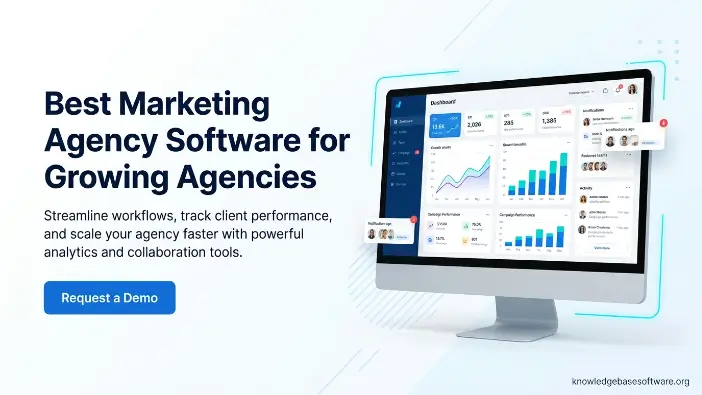
Marketing agencies today operate in a highly competitive digital environment where efficiency, speed, and accuracy directly impact client success. Managing multiple campaigns, clients, and performance reports manually can quickly become overwhelming and lead to missed opportunities. This is why many agencies are turning to marketing agency software to streamline their operations and centralize all essential workflows in one place.
With the rise of automation and data-driven decision-making, agencies can no longer rely on disconnected tools and manual processes. Modern marketing agency software helps teams manage projects, track performance, automate repetitive tasks, and improve collaboration across departments. As a result, agencies can focus more on strategy, creativity, and client growth rather than administrative workload.
What Is Marketing Agency Software?
Marketing agency software is a specialized digital solution designed to help marketing agencies manage all their core operations in one centralized platform. Its main purpose is to simplify complex workflows such as client management, campaign execution, reporting, and team collaboration. Instead of using multiple disconnected tools, agencies can rely on one system to handle everything more efficiently and accurately. This improves productivity, reduces manual errors, and ensures better coordination between teams and clients. Overall, it acts as a complete operational hub for modern marketing agencies.
Definition and Purpose
- A unified platform built specifically for marketing agencies
- Centralizes client, campaign, and project management
- Reduces dependency on multiple separate tools
- Improves efficiency and workflow automation
Core Functions
- Client relationship and CRM management
- Campaign planning, execution, and tracking
- Task and project management for teams
- Automated reporting and performance analytics
- Integration with marketing channels like email, social media, and ads
How It Differs from General Business Tools
- Designed specifically for agency workflows, not generic businesses
- Includes marketing-focused features like campaign tracking
- Offers advanced reporting tailored for marketing KPIs
- Supports multi-client management in one dashboard
- Provides automation built for marketing processes rather than general operations
Key Problems It Solves
Many agencies struggle to manage daily operations efficiently when systems are fragmented, and communication channels are scattered. This is where marketing agency software becomes essential, as it brings all client interactions, project updates, and campaign data into a single unified platform. By centralizing communication, teams can avoid confusion, reduce missed messages, and ensure every client request is tracked properly. It also improves transparency between departments, making collaboration smoother and more structured across the entire agency workflow.
In addition to communication issues, agencies often face challenges in handling repetitive administrative tasks and maintaining accurate performance reports. Marketing agency software helps eliminate these inefficiencies by automating reporting processes and standardizing workflows. This reduces human error, saves valuable time, and allows teams to focus more on strategy and execution rather than manual data handling.
- Disorganized client communication across multiple channels
- Manual reporting issues that consume time and increase errors
- Lack of workflow automation leading to repetitive tasks
Why Agencies Need Marketing Agency Software
Modern marketing agencies face increasing pressure to manage more clients, deliver faster results, and maintain consistent performance across multiple campaigns. Without a centralized system, operations often become chaotic, leading to delays, miscommunication, and inefficiencies. This is where marketing agency software becomes essential, as it provides a structured environment to manage everything from client onboarding to campaign reporting in one place. It helps agencies eliminate manual processes, improve collaboration, and maintain full visibility over ongoing projects. As agencies scale, the need for automation and streamlined workflows becomes even more critical to stay competitive and profitable.
Scalability Challenges
- Difficulty managing multiple clients and campaigns simultaneously
- Increased workload without structured systems
- Risk of errors when operations are handled manually
- Limited visibility into team performance and project progress
- Challenges in expanding services without increasing overhead
Time-Saving Benefits
- Automates repetitive administrative tasks like reporting and scheduling
- Reduces time spent switching between multiple tools
- Speeds up campaign execution and approval workflows
- Improves productivity by centralizing all operations
- Allows teams to focus on strategy instead of manual work
Improved Client Management
- Centralized client communication and history tracking
- Faster response times to client requests
- Clear visibility into campaign performance for clients
- Better onboarding and relationship management processes
- Enhanced transparency builds stronger client trust
Increased ROI and Efficiency
- Optimized resource allocation across projects
- Reduced operational costs through automation
- Better campaign performance tracking and optimization
- Improved decision-making with real-time data insights
- Higher output with fewer manual resources using marketing agency software
Benefits for Small vs Large Agencies
The value of marketing agency software varies depending on the size and structure of an agency. For small agencies, it often serves as an all-in-one solution that reduces the need for multiple expensive tools. It simplifies daily operations by centralizing tasks like client management, reporting, and campaign tracking. This helps small teams stay organized, control costs, and maintain productivity without requiring large technical resources or complex systems.
For large agencies, the same marketing agency software becomes a powerful engine for automation and collaboration. It supports multiple departments, large client portfolios, and complex workflows by offering advanced features like role-based access, real-time reporting, and cross-team coordination. This ensures consistency across campaigns while allowing different teams to work efficiently within a unified system.
- Small agencies benefit from cost control by reducing the need for multiple tools.
- Large agencies benefit from advanced automation features for complex workflows.
Read Also: marketing planning software
Essential Features of Marketing Agency Software
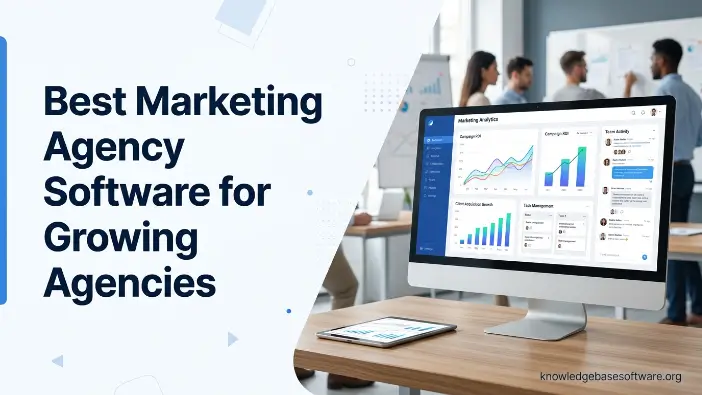
Modern agencies rely on advanced tools to manage clients, campaigns, and performance efficiently. The success of any agency depends on how well its systems are organized and automated. This is why marketing agency software plays a crucial role in bringing all essential functions into one platform. It combines CRM, project management, automation, and analytics to create a seamless workflow. Instead of switching between multiple tools, agencies can manage everything from a single dashboard. This improves productivity, reduces errors, and ensures better collaboration between teams and clients, making daily operations smoother and more scalable for long-term growth.
Client & CRM Management
A strong client and CRM system is one of the most important components of marketing agency software, as it helps agencies manage relationships and communication in a structured way. It ensures that all client information, interactions, and project details are stored in one centralized place. This eliminates confusion caused by scattered data and allows teams to access accurate client history whenever needed. As a result, agencies can deliver more personalized services and maintain stronger, long-term client relationships.
With marketing agency software, agencies can also improve how they handle onboarding and ongoing client engagement. Automated workflows make it easier to guide new clients through each step of the onboarding process, ensuring nothing is missed. This creates a smooth and professional experience from the very beginning and helps build trust between the agency and its clients.
- Lead tracking to monitor potential clients and sales opportunities
- Client onboarding workflows to streamline new client setup and integration
Campaign Management Tools
Effective campaign management is at the core of successful digital marketing, and marketing agency software provides agencies with the structure needed to plan, execute, and monitor campaigns in an organized way. It allows teams to create detailed campaign strategies, assign responsibilities, and track progress in real time. This reduces confusion and ensures that every campaign is aligned with client goals and deadlines. With centralized control, agencies can maintain consistency across all marketing activities while improving overall efficiency and performance.
Using marketing agency software, agencies can also gain better visibility into how campaigns perform across different platforms. Instead of managing each channel separately, teams can oversee everything from one unified dashboard. This improves coordination, reduces manual effort, and helps agencies make faster decisions based on real-time data insights.
- Planning and execution of marketing campaigns with structured workflows
- Multi-channel campaign control across social media, email, SEO, and paid ads
Automation & AI Features
Automation and artificial intelligence are transforming how agencies operate, and marketing agency software is at the center of this transformation. It helps agencies reduce manual workload by automating repetitive tasks such as data collection, reporting, and scheduling. This not only saves time but also improves accuracy and consistency across all marketing activities. By minimizing human effort in routine processes, teams can focus more on strategy, creativity, and client growth, leading to better overall performance.
With the integration of AI capabilities, marketing agency software also enables smarter decision-making through data-driven insights. Agencies can identify trends, optimize campaigns faster, and improve results with minimal manual analysis. These intelligent features help agencies stay competitive in a fast-changing digital landscape where speed and precision are critical.
- Automated reporting for real-time performance updates
- Smart recommendations to optimize campaigns and improve ROI
Analytics & Reporting Dashboards
Analytics and reporting are essential for measuring the success of campaigns, and marketing agency software provides agencies with powerful dashboards to track performance in real time. These dashboards bring all key metrics into one place, allowing teams to monitor campaign effectiveness, audience engagement, and ROI without switching between multiple tools. This helps agencies make faster, data-driven decisions and quickly identify what is working and what needs improvement.
With marketing agency software, reporting becomes more streamlined and customizable, enabling agencies to create detailed insights tailored to client needs. Instead of manually compiling data, teams can generate accurate reports instantly, saving time and reducing errors. This improves transparency and strengthens client trust by providing clear and professional performance updates.
- Real-time performance tracking for campaigns across all channels
- Custom reports tailored to client goals and marketing KPIs
Best Types of Marketing Agency Software
Choosing the right tools is essential for improving productivity and managing complex workflows in modern agencies. Different agencies have different operational needs, which is why various categories of tools exist to support specific functions. The use of marketing agency software helps streamline these operations by combining multiple capabilities such as client management, project tracking, automation, and reporting into structured systems. Instead of relying on a single solution, agencies often use different types of software based on their size, services, and goals. Understanding these categories helps agencies select the right tools that improve efficiency, enhance collaboration, and support long-term business growth effectively.
All-in-One Agency Platforms
All-in-one platforms are a core part of marketing agency software because they combine multiple functions into a single system. These tools typically include CRM, project management, reporting, and automation features in one dashboard. This makes them ideal for agencies that want to reduce tool overload and manage everything from one central location. By using a unified platform, teams can improve workflow efficiency, reduce software costs, and maintain better control over all client projects.
In addition, all-in-one solutions help agencies scale faster by simplifying operations and improving collaboration between teams. Instead of switching between different tools, employees can handle tasks, track campaigns, and generate reports within the same system, saving both time and effort.
CRM-Focused Tools
CRM-focused tools are an important category of marketing agency software designed specifically to manage client relationships and sales pipelines. These tools help agencies store client data, track leads, and monitor communication history in an organized way. This ensures that no opportunity is missed and every client interaction is properly recorded.
They also help improve client retention by enabling personalized communication and structured follow-ups. Agencies can easily manage prospects and convert them into long-term clients with better visibility into the entire customer journey.
Project Management Tools
Project management tools within marketing agency software help agencies plan, assign, and track tasks across different teams and campaigns. These tools ensure that deadlines are met, responsibilities are clearly defined, and project progress is visible at all times. This reduces confusion and improves accountability across the organization.
They are especially useful for managing multiple campaigns simultaneously, allowing teams to prioritize tasks and collaborate effectively. With better organization, agencies can deliver projects on time and maintain consistent quality.
Marketing Automation Platforms
Marketing automation platforms are a powerful part of marketing agency software that focus on reducing manual work through automated workflows. These tools handle repetitive tasks such as email marketing, lead nurturing, scheduling, and reporting. This allows agencies to save time and focus more on strategy and creative execution.
They also improve campaign performance by triggering actions based on user behavior and data insights. This ensures more personalized marketing and better results with less manual effort.
How to Choose the Right Marketing Agency Software
Selecting the right marketing agency software is a critical decision that directly impacts an agency’s efficiency, scalability, and long-term growth. With so many tools available in the market, agencies must carefully evaluate their needs before investing in any platform. The right solution should not only solve current operational challenges but also support future expansion. A well-chosen system can simplify workflows, improve collaboration, and enhance overall productivity. On the other hand, choosing the wrong software can lead to wasted resources, poor adoption by teams, and fragmented processes that slow down performance and client delivery.
Budget Considerations
- Compare pricing plans based on features offered
- Avoid overpaying for unused advanced functions
- Consider long-term subscription costs and ROI
- Balance affordability with essential capabilities
Team Size and Scalability
- Choose software that matches the current team size
- Ensure it supports future team expansion
- Look for scalable features for growing workloads
- Supports multi-user collaboration for larger agencies
Integration Requirements
- Must integrate with existing marketing tools
- Supports CRM, email, and analytics platforms
- Reduces manual data transfer between systems
- Improves workflow efficiency across tools
Ease of Use
- Simple and intuitive user interface for fast adoption
- Reduces training time for new team members
- Improves productivity through easy navigation
- Ensures smooth onboarding and daily usage across teams
Common Mistakes to Avoid
When implementing marketing agency software, many agencies make avoidable mistakes that reduce efficiency instead of improving it. One of the most common issues is selecting too many separate tools instead of a unified system. This leads to fragmented workflows, confusion among team members, and unnecessary complexity in daily operations. Another frequent mistake is ignoring integration capabilities, which results in disconnected platforms that do not communicate effectively. This can cause data silos, manual work duplication, and inconsistent reporting across campaigns, ultimately slowing down productivity and decision-making processes.
Another major mistake agencies make is overpaying for advanced features that are rarely used. While marketing agency software often comes with powerful capabilities, not every agency needs enterprise-level functions. Choosing a plan without evaluating actual requirements can waste budget and reduce ROI. Agencies must carefully assess their operational needs and ensure they invest only in features that directly support their workflow and growth strategy.
- Choosing too many tools instead of a centralized platform
- Ignoring integration requirements between marketing systems
- Overpaying for unused or unnecessary premium features
Real-World Use Cases of Marketing Agency Software
In real-world operations, marketing agency software is used by different types of agencies to streamline workflows, improve collaboration, and deliver better client results. It provides a centralized system where teams can manage campaigns, track performance, and handle client communication without switching between multiple tools. This makes daily operations more efficient and organized, especially when managing multiple clients at the same time. Whether an agency focuses on social media, SEO, PPC, or content marketing, the software helps standardize processes, reduce manual effort, and ensure consistent reporting. As a result, agencies can focus more on strategy and results rather than administrative tasks and disconnected workflows.
- Social media agencies use it to schedule posts, track engagement, and manage multiple client accounts from one dashboard.
- SEO agencies rely on it for keyword tracking, audit management, and performance reporting across search campaigns
- PPC management teams use it to monitor ad performance, optimize campaigns, and control budgets efficiently
- Content marketing agencies use it to plan content calendars, manage approvals, and track content performance across channels.
Future of Marketing Agency Software
The future of digital agencies is rapidly evolving, and marketing agency software is expected to become even more intelligent, automated, and interconnected. As agencies handle increasing data volumes and more complex campaigns, traditional manual processes will no longer be sufficient. Future platforms will focus on AI-driven decision-making, seamless integration across tools, and real-time collaboration to improve efficiency and performance. This evolution will allow agencies to deliver faster results, reduce operational costs, and enhance client satisfaction. Ultimately, marketing agency software will shift from being just a management tool to becoming a fully intelligent ecosystem that supports every aspect of marketing operations.
- AI-driven automation to handle repetitive tasks and optimize campaigns automatically
- Predictive analytics to forecast trends, customer behavior, and campaign performance
- Unified marketing ecosystems that integrate all tools into one seamless platform
- Real-time collaboration tools enable teams and clients to work together instantly.
Frequently Asked Questions
What is marketing agency software used for?
It is used to manage clients, campaigns, projects, and reporting in one centralized system. Marketing agency software helps agencies streamline workflows, improve communication, and automate repetitive tasks for better efficiency.
Is marketing agency software suitable for small agencies?
Yes, small agencies benefit greatly because marketing agency software reduces manual work, saves time, and removes the need for multiple expensive tools. It also helps small teams stay organized and scalable.
What features should good marketing agency software have?
Good marketing agency software should include CRM tools, campaign management, automation features, analytics dashboards, and integration capabilities with other marketing platforms.
How does marketing agency software improve productivity?
It improves productivity by automating reporting, organizing tasks, centralizing communication, and reducing time spent switching between different tools. Marketing agency software allows teams to focus more on strategy.
Is marketing agency software worth the investment?
Yes, it is worth it because marketing agency software increases efficiency, improves client management, and helps agencies scale operations while reducing overall operational costs.
Conclusion
In today’s competitive digital landscape, agencies need more than just basic tools to manage their operations effectively. Marketing agency software has become an essential solution for streamlining workflows, improving collaboration, and enhancing overall efficiency. Centralizing client management, campaign execution, automation, and reporting, it helps agencies eliminate manual work and focus more on strategy and growth.
Whether you run a small agency or manage a large team, adopting the right marketing agency software can significantly improve productivity and scalability. It not only saves time and reduces operational costs but also ensures better client satisfaction through organized processes and real-time insights. As the industry continues to evolve, agencies that invest in the right software will stay ahead of the competition and achieve long-term success.