Managing inventory effectively is among the major challenges faced by growing businesses, particularly when operations expand beyond manual management. Many small businesses deal with stock inaccuracies, shipment delays, and limited visibility, all of which can directly affect customer satisfaction and profitability. This is where warehouse management software for small businesses offers an effective solution for simplifying daily warehouse activities and enhancing overall efficiency.
With the right system, businesses can automate inventory monitoring, minimize human errors, and access real-time information about stock levels and order movement. Modern solutions created for small businesses make it easier to manage complicated warehouse operations without needing large teams or costly infrastructure. As competition continues to grow, adopting warehouse management software for small businesses has become more than an option and is now a practical way to achieve smarter and more scalable operations.
Understanding Warehouse Management Software for Small Businesses
Warehouse management software is a digital solution that helps businesses manage and optimize warehouse activities, including inventory tracking, order handling, and stock movement. For growing companies, warehouse management software for small businesses offers a centralized system that replaces manual spreadsheets and minimizes operational inefficiencies. It enables owners to track stock levels in real time, organize product locations, and simplify picking and packing tasks. This leads to greater accuracy and quicker decision-making. By using warehouse management software for small businesses, small enterprises can organize workflows more effectively, lower errors, and create a more efficient and scalable warehouse system that supports long-term growth.
What is Warehouse Management Software?
Warehouse Management Software is a digital system created to manage and oversee warehouse activities such as inventory monitoring, order processing, storage optimization, and shipping coordination. It replaces manual approaches like spreadsheets with automated tools that enhance accuracy, speed, and overall productivity. With this system, businesses can track stock movement in real time, minimize errors, and maintain greater control over warehouse operations.
With warehouse management software for small businesses, companies receive a centralized platform that brings all warehouse functions together in one place. It allows small businesses to monitor inventory levels, organize product locations, and simplify picking and packing activities. This enhances operational visibility and creates smoother workflows from receiving products through final delivery, making warehouse management more organized and scalable.
Why Small Businesses Need It
Small businesses commonly begin with straightforward manual methods such as spreadsheets or basic inventory records, but these approaches can quickly become inefficient as operations expand. Stock counting mistakes, delayed updates, and limited real-time visibility can result in lost sales opportunities and dissatisfied customers. Warehouse management software for small businesses addresses these problems by automating inventory monitoring and delivering accurate, current information about stock levels and order status.
As competition grows, small businesses require quicker and more dependable systems to remain efficient and profitable. Warehouse management software for small businesses supports better coordination among sales, storage, and shipping activities, helping reduce delays and improve order accuracy. It also enables owners to make more informed decisions through real-time data, leading to smoother operations and greater customer satisfaction while supporting sustainable business growth.
Key Challenges It Solves
Small businesses frequently encounter operational challenges such as inaccurate inventory records, misplaced products, and delays in fulfilling orders. These issues often result from manual tracking methods that struggle to handle increasing demand. Warehouse management software for small businesses helps address these challenges by automating inventory updates, enhancing stock visibility, and accurately recording every product movement in real time.
Another important challenge is weak coordination among warehouse, sales, and shipping teams, which can result in mistakes and dissatisfied customers. Warehouse management software for small businesses enhances workflow coordination by bringing all warehouse activities together within a single system. It minimizes human errors, accelerates order processing, and promotes better communication between departments, enabling businesses to work more efficiently and deliver consistent service quality.
Read Also: sales software for small business
Key Features of Warehouse Management Software
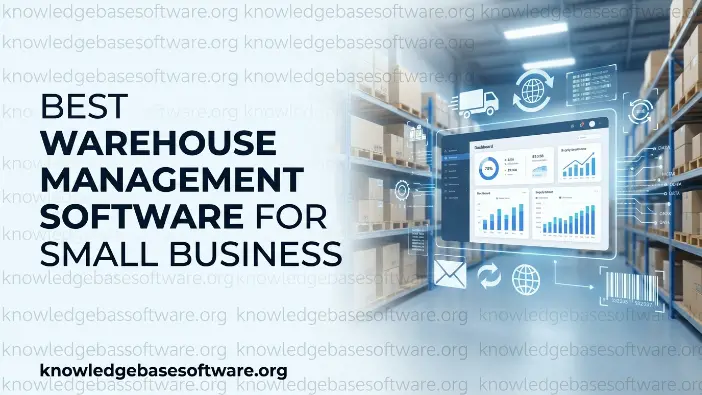
Modern warehouse systems include advanced tools that help simplify and automate everyday operations for growing businesses. Warehouse management software for small businesses offers important features such as real-time inventory tracking, barcode scanning, order management, and automated reporting. These tools help business owners keep accurate stock records, minimize manual mistakes, and increase overall warehouse efficiency. With centralized management of inventory and logistics, companies can easily track product movement and make better use of storage space. By using warehouse management software for small businesses, small enterprises can simplify workflows, improve operational visibility, and achieve faster and more accurate order fulfillment across warehouse activities.
Inventory Tracking and Control
Inventory tracking and control are among the most essential functions of any warehouse system. They help businesses maintain accurate information about stock levels, product locations, and inventory movement throughout the warehouse. With warehouse management software for small businesses, each item can be monitored in real time, reducing confusion and helping business owners know exactly what is available and what needs to be reordered.
This level of control helps prevent common issues such as stockouts, excess inventory, and misplaced products. It also increases overall efficiency by cutting down the time required for manual checks and corrections. As a result, small businesses can maintain greater inventory accuracy and keep daily operations running smoothly.
Barcode Scanning and Automation
Barcode scanning and automation make warehouse activities quicker, easier, and more dependable. Rather than entering product information manually, employees can scan barcodes to update inventory records immediately. Warehouse management software for small businesses uses this technology to accelerate receiving, picking, packing, and shipping activities.
This minimizes human errors and boosts productivity because tasks that previously required several minutes can often be completed within seconds. It also enables businesses to process a larger number of orders with the same workforce, making operations more scalable and economical.
Order and Shipment Management
Order and shipment management help ensure that every customer order moves efficiently from placement through delivery. They organize picking, packing, and shipping in a structured process so that orders are not overlooked or unnecessarily delayed. Warehouse management software for small businesses brings these steps together in one system, making real-time order tracking easier.
This increases delivery speed and accuracy, which has a direct effect on customer satisfaction. Businesses can quickly check order progress, minimize shipping mistakes, and ensure customers receive their products on time without unnecessary complications.
Real-Time Reporting and Analytics
Real-time reporting and analytics offer valuable insights into warehouse performance and current inventory conditions. These reports allow business owners to review stock levels, sales patterns, and operational performance at any time. Warehouse management software for small businesses provides dashboards and reports that help businesses make more informed decisions.
Using this information, businesses can identify slow-selling products, improve forecasting, and manage inventory planning more effectively. It can also reduce waste and increase profitability by providing a clear understanding of what is performing well and where warehouse operations need improvement.
Benefits of Using WMS for Small Businesses
Warehouse management systems can provide major improvements in efficiency, accuracy, and overall business performance. Warehouse management software for small businesses helps simplify inventory management, minimize manual mistakes, and accelerate order processing. It gives small businesses real-time visibility into inventory levels and warehouse activities, supporting better decisions and reducing operational errors. Through automation and centralized data management, businesses can make better use of storage space and lower unnecessary expenses. By adopting warehouse management software for small businesses, small enterprises can increase productivity, enhance customer satisfaction, and develop a more organized and scalable warehouse system that supports long-term growth and competitiveness.
Improved Accuracy and Reduced Errors
One of the main benefits of warehouse systems is their ability to greatly improve inventory management accuracy. Manual systems can create problems such as incorrect stock counts, misplaced products, and data entry errors, disrupting daily activities and potentially causing financial losses. However, warehouse management software for small businesses automatically updates inventory information in real time, keeping records accurate, consistent, and current.
This improved accuracy helps business owners manage stock with less confusion and make informed decisions using dependable data. It also reduces the amount of time spent checking records and correcting mistakes, allowing small businesses to work more efficiently and confidently.
Faster Order Fulfillment
Quick and accurate order processing is important for maintaining customer satisfaction in every business. Warehouse systems improve fulfillment by organizing each stage, including picking, packing, and shipping, into a clear and efficient workflow. With warehouse management software for small businesses, these activities become quicker and better coordinated, helping eliminate unnecessary delays.
As a result, businesses can process a greater number of orders in less time without placing additional pressure on employees. Faster fulfillment improves operational efficiency while helping ensure customers receive their orders on schedule, supporting trust and long-term customer relationships.
Cost Efficiency and Resource Optimization
Warehouse management systems help businesses lower unnecessary expenses by increasing efficiency and reducing waste. Weak inventory control can result in excess stock, storage problems, and wasted resources. Warehouse management software for small businesses addresses these issues by helping companies maintain suitable inventory levels and avoid unnecessary spending.
It also increases employee productivity by automating repetitive activities and distributing work more effectively. This allows businesses to achieve greater output with fewer resources, ultimately improving profitability while keeping warehouse operations organized and cost-efficient.
Better Customer Satisfaction
Customer satisfaction is closely connected to the speed and accuracy of order delivery. An efficiently managed warehouse reduces fulfillment mistakes and supports timely deliveries, creating a better overall customer experience. Warehouse management software for small businesses helps maintain this consistency by automating and simplifying warehouse activities.
When customers receive the correct products on time, it strengthens trust and encourages them to purchase again. Over time, this reliability can improve brand reputation and help small businesses develop a loyal customer base.
Types of Warehouse Management Systems
Warehouse management systems are available in several types, with each one designed to address different business needs and operational requirements. The appropriate option depends on factors such as budget, scalability, and the level of control a business needs. Warehouse management software for small businesses is generally available in cloud-based, on-premise, and hybrid models, giving businesses the flexibility to choose a solution suited to their stage of growth. These systems support inventory management, streamline warehouse activities, and improve overall efficiency. By using warehouse management software for small businesses, companies can benefit from flexible deployment choices, stronger data control, and improved operational performance, making warehouse management more adaptable and efficient for long-term success.
Cloud-Based WMS
Cloud-based WMS is a modern warehouse management solution that operates through the internet, enabling businesses to access warehouse information from virtually anywhere and at any time. It is particularly useful for small and growing businesses because it removes the need for costly hardware and complicated IT infrastructure. With warehouse management software for small businesses, cloud solutions offer real-time inventory tracking, automatic updates, and centralized data access, helping make warehouse operations more efficient and transparent.
A major benefit of cloud-based systems is their flexibility and ability to scale. Businesses can upgrade storage, add users, or introduce additional features as they expand without making major system changes. These systems also provide automatic backups and security updates, reducing the possibility of data loss and supporting smooth, uninterrupted operations.
On-Premise WMS
On-premise WMS is installed on a company’s own internal servers and maintained by its IT team. This type of system gives businesses greater control over their data, security, and customization options. For organizations handling sensitive information or needing strict operational control, warehouse management software for small businesses through an on-premise setup can provide a dependable solution.
However, this approach requires a larger initial investment and continuous maintenance, including server management and software updates. Even with these requirements, it provides strong performance and gives businesses the ability to customize workflows based on their specific operational needs, making it suitable for organizations that want complete control of their warehouse environment.
Hybrid Solutions
Hybrid WMS combines features of both cloud-based and on-premise systems, creating a flexible and balanced solution. In this approach, some information is stored locally while other operations are handled through the cloud, allowing businesses to benefit from both accessibility and security. Warehouse management software for small businesses using a hybrid model can work well for companies that want to gradually move toward cloud technology while continuing to control important data.
This approach is especially useful for growing businesses because it supports scalability, better performance, and operational flexibility. It can also help companies manage costs while protecting data and maintaining smooth connections between different warehouse processes.
How to Choose the Right Warehouse Management Software
Selecting the right warehouse system is an important decision for small businesses because it can directly influence efficiency, expenses, and future growth. The right solution should suit the company’s size, operational requirements, and budget while providing enough flexibility for future expansion. Warehouse management software for small businesses helps organizations improve inventory control, increase order accuracy, and boost warehouse productivity. When choosing a system, businesses should consider ease of use, integration options, scalability, and pricing. By evaluating these factors carefully, companies can select warehouse management software for small businesses that supports efficient operations, reduces mistakes, and strengthens overall supply chain performance.
Budget and Pricing Structure
Budget and pricing structure are among the most important considerations when selecting a warehouse management system. Small businesses need to make sure the software fits their financial capacity while still offering the necessary features for efficient operations. Many providers offer flexible pricing options, including monthly subscriptions, tiered packages, or usage-based plans, allowing businesses to select an option based on their size. With warehouse management software for small businesses, companies can find affordable solutions that reduce manual tasks and improve efficiency without requiring a significant initial investment.
Businesses should also carefully review any additional or hidden expenses that may occur during implementation. These can include setup charges, integration costs for connecting other tools, data migration expenses, and employee training fees. Understanding the complete pricing structure helps businesses avoid unexpected financial burdens. With proper planning, small businesses can choose a system that fits their budget while delivering long-term value and a measurable return on investment.
Scalability for Growth
Scalability is an important requirement for warehouse systems, particularly for small businesses that expect to expand. As order quantities rise and inventory becomes more complicated, the software needs to manage increased workloads without losing speed or accuracy. Warehouse management software for small businesses is built to support growth, allowing companies to expand operations by adding users, warehouses, product ranges, or advanced functions as required.
This flexibility is valuable because it reduces the need to replace systems as the business expands. Changing platforms can be expensive, time-consuming, and potentially risky for data consistency. A scalable system helps maintain stable and efficient operations during periods of rapid growth. It also provides a reliable foundation for long-term planning by adapting to changing business needs without interrupting workflows.
Integration with ERP and Accounting Tools
Integration with ERP and accounting systems is essential for building a connected and efficient business environment. When warehouse software connects with these systems, information can move automatically between sales, finance, inventory, and supply chain departments. This reduces manual data entry and lowers the risk of errors or inconsistent records. warehouse management software for small businesses that provides seamless integration helps keep business functions synchronized and updated in real time.
This connectivity can improve both decision-making and operational efficiency. Business owners can review accurate financial information, monitor inventory expenses, and track sales performance through a connected system. It also reduces duplicate data and strengthens communication between departments. As a result, businesses can work more smoothly, react faster to changes, and maintain greater control over their operations.
Ease of Use and Training Requirements
Ease of use is an important factor in determining how quickly employees can adapt to a new warehouse system. Complicated software can slow down operations and make employees less willing to adopt it. Warehouse management software for small businesses should feature a straightforward and intuitive interface that allows employees to quickly learn essential activities such as inventory updates, order processing, and reporting.
Proper training is equally important for successful implementation. Even systems that are easy to use require basic onboarding so employees understand workflows and features correctly. A well-planned training process reduces mistakes, improves productivity, and builds employee confidence. When software is easy to use and supported by proper training, businesses can achieve quicker adoption, smoother workflows, and more effective warehouse management.
Implementation Steps for Small Businesses
Implementing a warehouse system requires careful preparation to support smooth adoption and minimize disruption to daily operations. Small businesses should first assess their warehouse requirements, choose suitable software, and prepare current inventory information for migration. With warehouse management software for small businesses, the implementation process becomes more organized, enabling companies to configure workflows, storage areas, and user permissions efficiently. Careful preparation supports a smooth move from manual methods to digital operations. It also helps reduce mistakes, improve efficiency, and adapt more quickly to automated warehouse management for stronger long-term performance.
Planning and Requirement Analysis
Planning and requirement analysis form the foundation of a successful warehouse management system implementation. During this stage, small businesses assess their existing warehouse activities, identify areas of inefficiency, and establish clear improvement goals. This involves evaluating inventory size, order volume, storage capacity, and workflow problems. This information helps businesses choose system features that align with their operational requirements. With warehouse management software for small businesses, effective planning ensures the selected solution meets both current needs and future growth expectations.
A thorough requirement analysis also prevents businesses from paying for unnecessary features that provide little practical value. It ensures that every warehouse activity is properly considered before implementation starts. This organized approach lowers the likelihood of setup errors and establishes a strong base for successful system integration, ultimately supporting improved efficiency and long-term performance.
System Setup and Configuration
System setup and configuration involve installing the warehouse software and adjusting it to fit the company’s specific operations. This process includes defining warehouse layouts, organizing product categories, assigning user roles, and creating workflows for receiving, picking, packing, and shipping. Warehouse management software for small businesses offers flexibility during this stage, allowing companies to configure settings based on their individual operational structure.
Correct configuration is important to ensure the system operates effectively from the beginning. When settings are properly established, employees face less confusion and the risk of operational mistakes is reduced. It also ensures that warehouse activities are accurately tracked and recorded in real time. A properly configured system creates consistent workflows, improves accuracy, and supports smoother daily operations.
Employee Training and Adoption
Employee training is essential for successfully adopting a warehouse management system. Even advanced software cannot provide its full benefits if employees do not know how to use it properly. Training sessions teach staff important functions such as updating inventory, scanning barcodes, processing orders, and generating reports. Warehouse management software for small businesses is usually designed for ease of use, but organized training can greatly improve employee confidence and efficiency.
With proper training, employees can adapt faster to digital workflows and make fewer operational mistakes. This creates a smoother transition from manual methods to automated processes. It also improves productivity because workers can complete activities more quickly and accurately. Over time, trained employees help businesses make better use of the system and improve overall warehouse performance.
Monitoring and Optimization
Monitoring and optimization are continuous activities that help ensure the warehouse system remains effective after implementation. Businesses regularly monitor important performance indicators such as inventory accuracy, order fulfillment speed, storage efficiency, and system usage. Warehouse management software for small businesses provides real-time information and analytics that help identify operational weaknesses and inefficiencies.
Ongoing optimization allows businesses to adjust workflows, improve accuracy, and increase productivity when needed. For instance, companies may reorganize storage areas, improve picking methods, or modify inventory levels based on available data. This continuous improvement helps warehouse operations remain efficient, scalable, and aligned with business growth. Over time, it enables businesses to maintain operational advantages and achieve lasting success.
Common Mistakes to Avoid
During warehouse system implementation, small businesses can make several avoidable mistakes that may lower efficiency and raise costs. One common mistake is selecting software that is too complicated for the company’s actual requirements. Another is failing to consider integration with existing tools such as accounting or sales platforms. With warehouse management software for small businesses, successful implementation depends on effective planning, training, and configuration. Businesses should also avoid inadequate data migration and insufficient employee training because these problems can interrupt operations and create long-term warehouse management inefficiencies.
Choosing Overly Complex Systems
- Choosing software with excessive advanced features can make the system difficult to use and slow down daily activities.
- Small businesses may face steep learning curves and end up paying for tools they do not actually require.
- Warehouse management software for small businesses should match the company’s size, workflow, and operational requirements to support smooth performance.
Ignoring Integration Capabilities
- Many businesses fail to consider how effectively the system connects with existing tools such as ERP, accounting, or eCommerce platforms.
- Weak integration can result in manual data entry, mistakes, and disconnected processes.
- Warehouse management software for small businesses should provide seamless integration to maintain smooth data movement and improve operational efficiency.
Poor Data Migration Planning
- Rushed or inaccurate data migration from previous systems can create missing or duplicate inventory records.
- This can cause stock management problems and reduce order accuracy.
- Warehouse management software for small businesses requires careful preparation to support clean, accurate, and properly organized data migration.
Lack of Staff Training
- Without adequate training, employees may struggle to use the system correctly, resulting in mistakes and delays.
- Low adoption can limit the overall advantages of automation and improved efficiency.
- Warehouse management software for small businesses delivers better results when employees are properly trained and comfortable using its features.
Pricing and Cost Considerations
Pricing and cost are important factors when selecting a warehouse system for small businesses. Different solutions use different pricing methods, including monthly subscriptions, tiered packages, or usage-based charges. Businesses should consider both initial and ongoing expenses, including setup, training, and integration costs. Warehouse management software for small businesses should provide a practical balance between affordability and necessary features. Selecting an appropriate pricing structure helps businesses manage expenses, improve ROI, and receive greater value while maintaining efficient and scalable warehouse operations.
Free vs Paid Tools
- Free tools generally provide basic inventory functions but may not include advanced automation or reporting features.
- Paid solutions usually offer greater scalability, support, and integration capabilities for growing businesses.
- Warehouse management software for small businesses should be selected according to the features required rather than price alone.
Subscription Models
- Most modern warehouse systems follow monthly or annual subscription pricing.
- Plans are commonly structured according to users, storage capacity, or available features.
- Warehouse management software for small businesses with flexible subscription options allows companies to scale without a large initial investment.
Hidden Costs (Setup, Training, Integrations)
- Extra expenses can include installation, data migration, employee training, and integrations with third-party systems.
- If these costs are not considered in advance, they can substantially increase the total cost of ownership.
- Warehouse management software for small businesses should be assessed for complete pricing transparency before making a purchase.
ROI Considerations
- ROI is influenced by improved efficiency, fewer errors, and quicker order fulfillment.
- An effective system can lower operating expenses and increase productivity over time.
- Warehouse management software for small businesses can provide strong ROI when it simplifies workflows and reduces manual tasks.
Best Practices for Warehouse Management Success
Effective warehouse management depends on proper planning, consistent processes, and suitable technology. Businesses should prioritize accurate inventory records, standardized workflows, and regular stock audits to reduce mistakes and inefficiencies. Warehouse management software for small businesses helps automate these activities and strengthen overall operational control. It also supports performance monitoring and optimization of daily tasks. By following proven practices and using warehouse management software for small businesses, companies can increase productivity, lower costs, and maintain smooth and scalable warehouse operations.
Standardizing Workflows
- Standardized workflows ensure that every warehouse activity follows a clear and consistent process.
- This reduces employee confusion and improves overall operational efficiency.
- Warehouse management software for small businesses supports structured workflows for receiving, picking, packing, and shipping.
Regular Inventory Audits
- Frequent audits help detect stock differences and reduce inventory-related errors.
- They support accurate inventory records and improve demand forecasting.
- Warehouse management software for small businesses simplifies auditing by offering real-time inventory information and movement history.
Leveraging Automation Tools
- Automation reduces repetitive manual work and accelerates warehouse activities.
- It improves accuracy for tasks such as barcode scanning, order processing, and reporting.
- Warehouse management software for small businesses uses automation to increase productivity and reduce human mistakes.
Continuous Performance Tracking
- Performance tracking helps businesses identify inefficiencies and make better decisions.
- Companies can monitor KPIs such as order accuracy, fulfillment speed, and inventory turnover.
- Warehouse management software for small businesses offers real-time analytics to support continuous performance improvement.
Frequently Asked Questions
What is warehouse management software for small businesses?
Warehouse management software for small businesses is a digital system that helps companies manage inventory, orders, storage, and shipping processes in an organized and automated way. It improves accuracy, reduces manual work, and provides real-time visibility into warehouse operations.
Is warehouse management software expensive for small businesses?
Not necessarily. Many solutions offer affordable subscription-based pricing designed specifically for small businesses. Costs vary depending on features, users, and storage needs, but there are budget-friendly options available that still provide essential functionality.
Can warehouse management software integrate with other tools?
Yes, most modern systems can integrate with ERP platforms, accounting software, and eCommerce systems. This integration helps ensure smooth data flow between departments and reduces manual data entry errors.
How long does it take to implement warehouse management software?
Implementation time depends on business size and system complexity. For small businesses, it can take a few days to a few weeks, including setup, data migration, and employee training.
Do small businesses really need warehouse management software?
Yes, especially when inventory grows, and manual tracking becomes inefficient. Warehouse management software helps small businesses improve accuracy, speed up operations, and scale more effectively.
Conclusion
In a competitive market, efficient warehouse operations are essential for small business success and long-term growth. Manual processes are no longer enough to handle increasing inventory demands, order volumes, and customer expectations. Implementing warehouse management software for small business helps streamline inventory control, improve accuracy, and speed up order fulfillment while reducing operational costs.
By choosing the right system and following best practices, small businesses can build a more organized, scalable, and data-driven warehouse operation. Ultimately, warehouse management software for small business is not just a tool for automation but a strategic investment that supports productivity, customer satisfaction, and sustainable business growth.