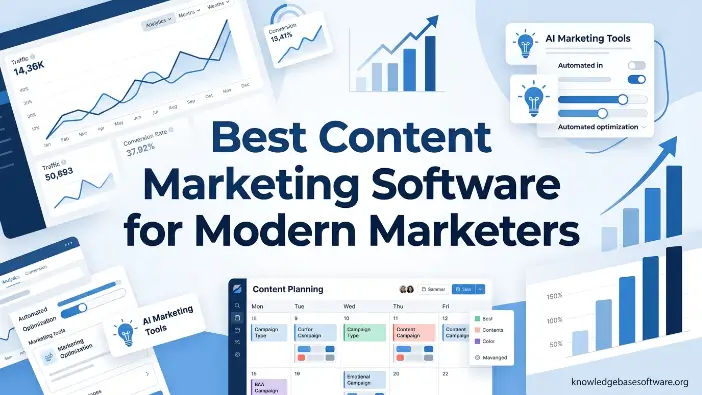
Content marketing software has become a vital part of modern digital marketing strategies, allowing businesses to manage the complete content lifecycle from one place. From planning and creation to optimization, publishing, and performance monitoring, these tools make complicated workflows easier and increase overall efficiency. Rather than depending on several disconnected platforms, marketers can bring their efforts together and have greater control over their content strategy.
In today’s competitive online landscape, consistency and data-based decision-making are important for achieving success. Content marketing software helps teams remain organized, automate repetitive activities, and optimize content for improved search engine visibility. With AI and automation capabilities now integrated into these platforms, they are no longer simply optional; they have become a core requirement for businesses looking to expand their digital presence effectively.
What is Content Marketing Software?
Content marketing software is a digital solution that helps marketers and businesses plan, create, manage, distribute, and analyze content through one platform. It simplifies the complete content workflow by bringing together different marketing functions, including SEO optimization, content scheduling, team collaboration, and performance monitoring. Rather than using different tools for every individual task, businesses can use one integrated system to increase efficiency and maintain consistency throughout their content strategy.
Definition
- A platform or tool that manages the complete content marketing lifecycle
- Helps create, organize, optimize, and publish content efficiently
- Combines SEO, analytics, and audience engagement within one system
How it works
- Brings content planning together through dashboards and editorial calendars
- Automates content scheduling and publishing across different channels
- Offers SEO recommendations and keyword optimization capabilities
- Monitors performance metrics such as traffic, engagement, and conversions
Core purpose in marketing strategy
- Builds brand visibility through regular and consistent content publishing
- Improves search engine rankings through optimized content strategies
- Increases productivity by minimizing manual marketing activities
- Enables data-driven decisions through real-time analytics insights
Key Functions of Content Marketing Tools
The main purpose of content marketing software is to simplify and improve every step of the content lifecycle. These tools allow marketers to replace scattered manual processes with a more organized and automated workflow. By bringing content operations into one central system, businesses can achieve greater consistency, quicker execution, and stronger collaboration between teams. This makes managing an effective content strategy much easier.
Along with improving organization and efficiency, content marketing software boosts performance by combining important marketing capabilities such as SEO, scheduling, and analytics. These functions help marketers make better decisions using actual data instead of guesswork, making sure that each piece of content supports broader business goals.
- Content planning helps arrange ideas and build organized editorial calendars.
- SEO optimization helps improve search rankings through keyword recommendations and content analysis
- Publishing & scheduling automates content posting across various platforms and channels.
- Performance tracking monitors traffic, engagement, and conversion results in real time.
Benefits of Using Content Marketing Software
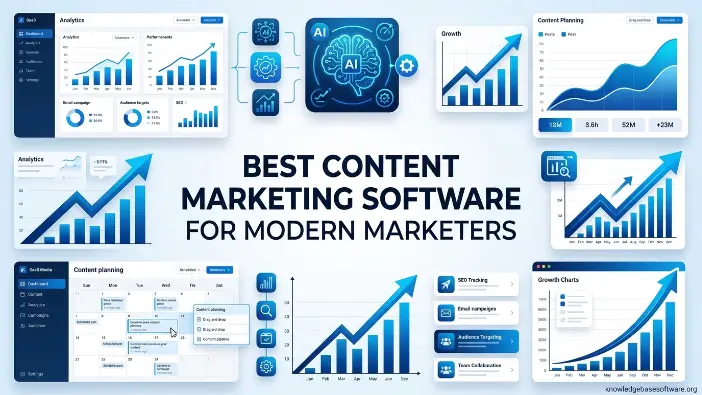
Using content marketing software gives businesses an effective way to simplify their complete content strategy while increasing efficiency and results. It enables marketing teams to plan, produce, and distribute content in a more organized and systematic way, reducing confusion and saving important time. With built-in automation and collaboration features, teams can work more efficiently and keep their messaging consistent across different marketing channels. These platforms also improve content quality by providing SEO recommendations and performance insights. As a result, businesses can gain greater visibility, stronger engagement, and improved ROI from their content marketing activities while reducing manual work and workflow inefficiencies.
Improved Content Strategy
A reliable content marketing software solution enables businesses to develop a more structured and goal-focused content strategy. Rather than producing content without a clear direction, marketers can plan campaigns, match topics with audience intent, and make sure each content piece supports broader business goals. This organized approach increases consistency and creates stronger brand messaging across different channels.
Additionally, content marketing software enables teams to review performance data and adjust their strategies over time. By identifying which content types deliver the strongest results, marketers can continually improve engagement and conversion rates. This results in more effective planning, smarter resource use, and stronger content performance.
Better SEO Performance
Content marketing software has an important role in increasing search engine visibility by providing integrated SEO tools and keyword optimization capabilities. These features help marketers find suitable keywords, improve content structure, and follow effective on-page SEO practices. As a result, content has a better opportunity to be found through search engines.
Furthermore, content marketing software offers information about ranking performance, backlinks, and content gaps. This enables businesses to regularly improve and update their content for stronger search rankings. Over time, this can result in greater organic traffic, increased authority, and a stronger online presence.
Time and Workflow Automation
One of the main benefits of content marketing software is its automation capability. It lowers manual effort by handling repetitive activities such as post scheduling, content publishing, and report generation. This gives marketing teams more time to concentrate on creativity and strategy instead of routine tasks.
At the same time, content marketing software makes workflows more efficient by simplifying collaboration among team members. Tasks can be assigned, monitored, and approved from one platform, supporting better communication and quicker content delivery.
Data-Driven Decision Making
Content marketing software helps marketers make decisions using real-time information instead of assumptions. Through analytics dashboards, businesses can monitor engagement, traffic sources, conversions, and user behavior to gain a clearer understanding of how their content performs.
This information helps improve future marketing strategies and increase ROI. With content marketing software, companies can determine what delivers results, remove ineffective approaches, and continually optimize their content for stronger business outcomes.
Key Features to Look for in Content Marketing Software
When selecting content marketing software, businesses should concentrate on features that directly support their marketing objectives and increase overall efficiency. An effective platform should manage the complete content process, starting with planning and creation and continuing through optimization and performance monitoring. It should also include SEO capabilities, collaboration features, and automation tools that make workflows easier. Many modern solutions also offer AI-powered assistance for generating ideas, improving content quality, and strengthening keyword targeting. Strong analytics and reporting capabilities are equally important for evaluating results. Choosing content marketing software with suitable features can improve productivity, strengthen content performance, and support long-term marketing growth.
Content Planning & Editorial Calendar
A quality content marketing software should provide content planning and editorial calendar functionality to help marketers manage their publishing schedules effectively. This feature enables teams to organize content ideas ahead of time, set deadlines, and maintain regular publishing across different channels. It reduces confusion and keeps content activities connected to the wider marketing strategy. With an easy-to-view calendar, teams can monitor upcoming content and maintain a consistent publishing flow without overlooking important deadlines.
Furthermore, content marketing software with editorial planning capabilities can increase productivity by helping teams focus on high-value content. It allows seasonal campaigns, product launches, and promotional materials to be planned and scheduled strategically for better engagement.
SEO & Keyword Optimization Tools
Effective content marketing software should offer integrated SEO and keyword optimization tools to strengthen search visibility. These features help marketers discover relevant keywords, evaluate competitors, and improve content structure for stronger rankings. By applying SEO best practices, businesses can improve their chances of appearing in search engine results pages.
Moreover, content marketing software can provide real-time recommendations for keyword placement, readability, and metadata improvements. This helps ensure that content is properly optimized before it goes live, supporting greater organic traffic and stronger online performance.
AI Writing Assistance
Modern content marketing software frequently provides AI writing assistance to help create ideas, outlines, and even complete content drafts. This feature reduces the time required for content creation and helps writers move past creative blocks. It also helps make content more organized and better aligned with user intent.
Additionally, content marketing software with AI functionality can enhance grammar, tone, and readability. This produces better-quality content that connects with readers more effectively and performs well across various digital channels.
Analytics & Reporting
Analytics and reporting are essential features of content marketing software because they allow marketers to evaluate the performance of their content strategy. The software provides data about traffic, engagement, conversions, and audience behavior. These measurements are important for determining which types of content achieve the best results.
With content marketing software, businesses can create detailed reports showing the strengths and weaknesses of their campaigns. This data-focused method supports ongoing optimization and more informed decisions for future content activities.
Team Collaboration Features
Good content marketing software provides team collaboration features that strengthen communication and improve workflow efficiency. These capabilities allow several users to work on content, assign responsibilities, and handle approvals from one centralized platform.
In addition, content marketing software minimizes communication problems by keeping feedback and revisions together in one location. This supports better coordination between writers, editors, and marketers, leading to quicker and more efficient content production.
Best Content Marketing Software in 2026
In 2026, content marketing software has become increasingly advanced, bringing together AI automation, SEO optimization, and multi-channel publishing within one powerful solution. These platforms help businesses handle the complete content lifecycle more efficiently, beginning with idea development and continuing through performance monitoring. As competition in digital marketing increases, companies are depending on intelligent tools to maintain consistency, strengthen search visibility, and connect with their target audiences effectively. Modern content marketing software does more than save time; it also supports better decision-making through real-time analytics and predictive insights. Because of this, it has become an important investment for businesses seeking to scale their content marketing activities successfully in a competitive online environment.
HubSpot Content Hub
Content marketing software such as HubSpot Content Hub provides an all-in-one solution for businesses that need to manage content, SEO, and customer relationships from one location. It enables marketers to create, optimize, and distribute content while connecting with CRM tools for improved lead management. This makes it particularly useful for businesses that focus on inbound marketing and long-term customer engagement.
Additionally, content marketing software like HubSpot provides automation capabilities, analytics dashboards, and AI-powered content recommendations. These features help teams increase productivity, monitor performance, and make data-based decisions that improve overall marketing results.
Semrush Content Marketing Toolkit
Content marketing software such as Semrush Content Marketing Toolkit is well known for its powerful SEO and keyword research capabilities. It enables marketers to discover trending topics, evaluate competitors, and optimize content for improved search engine rankings. This makes it a useful solution for increasing organic visibility and attracting targeted traffic.
Furthermore, content marketing software from Semrush includes content planning, topic research, and performance monitoring features. These capabilities help marketers develop data-driven content strategies that steadily improve search performance.
CoSchedule Marketing Suite
Content marketing software like CoSchedule Marketing Suite places strong emphasis on content planning, scheduling, and workflow management. It is particularly helpful for teams that need an organized editorial calendar to handle multiple campaigns effectively. This supports better organization and helps ensure content is delivered on time.
Additionally, content marketing software such as CoSchedule supports team collaboration by enabling task assignments, approvals, and progress monitoring through one centralized platform. This helps marketing teams remain coordinated and productive throughout content creation.
Contently
Content marketing software such as Contently is created for enterprise businesses that need professional content production and advanced analytics. It connects brands with experienced writers and supports the creation of high-quality, performance-focused content at scale. This makes it suitable for large organizations with more complex content requirements.
Furthermore, content marketing software like Contently offers detailed performance data that helps businesses measure ROI effectively. It ensures each piece of content supports measurable marketing objectives and long-term business growth.
StoryChief
Content marketing software such as StoryChief is designed for distributing content across multiple channels, enabling marketers to publish to blogs, social media, and newsletters at the same time. This reduces the time required for publishing and helps maintain consistent messaging across platforms.
In addition, content marketing software like StoryChief includes collaboration capabilities and SEO optimization tools that help teams produce and distribute content more efficiently while increasing visibility and engagement.
Notion + AI Tools (Hybrid Workflow)
Content marketing software such as Notion, when combined with AI tools,s provides a flexible and customizable workflow for startups and smaller teams. It enables users to plan, organize, and manage content while using AI to support writing and generate ideas.
At the same time, content marketing software used in this hybrid approach is affordable and highly flexible. It allows teams to create their own content workflows without depending on costly enterprise platforms, making it suitable for rapidly growing businesses.
Comparison Table of Top Content Marketing Software
| Tool | Best For | Key Strength | Main Features | Pricing Level |
| HubSpot Content Hub | All-in-one marketing | CRM + content integration | Content creation, SEO tools, automation, analytics | Mid to High |
| Semrush Content Marketing Toolkit | SEO-focused marketing | Strong keyword research | Topic research, SEO optimization, competitor analysis | Mid |
| CoSchedule Marketing Suite | Content planning teams | Editorial calendar | Scheduling, workflow management, and team collaboration | Mid |
| Contently | Enterprise businesses | High-quality content creation | Professional writers, content strategy, performance analytics | High |
| StoryChief | Multi-channel publishing | Content distribution | Cross-platform publishing, SEO optimization, and collaboration | Mid |
| Notion + AI Tools | Startups & small teams | Flexible workflow | Content planning, AI writing support, task management | Low to Mid |
How to Choose the Right Content Marketing Software
Selecting the right content marketing software requires understanding your business objectives, team size, and content strategy needs. Since every business has different requirements, the platform should fit your workflow instead of being selected only because it is popular. The right solution should support content planning, SEO optimization, automation, and performance tracking to provide complete management of your marketing activities. It is also important to consider usability, scalability, and integration with other tools. Choosing suitable content marketing software can increase productivity, simplify processes, and improve ROI by making sure your content strategy remains efficient and focused on results over time.
Business Size Consideration
When choosing content marketing software, the size of the business is an important factor in finding the right platform. Small businesses and startups generally require straightforward, user-friendly tools that provide essential content planning, SEO, and scheduling features without unnecessary complexity. In comparison, medium-sized and large enterprises often need more advanced solutions with automation, analytics, and collaboration features to efficiently handle large volumes of content.
In addition, content marketing software should be scalable enough to support business growth. A flexible platform allows businesses to expand their content capabilities as their needs increase without having to move to an entirely different system, helping save both time and money.
Budget and Pricing Models
The cost of content marketing software can differ significantly, ranging from free basic solutions to advanced enterprise platforms. Businesses should select an option that matches their budget while still providing important capabilities such as SEO optimization, analytics, and automation. Spending money on features that are not needed can lower overall ROI.
Moreover, content marketing software may use subscription-based, tiered, or usage-based pricing structures. Understanding these pricing models allows businesses to choose a suitable and affordable plan that matches their content objectives and long-term strategy.
SEO vs Full Marketing Needs
Some content marketing software solutions focus mainly on SEO, while others provide broader marketing functionality. SEO-focused platforms are suitable for businesses that emphasize search rankings, keyword research, and organic traffic growth. They offer detailed optimization features but may not include wider marketing functions.
In comparison, content marketing software with comprehensive marketing capabilities can include CRM integration, automation, email marketing, and analytics. The choice between an SEO-focused and all-in-one platform depends on whether the primary goal is search visibility or a broader digital marketing strategy.
AI and Automation Requirements
Modern content marketing software is increasingly equipped with AI and automation features that boost efficiency and reduce manual work. AI capabilities can generate content ideas, improve SEO, and create drafts, making the content creation process faster and more efficient.
Additionally, content marketing software with automation can schedule posts, distribute content through different channels, and create performance reports automatically. This enables marketing teams to spend more time on strategy and creativity instead of repetitive work, improving overall productivity.
Common Mistakes to Avoid
Many businesses make important errors when choosing content marketing software, which can hurt productivity and restrict marketing performance. A common problem is selecting tools that are more complicated than the team can effectively manage. Although advanced capabilities may appear appealing, they can cause confusion and slow workflows when employees are not properly trained. Another significant mistake is overlooking SEO integration, which plays an important role in improving search visibility and attracting organic traffic. In addition, failing to train employees to use the platform can lower efficiency and cause valuable features to remain unused. Eventually, this can result in poor ROI and wasted resources instead of stronger performance.
- Selecting overly complicated tools that lower efficiency
- Overlooking SEO integration and optimization capabilities
- Failing to train teams on how to operate the software
- Paying too much for features that are unused or unnecessary
Future of Content Marketing Software
The future of content marketing software will likely be shaped largely by artificial intelligence, automation, and advanced analytics. As competition across digital channels increases, businesses will depend more on intelligent platforms capable of creating, optimizing, and distributing content with less manual involvement. These solutions will not only simplify workflows but also deliver deeper insights into audience behavior and content performance. Through AI-powered personalization, marketers will be able to provide highly targeted content experiences on a larger scale. Overall, content marketing software will continue developing into more predictive, automated, and integrated platforms that help businesses make quicker, smarter, and more effective marketing decisions.
AI-Driven Content Creation
The future of content marketing software is being heavily influenced by AI-driven content creation, where artificial intelligence helps marketers develop ideas, outlines, and even complete articles. This reduces manual work and accelerates content production while supporting quality and consistency. AI tools can also improve grammar, tone, and structure, helping make content more engaging and SEO-friendly.
Additionally, content marketing software powered by AI enables businesses to increase content production without adding more workload. Marketers can dedicate more attention to strategy and creative work while AI manages repetitive writing activities, creating faster and more efficient content workflows.
Predictive Analytics
Predictive analytics is becoming an important capability in advanced content marketing software, helping marketers estimate how content may perform before publication. By examining historical information, user behavior, and engagement trends, these tools can help determine which types of content are most likely to achieve strong results.
Moreover, content marketing software with predictive analytics enables businesses to make more informed choices, minimize content-related risks, and use resources more effectively. This supports better ROI and more successful marketing campaigns over time.
Hyper-Personalization
Modern content marketing software is increasingly moving toward hyper-personalization, where content is customized according to individual preferences, behavior, and interests. This helps audiences receive more relevant content, which can increase engagement and conversion rates.
Additionally, content marketing software uses AI and data insights to create more precise audience segments. This allows marketers to provide personalized experiences at scale, supporting greater customer satisfaction and stronger brand loyalty.
Automation in Content Distribution
Content distribution automation is an important development in content marketing software, allowing businesses to publish and share content across multiple channels automatically. This can include blogs, social media, email campaigns, and other channels, reducing considerable time and effort.
Furthermore, content marketing software can help ensure content reaches audiences at the right time for greater reach and engagement. This automated process enables marketers to maintain consistency and improve overall content performance without manual intervention.
Frequently Asked Questions
What is content marketing software used for?
Content marketing software is used to plan, create, optimize, publish, and analyze digital content in one centralized platform. It helps marketers manage the entire content lifecycle efficiently, improve SEO performance, and track results to make data-driven decisions.
Is content marketing software necessary for small businesses?
Yes, content marketing software is very useful for small businesses because it saves time, improves content quality, and helps maintain consistency. Even with limited resources, small teams can manage content more effectively and compete with larger brands.
Which features are most important in content marketing software?
The most important features in content marketing software include content planning tools, SEO optimization, AI writing assistance, analytics, and team collaboration. These features ensure smooth workflow and better marketing performance.
Can content marketing software improve SEO rankings?
Yes, content marketing software helps improve SEO rankings by offering keyword suggestions, content optimization tips, and performance tracking. These tools ensure that content follows SEO best practices for better visibility on search engines.
Does content marketing software use AI?
Modern content marketing software often includes AI features that assist with writing, idea generation, optimization, and automation. AI helps marketers work faster and create higher-quality, more targeted content.
Conclusion
Content marketing software has become an essential tool for modern businesses looking to build a strong and consistent digital presence. It brings together content planning, creation, SEO optimization, publishing, and performance tracking into a single streamlined system. This not only saves time but also improves efficiency and ensures that every piece of content supports overall marketing goals.
As competition in the digital space continues to grow, using the right content marketing software helps businesses stay ahead through automation, data-driven insights, and improved collaboration. Whether you are a small business or a large enterprise, choosing the right platform can significantly enhance your content strategy, boost organic visibility, and deliver better long-term marketing results.