
Welcome to knowledgebasesoftware. Managing business finances has become much more complicated in today’s rapidly evolving digital economy, as companies work across various channels, currencies, and expense structures. Traditional approaches such as static spreadsheets and manual bookkeeping are no longer adequate because they are vulnerable to human errors, offer limited real-time collaboration, and cannot deliver the flexible insights required for strategic decisions. Consequently, many organizations are turning to business budgeting software to simplify financial planning and enhance overall accuracy.
Today’s financial environments require more than simply recording income and expenses; they call for real-time forecasting, scenario planning, and ongoing performance tracking. This is where financial planning software and expense management software become essential, helping businesses gain better control over cash flow while preparing for upcoming financial requirements. Through automation and analytics, these tools reduce uncertainty and replace assumptions with data-driven insights.
What Is Business Budgeting Software?
Business budgeting software is a structured digital solution that helps organizations plan, track, and manage their financial resources more accurately and efficiently. Rather than depending on manual calculations or separate spreadsheets, it brings budgeting activities together on one platform, where income, expenses, forecasts, and financial objectives can be managed in real time. This gives businesses a clearer view of their finances, supports better decisions, and enables them to respond quickly to changing market conditions.
Core Definition
At its core, budgeting software serves as a financial planning center that allows businesses to develop detailed budgets, distribute resources among departments, and compare actual performance with planned targets. Unlike basic accounting applications, it emphasizes future-oriented financial management instead of maintaining historical records.
Modern financial planning software commonly provides automation features such as predictive analytics, scenario planning, and real-time reporting, allowing businesses to prepare for potential outcomes instead of merely responding to previous data.
How It Differs from Accounting Software
While accounting software is mainly used to record transactions, handle invoices, and support financial compliance, budgeting software is centered on planning and optimization. Accounting systems answer “What happened financially?”, while budgeting systems focus on “What should happen next?”.
This difference is important because budgeting tools incorporate cash flow management software capabilities that help businesses predict liquidity requirements, prevent excessive spending, and connect financial strategies with long-term objectives.
Why Spreadsheets Are No Longer Enough
Spreadsheets were traditionally the go-to option for budgeting, but they are becoming less suitable for today’s financial requirements. They provide limited automation, version control, and real-time collaboration, resulting in inefficiencies and expensive mistakes. As organizations grow, handling complicated information across numerous sheets becomes increasingly challenging and time-consuming.
By comparison, modern budgeting tools provide centralized data management, automatic updates, and integrated reporting features, making them much more dependable for changing financial environments where speed and accuracy are critical.
Read Also: Business Management Software: Features & Benefits Guide
Key Features of the Best Budgeting Tools
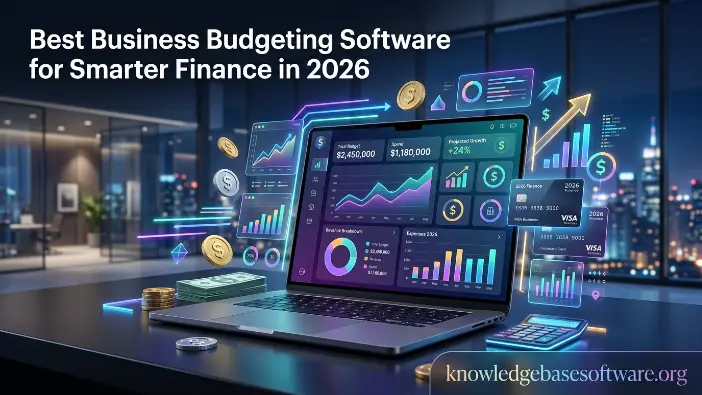
The best business budgeting software is characterized by a strong collection of features that extend beyond basic expense tracking and create a comprehensive financial management system. These solutions are built to provide businesses with real-time financial visibility, enhance forecasting precision, and automate repetitive financial activities, enabling teams to dedicate more time to strategy and less to manual tasks.
Core Features Include:
- Real-time budget monitoring and financial updates
- Advanced forecasting and scenario planning capabilities
- Automated expense classification and management
- Integration with accounting platforms such as QuickBooks and Xero
- Customizable dashboards and automated financial reports
Best Use Cases for Businesses
The effectiveness of business budgeting software is most apparent when it is used in practical business situations where financial control, forecasting, and resource allocation are essential. Different organizations apply these solutions in different ways based on their size, structure, and financial complexity. From small startups managing restricted cash flow to large enterprises overseeing budgets across several departments, budgeting software offers solutions that enhance financial visibility, lower risk, and support strategic growth decisions. It serves as a centralized financial platform that adjusts to various operational requirements while maintaining consistent accuracy and transparency.
Common Use Cases Include:
- Small Businesses: Make expense tracking easier and maintain stronger control over limited cash flow
- Startups: Manage initial budgets and effectively monitor burn rate to prevent excessive spending
- Freelancers & Solopreneurs: Monitor changing income and keep personal and business finances organized separately
- Mid-Sized Companies: Manage departmental budgets and strengthen coordination between teams
- Enterprises: Oversee complex, multi-level budgets across different regions and departments
- Finance Teams (FP&A): Enhance forecasting accuracy and assist with strategic financial planning
- E-commerce Businesses: Monitor inventory expenses, sales results, and seasonal budgeting requirements
- Project-Based Businesses: Track project budgets, manage expenses, and maintain profitability for each project
How to Choose the Right Business Budgeting Software
Choosing the right business budgeting software is an important decision that directly influences how efficiently an organization handles financial planning, forecasting, and everyday budgeting activities. The right solution should not only meet your current business requirements but also accommodate future growth, work smoothly with existing systems, and deliver useful financial insights. A properly selected tool becomes an important part of the financial ecosystem, supporting better decisions and reducing inefficiencies throughout the organization.
Budget and Pricing Models
When assessing business budgeting software, pricing is a major consideration because it influences both immediate affordability and long-term scalability. Most solutions use different pricing approaches, including monthly or annual subscriptions, tiered plans, or customized enterprise pricing based on company size and needs. Each structure is intended for different business types—for instance, small companies may choose simple subscription plans, while larger organizations may need advanced enterprise packages with tailored features and dedicated assistance.
However, the focus should not simply be on selecting the lowest-priced option, but on making sure the expense is supported by the value and features offered. A properly priced solution should provide essential capabilities such as budgeting, forecasting, reporting, and integrations without requiring additional payments for basic functions.
Scalability
Scalability in business budgeting software describes how effectively a system can adjust and grow alongside a company over time. During the early stages, a business may only need to manage basic income, expenses, and cash flow. As the organization grows, however, financial operations can become more complicated, involving additional teams, departments, locations, and revenue sources. A scalable solution makes sure the software continues working effectively as this complexity develops.
A reliable budgeting platform should manage increasing amounts of financial information without becoming slow or compromising accuracy. As transaction volumes grow and reporting needs become more detailed, the system should remain stable and responsive.
Ease of Use
User experience is essential in determining whether business budgeting software is successfully adopted and used throughout an organization. Even a platform packed with features may provide little value if employees consider it confusing, slow, or difficult to operate. In everyday business settings, the effectiveness of a tool depends heavily on the people using it, making usability as important as functionality.
A well-developed budgeting system prioritizes clarity and simplicity. It includes intuitive dashboards that display complicated financial information through easy-to-understand visuals, including charts, graphs, and summaries. This enables users to understand important financial metrics quickly without requiring advanced accounting expertise. Clear navigation and well-organized menus also minimize the time needed to locate information, making routine financial activities more efficient.
Integration Capabilities
Modern organizations operate within complicated digital environments where several systems work together to manage different operational areas. These commonly include accounting software for financial records, CRM platforms for managing customers, and ERP solutions for broader business operations. Within this environment, business budgeting software needs to connect smoothly with these platforms so it can operate effectively as part of an integrated financial system.
Strong integration features enable budgeting platforms to automatically synchronize information across connected systems. Rather than manually moving financial data from one tool to another, information can flow in real time, ensuring budgets are built using the latest and most accurate figures. This greatly reduces manual data entry, which can be both time-consuming and highly susceptible to human mistakes.
Reporting & Analytics Depth
Advanced reporting and analytics are key elements of modern business budgeting software, turning raw financial information into useful and actionable insights. Rather than manually reviewing spreadsheets or fixed reports, businesses can use integrated analytics features to continuously track performance and make quicker, data-informed decisions.
High-quality budgeting platforms provide customizable reporting options that let users create financial reports based on particular requirements, including departmental performance, project spending, or overall business profitability. Reports can be modified according to periods, metrics, or business units, giving decision-makers flexibility in how they review and understand financial data.
Common Mistakes to Avoid
When choosing or introducing business budgeting software, organizations often make preventable mistakes that reduce the tool’s effectiveness and limit its long-term benefits. Even highly advanced software may not produce the expected results if it is selected without sufficient planning or introduced without considering how teams will use it in their everyday work. Recognizing these common issues helps businesses make more informed choices and gain greater value from their investment.
Choosing Overly Complex Tools
A common mistake is choosing software that is more advanced than the organization’s actual requirements. Although platforms with many features can appear appealing, they may introduce unnecessary complexity that makes adoption slower and users more confused.
When employees struggle to operate the system, they are less likely to use it consistently, resulting in incomplete or unreliable financial information. The better approach is to select a solution that combines useful functionality with simplicity and fits the organization’s current size and financial capabilities.
Ignoring Integration Needs
Another major mistake businesses can make when implementing business budgeting software is failing to assess how well it integrates with their existing systems. In the modern digital business environment, organizations commonly rely on several platforms, including accounting systems, CRM applications, and ERP solutions, to manage different operational areas. If budgeting software cannot connect effectively with these platforms, it can create isolated data environments, commonly known as data silos.
When data silos occur, financial information is spread across separate platforms, making consistency and accuracy harder to maintain. Teams may then have to depend on manual data entry or repeatedly transfer information between systems, consuming valuable time while increasing the possibility of human error. These inconsistencies can produce inaccurate financial reports, weak forecasting, and ultimately poor business decisions.
Not Training Teams Properly
Another major mistake businesses can make when implementing business budgeting software is failing to assess how well it integrates with their existing systems. In the modern digital business environment, organizations commonly rely on several platforms, including accounting systems, CRM applications, and ERP solutions, to manage different operational areas. If budgeting software cannot connect effectively with these platforms, it can create isolated data environments, commonly known as data silos.
When data silos occur, financial information is spread across separate platforms, making consistency and accuracy harder to maintain. Teams may then have to depend on manual data entry or repeatedly transfer information between systems, consuming valuable time while increasing the possibility of human error. These inconsistencies can produce inaccurate financial reports, weak forecasting, and ultimately poor business decisions.
Overlooking Forecasting Features
Many businesses concentrate on basic budgeting capabilities while overlooking advanced forecasting features. Yet forecasting is among the most useful functions of modern budgeting tools because it enables businesses to anticipate future financial performance and prepare for various possible scenarios.
Overlooking these capabilities means losing opportunities to improve planning, manage risks, and support strategic decisions. Businesses that make full use of forecasting tools can respond more effectively to market changes and prepare for long-term growth.
Future of Business Budgeting Software
The future of business budgeting software is developing quickly as organizations move toward smarter, more automated, and data-focused financial systems. Rather than depending entirely on traditional budgeting approaches, businesses are increasingly embracing advanced technologies that enhance accuracy, efficiency, and strategic decision-making. These developments are turning budgeting platforms from basic planning tools into sophisticated financial intelligence systems.
AI-Driven Forecasting
One of the most important developments in modern business budgeting software is the use of artificial intelligence within financial planning processes. AI-based forecasting has changed how businesses process and understand financial information by allowing systems to evaluate large volumes of historical data together with real-time inputs.
This enables organizations to produce more precise predictions of future financial performance without depending entirely on manual calculations or fixed assumptions. With AI-powered models, businesses can better recognize revenue trends, identify changes in customer spending behavior, and discover hidden expense patterns that may be difficult to detect through traditional analysis.
Predictive Analytics
Predictive analytics is an advanced form of financial intelligence within modern business budgeting software, going beyond basic forecasting to identify potential trends, risks, and opportunities before they appear through conventional financial reports. Rather than depending only on historical summaries, predictive systems continuously examine extensive financial and operational datasets to identify hidden patterns that could affect business performance.
Using methods such as data modeling and trend analysis, financial planning software can identify small changes in customer behavior, spending habits, and revenue cycles. For instance, it can indicate when sales may rise during particular periods, when operating expenses could unexpectedly increase, or when customer demand may start falling.
Automation in Finance Operations
Automation is now a central element of modern business budgeting software, changing the way financial activities are handled each day. Instead of depending on manual procedures, businesses are increasingly using automated systems to complete repetitive and time-intensive tasks with improved speed and accuracy.
Regular financial activities such as categorizing expenses, producing reports, processing invoices, and reconciling data are increasingly handled automatically by software. This reduces manual data entry, saves time, and substantially decreases the possibility of human error. As a result, finance teams can devote more attention to analysis and strategic work instead of administrative responsibilities.
Real-Time Decision Intelligence
The future of budgeting software is also advancing toward real-time decision intelligence, enabling businesses to receive immediate financial insights and respond without delay. Rather than waiting for monthly or quarterly reports, decision-makers will use live dashboards and AI-powered recommendations to support strategic actions. This allows organizations to react faster to market changes, manage risks more effectively, and maintain a stronger competitive position.
Overall, the continued development of budgeting tools is making financial management more proactive, intelligent, and automated, helping businesses operate with greater confidence and accuracy.
Frequently Asked Questions
What is business budgeting software used for?
Business budgeting software is used to plan, track, and manage a company’s financial resources. It helps businesses create budgets, monitor expenses, forecast future performance, and improve overall financial decision-making using real-time data.
Is budgeting software better than spreadsheets?
Yes, budgeting software is generally more efficient than spreadsheets because it offers automation, real-time updates, better accuracy, and collaboration features. Unlike spreadsheets, it reduces manual errors and scales easily as the business grows.
Can small businesses use budgeting software?
Absolutely. Many budgeting tools are designed specifically for small businesses. They help track cash flow, manage expenses, and create simple financial forecasts without requiring advanced accounting knowledge.
Does budgeting software integrate with accounting tools?
Most modern budgeting platforms integrate with accounting systems like QuickBooks, Xero, and ERP software. This ensures smooth data flow, reduces manual entry, and improves financial accuracy across systems.
What features should I look for in budgeting software?
Key features include real-time budget tracking, forecasting tools, expense management, integration capabilities, customizable dashboards, and advanced reporting. These features help businesses maintain better financial control and planning.
How does budgeting software improve financial forecasting?
It uses historical and real-time data to predict future financial outcomes. With advanced analytics and AI-driven models, businesses can anticipate revenue changes, manage risks, and plan budgets more effectively.
Conclusion
Business budgeting software has become an essential tool for modern organizations that want to manage finances with greater accuracy, efficiency, and strategic control. As businesses grow more complex, traditional methods like spreadsheets are no longer sufficient to handle real-time financial tracking, forecasting, and reporting needs. By adopting advanced budgeting solutions, companies can streamline financial planning, improve cash flow visibility, and make more informed decisions based on reliable data. Features such as automation, predictive analytics, and real-time reporting not only reduce manual effort but also help businesses respond quickly to changing market conditions.
Ultimately, the right budgeting software empowers organizations to move beyond basic financial management and toward a more proactive, data-driven approach. Whether for small businesses or large enterprises, investing in the right tool builds a stronger financial foundation and supports long-term growth and stability.