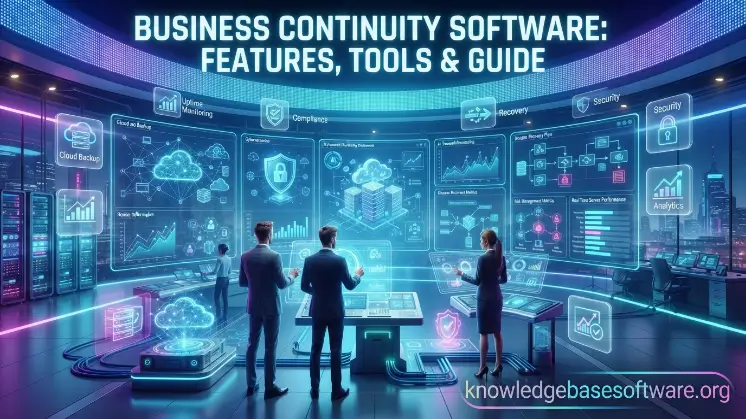
Welcome to knowledgebasesoftware. Modern organizations operate in an environment where disruptions are no longer rare; they are expected. Cyberattacks, system failures, supply chain interruptions, and natural disasters can halt operations within seconds, leading to significant financial and reputational damage. In this context, business continuity software plays a critical role in helping companies prepare for uncertainty and maintain essential operations even when normal workflows are interrupted.
Unlike traditional manual planning methods, this technology provides a structured and automated approach to resilience. It integrates business continuity planning software capabilities with disaster recovery software functions, ensuring that both strategic planning and technical recovery are aligned. By combining risk analysis, emergency response coordination, and recovery automation, organizations can achieve stronger operational resilience and minimize downtime. This makes it an essential investment for businesses that depend on uninterrupted digital systems and consistent service delivery.
What Is Business Continuity Software?
Business continuity software is a structured digital solution designed to help organizations prepare for disruptions, respond effectively during crises, and recover normal operations as quickly as possible. It brings together planning, coordination, and recovery tools into a single platform so businesses can maintain stability even when unexpected events occur. In today’s complex IT environments, relying on manual documents or spreadsheets is no longer enough. This software ensures that critical processes are documented, accessible, and actionable in real time, reducing confusion and improving response speed during emergencies.
Definition and Core Purpose
The primary definition of business continuity software is a centralized system that enables organizations to manage risk, maintain essential functions, and ensure operational stability during disruptions.
Its core purpose is to minimize downtime and protect business operations by:
- Identifying critical business functions
- Documenting recovery procedures
- Automating emergency communication
- Supporting faster decision-making during incidents
At its foundation, it helps organizations ensure that even if a system fails or a disaster occurs, essential services continue without major interruption.
How It Supports Business Continuity Planning (BCP)
Business continuity planning (BCP) is the process of identifying risks and creating strategies to keep operations running during unexpected disruptions. Business continuity software strengthens this process by making it more organized, automated, and scalable.
It supports BCP in several important ways:
- Centralizing all continuity plans in one accessible platform
- Linking risk assessments with recovery actions
- Tracking key recovery metrics such as RTO (Recovery Time Objective) and RPO (Recovery Point Objective)
- Enabling real-time updates and communication during incidents
- Ensuring teams follow predefined response workflows without delay
By digitizing and automating these processes, organizations reduce human error and improve coordination during high-pressure situations, making their continuity strategy far more reliable and effective.
Why Business Continuity Software Matters
In today’s highly connected and digital-first business environment, even a few minutes of system downtime can lead to significant financial losses, operational disruption, and reputational damage. This is why organizations increasingly rely on business continuity software to ensure uninterrupted operations and faster recovery during unexpected incidents. It provides a structured way to manage risks, coordinate responses, and maintain critical services under pressure. By integrating planning, automation, and monitoring, it helps businesses stay resilient in the face of both predictable and unforeseen disruptions such as cyberattacks, infrastructure failures, and natural disasters.
Reducing downtime and financial loss
Unplanned downtime is one of the most expensive risks a business can face. Every minute of system unavailability can disrupt customer service, halt transactions, and reduce productivity across teams. Business continuity software helps reduce this risk by automating response workflows, enabling faster decision-making, and ensuring that recovery procedures are executed without delay.
In addition to speed, it provides structured recovery planning that minimizes financial exposure during incidents. By aligning recovery priorities with business impact analysis, organizations can focus on restoring critical systems first, reducing revenue loss, and maintaining customer trust even during disruptions.
Strengthening IT resilience and disaster recovery
Modern IT environments are complex, often involving cloud systems, hybrid infrastructures, and distributed networks. This complexity increases the likelihood of system failures and makes manual recovery processes inefficient. Business continuity software enhances disaster recovery software capabilities by automating backups, failover processes, and system restoration workflows.
It also strengthens IT resilience by ensuring systems are continuously monitored and recovery strategies are always up to date. This allows organizations to respond to incidents in real time, reduce recovery time objectives (RTO), and maintain service availability even during major outages or cyber incidents.
Compliance and regulatory requirements
Many industries, such as finance, healthcare, and telecommunications, are required to follow strict regulatory standards for risk management and operational continuity. Business continuity software helps organizations meet these requirements by providing structured documentation, audit trails, and compliance reporting features.
It ensures that all continuity plans are properly recorded, regularly tested, and aligned with industry regulations. This reduces the risk of non-compliance penalties while also improving transparency and accountability across the organization’s risk management framework.
Key Features of Business Continuity Software
Business continuity software is built to provide organizations with a comprehensive set of tools that ensure preparedness, rapid response, and efficient recovery during disruptions. These features work together to support business continuity planning software strategies and strengthen overall operational resilience. By centralizing risk management, automation, and communication, the software enables businesses to reduce downtime, improve decision-making, and maintain critical operations even in high-pressure situations.
Key Features
- Risk Assessment and Impact Analysis – Identifies potential threats and evaluates their impact on critical business functions.
- Business Impact Analysis (BIA) – Determines which processes are most essential and prioritizes recovery efforts accordingly.
- Disaster Recovery Automation – Automates system backups, failover processes, and data restoration to reduce downtime.
- RTO and RPO Management – Helps define and track Recovery Time Objectives and Recovery Point Objectives for faster recovery.
- Incident Management System – Centralizes response coordination, task assignment, and incident tracking during disruptions.
- Real-Time Alerts and Notifications – Sends instant updates to relevant teams when disruptions or risks are detected.
- Crisis Communication Tools – Ensures fast and structured communication across teams during emergencies.
- Workflow Automation – Automates response procedures to reduce manual effort and human error.
- Compliance and Audit Reporting – Generates detailed reports to meet regulatory and industry compliance requirements.
- Dashboard and Monitoring Tools – Provides real-time visibility into system health, risks, and recovery status.
Read Also: business management software solutions
Types of Business Continuity Solutions
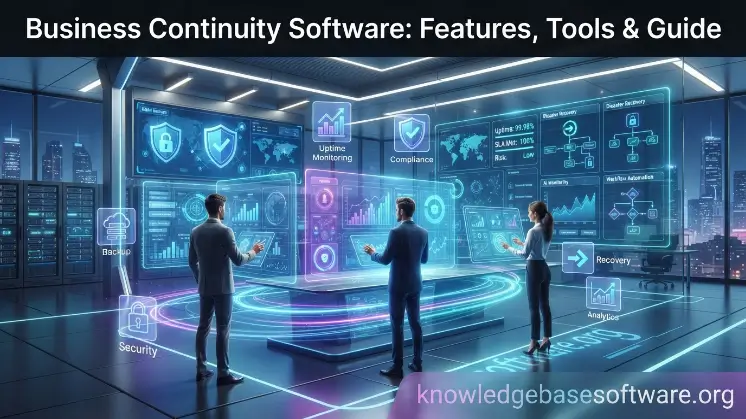
Business continuity solutions come in different deployment models and system architectures, each designed to meet specific organizational needs, budgets, and compliance requirements. While the core goal remains the same, ensuring uninterrupted operations during disruptions, the way these systems are implemented can vary significantly. Modern business continuity software solutions are typically categorized into cloud-based platforms, on-premise systems, and integrated GRC frameworks, each offering unique advantages in terms of scalability, control, and risk management. Choosing the right type depends on factors such as business size, industry regulations, IT infrastructure, and desired level of automation.
Cloud-based platforms
Cloud-based business continuity platforms are hosted on external servers and accessed via the internet, making them highly scalable and flexible. These solutions are widely used because they eliminate the need for heavy on-site infrastructure while offering real-time updates and remote accessibility. For distributed teams and global organizations, cloud-based systems ensure that continuity plans can be accessed and executed from anywhere, which is critical during emergencies.
In addition to accessibility, cloud-based systems provide automatic updates, built-in redundancy, and faster deployment compared to traditional systems. They integrate well with modern disaster recovery software tools, allowing businesses to automate backups, synchronize data across regions, and improve recovery speed without manual intervention.
On-premise solutions
On-premise business continuity solutions are installed and operated within an organization’s internal IT infrastructure. This model provides greater control over data, security, and system configuration, making it ideal for organizations with strict compliance or regulatory requirements. Industries such as banking, government, and healthcare often prefer on-premise systems due to sensitive data handling needs.
However, on-premise systems require higher maintenance, dedicated IT resources, and longer deployment times. Despite these challenges, they offer strong customization capabilities and allow organizations to maintain full ownership of their continuity environment, which is critical for businesses prioritizing data sovereignty and internal governance.
Integrated GRC systems
Integrated Governance, Risk, and Compliance (GRC) systems combine business continuity planning with broader risk management and compliance frameworks. These platforms provide a unified view of organizational risks, policies, and continuity strategies, enabling better alignment between operational and regulatory requirements.
By integrating continuity planning with risk management software and compliance tracking tools, GRC systems help organizations streamline reporting, improve decision-making, and maintain audit readiness. They are especially valuable for large enterprises that need a centralized approach to managing risk, resilience, and regulatory obligations across multiple departments and locations.
Use Cases Across Industries
Business continuity software is widely used across industries because every sector faces risks that can disrupt operations, data access, and customer trust. From cyberattacks in digital businesses to system outages in healthcare and finance, organizations rely on it to maintain stability and enable fast recovery. It provides structured frameworks to prepare for disruptions, respond quickly, and restore normal operations with minimal downtime. Its main value lies in strengthening operational resilience and ensuring critical services stay available during unexpected events. Whether protecting financial transactions, safeguarding patient data, or maintaining cloud system uptime, it has become an essential part of modern business strategy.
Financial services and banking
In the financial sector, even a few seconds of downtime can result in significant financial losses and regulatory issues. Banks and financial institutions use business continuity software to ensure uninterrupted transaction processing, secure data handling, and continuous customer access to digital banking services. These systems help institutions manage risks associated with cyberattacks, system failures, and market disruptions.
Additionally, financial organizations must comply with strict regulatory frameworks that require detailed reporting and disaster recovery planning. Business continuity tools support risk management software integration, ensuring audit readiness and maintaining compliance with standards such as operational resilience guidelines and financial governance regulations.
Healthcare and emergency systems
Healthcare systems depend heavily on uninterrupted access to patient records, diagnostic systems, and emergency response platforms. Business continuity software ensures that hospitals and clinics can continue operating during IT failures, cyber incidents, or natural disasters. It helps prioritize critical systems such as electronic health records (EHR) and life-support infrastructure.
In emergency response environments, continuity tools support real-time communication and coordination between medical staff, emergency teams, and administrative units. This ensures faster response times, improved patient care, and reduced risk during high-pressure situations where system availability is essential.
IT and SaaS companies
IT and SaaS organizations operate in highly competitive environments where uptime and service reliability directly impact customer satisfaction. Business continuity software helps these companies maintain high availability by automating failover systems, monitoring infrastructure health, and ensuring rapid disaster recovery.
These platforms integrate closely with disaster recovery software and cloud infrastructure tools to minimize downtime and maintain service-level agreements (SLAs). For SaaS providers, even minor disruptions can lead to customer churn, making continuity planning a critical part of their operational strategy.
SMEs and startups
Small and medium-sized enterprises (SMEs) and startups often operate with limited resources, making them more vulnerable to operational disruptions. Business continuity software provides them with affordable and scalable solutions to protect critical data, maintain operations, and recover quickly from unexpected events.
For startups, these tools are particularly valuable because they reduce dependency on manual processes and help establish structured risk management from an early stage. By adopting continuity solutions early, smaller businesses can build long-term resilience and compete more effectively in unstable or rapidly changing markets.
How to Choose the Right Business Continuity Software
Selecting the right business continuity software is a critical decision that directly impacts an organization’s ability to respond to disruptions and maintain operational stability. With numerous solutions available in the market, businesses must evaluate platforms based on functionality, scalability, security, and long-term reliability. The right choice ensures that continuity planning is not only effective but also aligned with overall IT infrastructure and business goals. A well-chosen system strengthens operational resilience and improves coordination during emergencies, reducing downtime and financial risk. Organizations should also consider how well the software integrates with existing systems and supports business continuity planning software frameworks. Beyond technical capabilities, factors such as usability, automation, and vendor reliability play a major role in ensuring successful adoption and long-term performance.
Scalability and integration capabilities
Scalability is one of the most important factors when choosing business continuity software, especially for growing organizations. A scalable system ensures that as business operations expand, the software can handle increased data, users, and complexity without performance issues. This is essential for maintaining consistent continuity planning across multiple departments or global locations.
Integration capabilities are equally important because continuity software must work seamlessly with existing IT systems, cloud platforms, and disaster recovery software. Strong integration reduces operational silos and ensures that data flows smoothly between tools, enabling faster response times and more efficient recovery processes during disruptions.
Security and compliance features
Security is a core requirement for any business continuity solution because these systems often manage sensitive operational and recovery data. Advanced encryption, access controls, and secure authentication mechanisms help protect critical information from unauthorized access or cyber threats.
Compliance features are equally important, especially for industries such as finance and healthcare. The software should support regulatory requirements by providing audit logs, reporting tools, and documentation capabilities that align with industry standards and governance frameworks.
Ease of use and automation
Ease of use plays a major role in ensuring that employees can quickly adopt and effectively use the software during high-pressure situations. A clean interface, intuitive navigation, and clear workflows reduce confusion and improve response speed during incidents.
Automation further enhances efficiency by reducing manual intervention in critical processes. Automated alerts, recovery workflows, and task assignments help organizations respond faster and minimize human error, improving overall operational resilience.
Vendor support and reliability
Vendor support is essential because business continuity software must perform reliably during emergencies when immediate assistance may be required. Strong customer support, training resources, and onboarding assistance ensure that organizations can implement and maintain the system effectively.
Reliability also includes system uptime, performance history, and regular updates from the vendor. A trusted provider ensures that the software remains stable, secure, and up to date, giving organizations confidence in their continuity planning strategy.
Common Challenges and Mistakes
Even when organizations invest in business continuity software, implementation does not always guarantee success. Many companies still face operational gaps because of poor planning, weak execution, or a misunderstanding of how continuity systems should be maintained over time. These challenges often reduce the effectiveness of business continuity planning software and leave organizations vulnerable during real disruptions. Understanding common mistakes is essential for building a more reliable and resilient continuity strategy that truly supports operational resilience.
Lack of testing
One of the most common mistakes is failing to regularly test business continuity plans. Many organizations create detailed recovery strategies but never validate them through real-world simulations or drills. Without testing, even well-designed plans can fail when an actual disruption occurs.
Regular testing ensures that employees understand their roles, systems function as expected, and recovery procedures are practical. It also helps identify weaknesses in the plan early, allowing organizations to improve their response strategy before a real incident happens.
Poor integration with IT systems
Another major challenge is poor integration between business continuity software and the existing IT infrastructure. When systems are disconnected, critical data may not sync properly, leading to delays in response and recovery during emergencies.
Effective integration with disaster recovery software, cloud platforms, and internal applications ensures smooth communication between systems. Without it, organizations face operational silos, slower decision-making, and reduced efficiency during critical incidents.
Underestimating risks
Many businesses underestimate the likelihood or impact of disruptions such as cyberattacks, hardware failures, or natural disasters. This leads to insufficient planning, inadequate resources, and weak recovery strategies.
Underestimating risks can be costly, as even minor incidents can escalate into major operational failures. Proper risk assessment and continuous monitoring are essential to ensure that continuity plans remain realistic and aligned with evolving threats.
Even when organizations invest in business continuity software, implementation does not always guarantee success. Many companies still face operational gaps because of poor planning, weak execution, or a misunderstanding of how continuity systems should be maintained over time. These challenges often reduce the effectiveness of business continuity planning software and leave organizations vulnerable during real disruptions. Understanding common mistakes is essential for building a more reliable and resilient continuity strategy that truly supports operational resilience.
Lack of testing
One of the most common mistakes is failing to regularly test business continuity plans. Many organizations create detailed recovery strategies but never validate them through real-world simulations or drills. Without testing, even well-designed plans can fail when an actual disruption occurs.
Regular testing ensures that employees understand their roles, systems function as expected, and recovery procedures are practical. It also helps identify weaknesses in the plan early, allowing organizations to improve their response strategy before a real incident happens.
Poor integration with IT systems
Another major challenge is poor integration between business continuity software and the existing IT infrastructure. When systems are disconnected, critical data may not sync properly, leading to delays in response and recovery during emergencies.
Effective integration with disaster recovery software, cloud platforms, and internal applications ensures smooth communication between systems. Without it, organizations face operational silos, slower decision-making, and reduced efficiency during critical incidents.
Underestimating risks
Many businesses underestimate the likelihood or impact of disruptions such as cyberattacks, hardware failures, or natural disasters. This leads to insufficient planning, inadequate resources, and weak recovery strategies.
Underestimating risks can be costly, as even minor incidents can escalate into major operational failures. Proper risk assessment and continuous monitoring are essential to ensure that continuity plans remain realistic and aligned with evolving threats.
Future Trends in Business Continuity Software
The future of business continuity software is being shaped by rapid advancements in automation, artificial intelligence, and cloud technologies. As organizations face increasingly complex risks such as cyber threats, system failures, and global disruptions, continuity solutions are evolving from reactive tools into proactive, intelligent systems. Modern platforms are no longer just about recovery—they are becoming predictive systems that help businesses anticipate risks and prevent downtime before it happens. This shift is strengthening operational resilience and redefining how organizations approach business continuity planning software in a digital-first world.
Future Trends
- AI-driven risk prediction – Artificial intelligence will analyze patterns and predict potential disruptions before they occur, enabling proactive response strategies.
- Hyper-automation in recovery processes – End-to-end automation will reduce human intervention and speed up disaster recovery workflows significantly.
- Cloud-native continuity platforms – More businesses will adopt fully cloud-based systems for scalability, flexibility, and global accessibility.
- Integrated cybersecurity and continuity systems – Security tools will merge with continuity platforms to provide unified protection and response capabilities.
- Real-time resilience monitoring – Continuous monitoring dashboards will offer instant visibility into system health, risks, and recovery readiness.
Frequently Asked Questions
What is business continuity software used for?
Business continuity software is used to help organizations prepare for, respond to, and recover from unexpected disruptions. It centralizes continuity plans, automates response processes, and ensures that critical business operations can continue with minimal downtime during emergencies.
How is business continuity software different from disaster recovery software?
While both solutions support organizational resilience, their focus differs. Disaster recovery software primarily deals with restoring IT systems, applications, and data after an outage or failure. Business continuity software takes a broader approach by ensuring that all critical business functions, people, processes, and technologies continue operating during and after a disruption.
Is business continuity software necessary for small businesses?
Yes. Small businesses are often more vulnerable to disruptions because they typically have fewer resources and recovery options. Implementing business continuity software helps protect important data, maintain customer service, and reduce the impact of unexpected events, making it a valuable investment regardless of company size.
What features should I look for in business continuity software?
Key features to consider include risk assessment tools, business impact analysis, disaster recovery automation, incident management, real-time alerts, compliance reporting, and integration capabilities. The ideal solution should also be scalable, secure, and easy for employees to use during emergencies.
How much does business continuity software cost?
The cost varies depending on the provider, deployment model, and feature set. Basic cloud-based solutions may be affordable for small businesses, while enterprise-level platforms with advanced automation, compliance tools, and global support can require a larger investment. Organizations should evaluate costs based on their operational needs and risk management goals.
Conclusion
In an increasingly unpredictable business environment, business continuity software has become an essential tool for maintaining operational stability and minimizing the impact of disruptions. From risk assessment and incident management to disaster recovery and compliance support, these solutions help organizations prepare for unexpected events and recover more efficiently when challenges arise.
By implementing the right platform, businesses can strengthen operational resilience, reduce downtime, protect critical data, and ensure continuity of essential services. Whether you are a small business looking to improve preparedness or a large enterprise managing complex operations, investing in a reliable continuity solution can provide long-term security and competitive advantage.