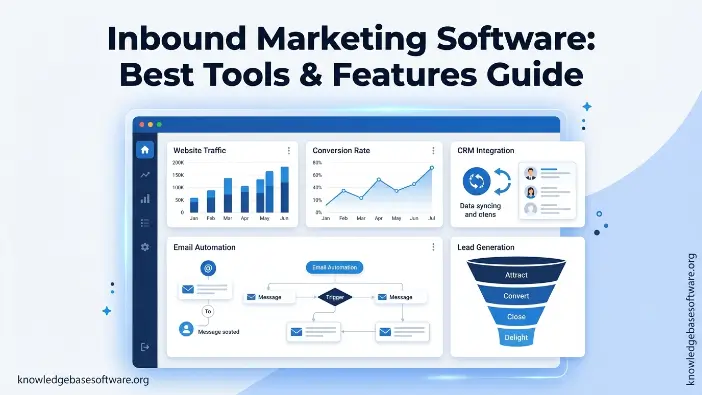
Inbound marketing software is transforming the way businesses attract and convert customers in today’s digital landscape. Instead of relying on traditional outbound methods like cold calling or intrusive ads, companies now use content-driven strategies, automation, and data insights to engage potential buyers. This shift has made marketing more efficient, personalized, and measurable than ever before.
At its core, inbound marketing software helps businesses manage the entire customer journey from the first touchpoint to final conversion. It brings together tools like lead capture forms, email automation, CRM integration, and analytics into one unified platform. This allows marketing teams to nurture leads more effectively, improve engagement, and ultimately increase conversions while saving time and resources.
What Is Inbound Marketing Software?
Inbound marketing software is a digital platform designed to attract potential customers through valuable content, automation, and personalized engagement rather than traditional interruptive advertising. Its main purpose is to help businesses generate qualified leads, nurture them through automated workflows, and convert them into loyal customers. By combining tools like CRM systems, email marketing, landing pages, and analytics, it creates a unified system that manages the entire customer journey from awareness to conversion.
Definition and Purpose
- Inbound marketing software helps attract and convert leads using content-driven strategies.
- Centralizes marketing activities into one platform for better efficiency
- Automates repetitive tasks like emails, follow-ups, and lead tracking
- Improves lead quality by targeting users based on behavior and interest
- Enhances customer engagement through personalized communication
How It Supports Inbound Marketing Strategy
- Captures leads through SEO blogs, landing pages, and forms
- Nurtures prospects using automated email sequences
- Tracks user behavior to optimize campaigns in real time
- Aligns marketing and sales teams with shared data and insights
- Increases conversion rates through targeted messaging and timing
Difference Between Inbound and Outbound Marketing Tools
- Inbound tools focus on attracting customers through content and value
- Outbound tools rely on cold outreach like ads, calls, and emails
- Inbound marketing is permission-based, while outbound is interruption-based
- Inbound tools generate long-term relationships, and outbound focuses on quick reach
- Inbound marketing software builds trust through education and engagement
Core Functions Overview
- Lead capture and management through forms and landing pages
- Email marketing automation and drip campaigns
- CRM integration for tracking customer interactions
- Marketing analytics and performance reporting
- Content management and SEO optimization support
How Inbound Marketing Software Works
Inbound marketing software works by guiding potential customers through a structured digital journey, starting from their first interaction with a brand and leading them toward conversion. It automates and connects every stage of the marketing funnel, ensuring that no lead is lost and every interaction is tracked. By combining data, content, and automation, it helps businesses deliver the right message at the right time, increasing engagement and improving conversion rates.
The system operates continuously in the background, collecting user data, analyzing behavior, and triggering automated actions based on predefined workflows. This allows marketing teams to focus more on strategy and content creation while the software handles repetitive tasks such as follow-ups, segmentation, and reporting.
- Lead Capture: Collects visitor information through landing pages, forms, pop-ups, and gated content to build a qualified lead database
- Lead Nurturing: Engages prospects through automated email sequences, personalized messages, and targeted content based on user behavior.
- Content Distribution: Shares blogs, emails, social posts, and campaigns across multiple channels to attract and educate potential customers
- Conversion Tracking: Monitors user actions, engagement levels, and campaign performance to identify which leads are most likely to convert
Read Also: marketing agency software
Key Features of Inbound Marketing Software
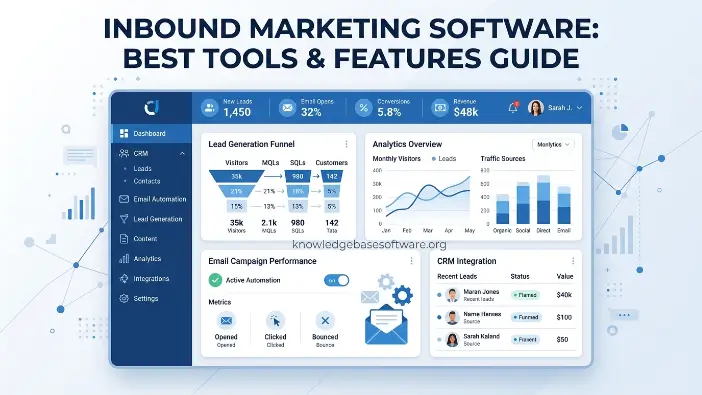
Inbound marketing software comes with a powerful set of features designed to streamline marketing operations, automate repetitive tasks, and improve lead conversion rates. These features work together to create a seamless system where businesses can attract visitors, convert them into leads, and nurture them into loyal customers. By integrating multiple marketing functions into one platform, it reduces manual effort and improves overall efficiency. Modern solutions also provide data-driven insights, allowing marketers to optimize campaigns in real time and achieve better ROI.
Marketing Automation
- Automates repetitive marketing tasks like emails, follow-ups, and social media posting
- Creates workflow sequences based on user behavior and triggers
- Saves time by reducing manual campaign management
- Ensures consistent communication across all customer touchpoints
- Improves efficiency and scalability of marketing efforts
CRM Integration
- Connects marketing activities with customer relationship management systems
- Provides a unified view of customer interactions and history
- Helps sales teams prioritize high-quality leads
- Improves collaboration between marketing and sales departments
- Enables better tracking of customer journeys and behavior patterns
Email Marketing Tools
- Allows creation of personalized and targeted email campaigns
- Supports segmentation of audiences based on interests and behavior
- Provides automation for drip campaigns and newsletters
- Tracks open rates, click-through rates, and engagement metrics
- Enhances customer engagement through timely communication
Landing Pages and Forms
- Enables creation of optimized landing pages without coding skills
- Captures lead information through customizable forms
- Supports A/B testing for better conversion performance
- Integrates with CRM for instant lead storage and tracking
- Improves conversion rates through focused messaging and design
Analytics and Reporting
- Tracks campaign performance in real time
- Provides insights into traffic sources, conversions, and engagement
- Helps identify high-performing marketing channels
- Supports data-driven decision-making for better ROI
- Generates detailed reports for performance evaluation and optimization
Lead Management and Scoring
Inbound marketing software plays a crucial role in managing and organizing leads throughout the entire customer journey. It tracks every interaction a user has with a brand, from the first website visit to final conversion. This helps businesses understand where each lead stands in the sales funnel and what actions are needed to move them forward. By centralizing lead data, teams can avoid losing potential customers and ensure timely follow-ups that improve conversion rates.
In addition to tracking, the software uses intelligent scoring systems to evaluate lead quality. This ensures that sales teams focus their efforts on the most promising prospects rather than spending time on unqualified leads. The combination of tracking and scoring makes the sales process more efficient, targeted, and data-driven.
- How leads are tracked: Monitors user activity such as website visits, form submissions, email clicks, and content downloads
- Behavior-based scoring system: Assigns points based on user actions, engagement level, and buying intent signals
Automation and Workflow Tools
Inbound marketing software provides powerful automation and workflow tools that help businesses streamline their marketing processes and reduce manual effort. These tools allow marketers to design and execute entire campaigns automatically, ensuring consistent communication with leads at every stage of the funnel. By setting predefined rules and conditions, businesses can deliver the right message to the right audience at the right time without constant manual intervention.
These automation capabilities are especially useful for scaling marketing efforts efficiently. Instead of managing each lead individually, the software handles repetitive tasks, freeing up time for strategy, content creation, and optimization. This improves productivity while ensuring no opportunity is missed in the customer journey.
- Automated campaigns: Run scheduled marketing campaigns automatically across email, social media, and other channels
- Drip sequences: Deliver a series of timed emails or messages to nurture leads gradually and build engagement
- Trigger-based actions: Activate specific workflows based on user behavior, such as clicks, downloads, or page visits
Benefits of Using Inbound Marketing Software
Inbound marketing software delivers significant advantages for businesses aiming to grow their online presence and improve customer acquisition strategies. It helps organizations attract high-quality leads through content-driven marketing while automating repetitive tasks across the entire funnel. By combining analytics, CRM, and automation in one system, it allows marketing teams to make smarter decisions based on real-time data. This not only improves campaign performance but also reduces manual workload, increases efficiency, and ensures consistent communication with potential customers throughout their journey.
Improved Lead Quality
- Attracts highly targeted audiences through SEO, content, and personalized campaigns
- Filters out unqualified leads using behavior tracking and scoring systems
- Focuses sales efforts on leads with higher conversion potential
- Improves alignment between marketing and sales teams
- Increases overall conversion rates by prioritizing relevant prospects
Better ROI on Marketing Campaigns
- Reduces wasted ad spend through precise audience targeting
- Optimizes campaigns using real-time performance analytics
- Increases conversions with personalized messaging strategies
- Helps identify high-performing channels for better investment decisions
- Maximizes revenue while lowering customer acquisition costs
Time-Saving Automation
- Automates repetitive tasks such as emails, follow-ups, and reporting
- Streamlines campaign management across multiple channels
- Reduces manual workload for marketing teams
- Enables faster execution of marketing strategies
- Frees up time for creative and strategic planning
Enhanced Customer Experience
- Delivers personalized content based on user behavior and interests
- Ensures timely communication throughout the customer journey
- Improves engagement through targeted messaging and automation
- Builds stronger customer relationships through consistent interaction
- Increases customer satisfaction and long-term loyalty
For Businesses
Inbound marketing software provides businesses with a powerful foundation to scale their marketing efforts efficiently while maintaining consistency and quality. It enables organizations to manage increasing volumes of leads, campaigns, and customer interactions without requiring a proportional increase in manual effort or resources. As businesses grow, this software ensures that marketing processes remain structured, automated, and data-driven, allowing teams to focus on strategy and long-term growth rather than repetitive tasks.
At the same time, it improves targeting capabilities by using data insights and behavioral tracking. Businesses can understand customer preferences more accurately and deliver personalized content that matches user intent. This leads to stronger engagement, higher conversion rates, and better overall marketing performance.
- Scalable growth: Supports expanding marketing operations without increasing manual workload or operational complexity
- Better targeting: Uses customer data, segmentation, and behavior analysis to deliver highly relevant campaigns
For Marketing Agencies
Inbound marketing software is especially valuable for marketing agencies because it simplifies the management of multiple client campaigns from a single centralized platform. Agencies often handle diverse industries, audiences, and marketing strategies at the same time, and this software helps organize all campaigns efficiently. It allows teams to streamline workflows, maintain consistency across clients, and deliver results without losing track of individual campaign performance.
In addition, it provides powerful tracking and reporting capabilities that help agencies demonstrate value to their clients. With real-time insights, agencies can measure performance, optimize strategies, and make data-driven decisions that improve ROI for every campaign. This builds stronger client relationships and increases trust through transparent reporting.
- Client campaign management: Enables agencies to handle multiple client accounts, campaigns, and workflows from one unified dashboard.d
- Performance tracking: Provides real-time analytics, reporting, and KPI monitoring to measure campaign success accurately
Best Inbound Marketing Software Options
There are many tools available in the market that qualify as inbound marketing software, each designed to help businesses attract leads, nurture prospects, and improve conversions through automation and data-driven strategies. These platforms typically combine multiple marketing functions such as CRM, email automation, landing page creation, and analytics into a single system. The main goal is to simplify marketing operations while improving performance and ROI. Some tools are best suited for small businesses with simple needs, while others are built for large enterprises requiring advanced automation and AI-powered insights. Choosing the right solution depends on your budget, goals, and required features.
Overview of Popular Tools (General Comparison)
- Inbound marketing software platforms often come in all-in-one solutions that combine CRM, email marketing, automation, and analytics in one dashboard.
- Some tools focus on specialized functions like SEO optimization, content marketing, or email campaign management.
- Many platforms are designed for small businesses with simple interfaces and low-cost plans.s
- Enterprise-level systems offer advanced automation, AI-powered insights, and deeper customization options.ns
- Cloud-based solutions are widely used because they allow easy access, scalability, and remote team collaboration.
- Most tools support third-party integrations such as CRMs, social media platforms, and advertising networks.s
Feature Highlights Comparison
- Marketing Automation: Automates workflows, email sequences, lead nurturing, and campaign scheduling
- CRM Integration: Centralizes customer data, tracks interactions, and improves sales alignment
- Email Marketing: Enables personalized campaigns, segmentation, A/B testing, and performance tracking.ng
- Lead Generation Tools: Includes landing pages, pop-ups, forms, and gated content for capturing leads
- Analytics & Reporting: Provides real-time insights into traffic, conversions, and campaign performance
- Content Management: Helps create, manage, and distribute blogs, emails, and digital content efficiently.
- AI & Personalization: Uses predictive analytics to deliver targeted and behavior-based recommendations
- Multi-Channel Marketing: Supports coordinated campaigns across email, social media, and websites
All-in-One Platforms
Inbound marketing software in the form of all-in-one platforms is designed to bring multiple marketing functions into a single unified system. These platforms typically combine CRM, marketing automation, email marketing, lead management, and analytics into one dashboard. This integration helps businesses manage their entire marketing funnel without switching between different tools. It improves efficiency, reduces complexity, and ensures that all customer data is stored and analyzed in one place for better decision-making.
These platforms are especially useful for growing businesses and agencies that need a centralized solution to handle large-scale marketing operations. By connecting all core functions, they enable seamless collaboration between marketing and sales teams while improving lead tracking and conversion performance.
- CRM + automation + analytics tools: Combine customer relationship management, workflow automation, and performance tracking in one system
Specialized Tools
Inbound marketing software also includes specialized tools that focus on specific areas of digital marketing rather than offering an all-in-one solution. These tools are designed to solve individual marketing challenges such as improving email campaigns, boosting organic search visibility, or generating high-quality leads. By focusing on one core function, they often provide deeper features and more advanced capabilities in their specific niche, making them ideal for businesses that already have some marketing systems in place.
Specialized tools are commonly used alongside other platforms to enhance overall marketing performance. Businesses can mix and match these solutions based on their needs, creating a flexible and customized marketing stack that delivers better results. This approach allows teams to optimize specific parts of the funnel while maintaining efficiency and control.
- Email marketing tools: Focus on creating, automating, and optimizing email campaigns with segmentation, personalization, and performance tracking
- SEO + content tools: Help improve search rankings, keyword optimization, content planning, and organic traffic growth
- Lead generation platforms: Capture and qualify leads using landing pages, pop-ups, forms, and targeted campaigns
How to Choose the Right Inbound Marketing Software
Selecting the right inbound marketing software is a critical decision that directly impacts your marketing performance, lead generation efficiency, and long-term business growth. The ideal platform should align with your overall business objectives, whether you are focused on increasing brand awareness, generating qualified leads, or improving customer retention. Since every business has different needs, it is important to evaluate software based on functionality, flexibility, and return on investment rather than just popularity. A well-chosen solution will streamline your marketing processes, reduce manual work, and help your team achieve better results with less effort.
Business Goals Alignment
- Inbound marketing software should support your core objectives, such as lead generation, sales growth, or customer engagement.t
- Ensures the platform matches your marketing strategy and funnel requirements
- Helps prioritize features that directly contribute to business success
- Avoids unnecessary tools that do not add value to your workflow
- Improves overall campaign effectiveness and ROI
Budget Considerations
- Choose software that fits your monthly or yearly marketing budget
- Compare free, mid-tier, and enterprise pricing plans
- Evaluate cost versus features and long-term value
- Consider hidden costs like add-ons, integrations, or upgrades
- Ensure affordability without compromising essential functionality
Scalability
- Inbound marketing software should grow with your business needs
- Supports increasing leads, campaigns, and customer data over time
- Offers upgrade options for advanced features and users
- Prevents the need to switch platforms as your business expands
- Ensures long-term usability and cost efficiency
Ease of Use
- Simple and intuitive interface reduces learning time for teams
- Improves productivity and speeds up onboarding for new users
- Minimizes dependency on technical experts
- Allows quick campaign setup and management
- Enhances overall user experience and adoption rate
Integration Capabilities
- Connects with CRM systems, email tools, and analytics platforms
- Ensures smooth data flow across marketing and sales systems
- Reduces manual data entry and errors
- Supports third-party apps for extended functionality
- Creates a unified and efficient marketing ecosystem
Common Mistakes to Avoid
When implementing inbound marketing software, many businesses make critical mistakes that reduce the effectiveness of their marketing efforts. One of the most common issues is selecting a platform that is too complex for their actual needs. Instead of improving productivity, overly advanced tools can slow down teams, create confusion, and lead to poor adoption. Another major mistake is ignoring integration capabilities, which results in disconnected systems and fragmented data across marketing and sales channels.
Failing to track performance metrics is also a serious issue. Without monitoring KPIs, businesses cannot measure success or identify areas for improvement. This leads to wasted budget, inefficient campaigns, and missed growth opportunities. Avoiding these mistakes ensures that your marketing system remains efficient, scalable, and results-driven.
- Choosing too complex tools: Selecting overly advanced inbound marketing software can overwhelm teams and reduce productivity.
- Ignoring integrations: Not connecting CRM, email, and analytics tools leads to disconnected workflows and data gaps
- Not tracking KPIs: Failing to measure performance results in poor decision-making and weak campaign optimization.on
Use Cases of Inbound Marketing Software
Inbound marketing software is widely used across different industries to attract leads, automate marketing processes, and improve customer engagement. Its flexibility makes it suitable for both small and large organizations that want to streamline their marketing efforts and improve conversions. By combining tools like automation, CRM, analytics, and content management, businesses can create personalized customer journeys and manage the entire sales funnel more effectively. Different industries use this software in unique ways depending on their goals, audience type, and sales cycle complexity, making it a versatile solution for modern digital marketing strategies.
- SaaS companies: Use inbound marketing software to onboard users, nurture free trial leads, and convert them into paying subscribers through automated email sequences and product education campaigns
- E-commerce businesses: Automate product recommendations, abandoned cart emails, and personalized promotions to increase sales and customer retention
- Digital marketing agencies: Manage multiple client campaigns, track performance, and generate detailed reports using a centralized dashboard for better efficiency
- B2B companies: Focus on lead generation, nurturing long sales cycles, and aligning marketing with sales teams to close high-value deals
Pricing of Inbound Marketing Software
The cost of inbound marketing software varies widely depending on features, scalability, and the level of automation required by a business. Most platforms offer flexible pricing structures to accommodate startups, small businesses, and large enterprises. Some tools provide free versions with limited features, which are ideal for beginners testing inbound strategies. Paid plans unlock advanced capabilities such as automation, CRM integration, detailed analytics, and multi-channel marketing tools. Understanding these pricing models is important for choosing a solution that delivers the best value while meeting business goals and long-term marketing needs.
Free vs Paid Tools
- Inbound marketing software free versions usually include basic CRM, email marketing, and limited automation features.
- Free plans are suitable for startups and small businesses testing inbound strategies.s
- Paid versions offer advanced automation, analytics, segmentation, and integration.s
- Premium plans significantly improve scalability and campaign performance
- Paid tools are better suited for businesses focused on growth and ROI
Subscription Models
- Monthly and annual subscription plans are the most common pricing structures
- Pricing often depends on the number of users, contacts, or features included
- Annual plans usually offer cost savings compared to monthly billing
- Tiered pricing allows businesses to choose plans based on needs
- Flexible upgrades make it easy to scale as the business grows
Enterprise Pricing Overview
- Designed for large organizations with complex marketing needs
- Includes advanced automation, AI features, and custom integrations
- Offers dedicated account management and priority support
- Pricing is usually custom-based, depending on requirements
- Provides full-scale inbound marketing software capabilities for high-volume campaigns
Future Trends in Inbound Marketing Software
The future of inbound marketing software is being shaped by rapid advancements in artificial intelligence, data analytics, and automation technologies. As customer expectations continue to rise, businesses are shifting toward more intelligent and personalized marketing strategies. Modern platforms are evolving from simple automation tools into fully integrated ecosystems that can predict user behavior, optimize campaigns in real time, and deliver highly personalized experiences across multiple channels. This transformation is helping businesses improve efficiency, increase engagement, and achieve better marketing results with less manual effort.
AI-Driven Automation
- Inbound marketing software uses AI to automate complex marketing workflows and decision-making processes.
- Reduces manual effort by optimizing campaigns automatically based on performance data
- Enhances email marketing, content delivery, and lead nurturing processes
- Improves targeting accuracy through machine learning algorithms
- Enables smarter and faster marketing execution
Predictive Analytics
- Analyzes customer data to forecast future behavior and buying intent
- Helps businesses identify high-value leads before they convert
- Improves campaign planning and resource allocation
- Increases ROI through data-driven decision-making
- Enhances overall marketing strategy effectiveness
Personalization at Scale
- Delivers highly targeted content to individual users based on behavior and preferences
- Creates dynamic customer journeys tailored to each stage of the funnel
- Improves engagement rates and customer satisfaction
- Automates personalized messaging across email, web, and social channels
- Strengthens brand loyalty through relevant experiences
Unified Marketing Ecosystems
- Combines CRM, analytics, automation, and content tools into one platform
- Ensures seamless data flow across all marketing channels
- Improves collaboration between marketing and sales teams
- Reduces tool fragmentation and operational inefficiencies
- Enhances the overall performance of inbound marketing software systems
Frequently Asked Questions
What is inbound marketing software used for?
Inbound marketing software is used to attract, engage, and convert customers through automated marketing strategies such as content marketing, email campaigns, lead nurturing, and CRM-based tracking.
Is inbound marketing software suitable for small businesses?
Yes, small businesses can use inbound marketing software to generate leads, automate marketing tasks, and improve customer engagement even with limited resources and budgets.
What are the main benefits of inbound marketing software?
It improves lead quality, increases ROI, saves time through automation, and enhances customer experience by delivering personalized and targeted content.
Do I need technical skills to use inbound marketing software?
Most modern platforms are user-friendly and designed for non-technical users, offering drag-and-drop builders, templates, and automated workflows.
Can inbound marketing software replace CRM tools?
No, it does not fully replace CRM systems. Instead, inbound marketing software integrates with CRM tools to improve lead tracking, sales alignment, and customer management.
Conclusion
Inbound marketing software has become an essential tool for modern businesses looking to attract high-quality leads, automate marketing processes, and build stronger customer relationships. By combining features like CRM integration, email automation, analytics, and lead nurturing, it creates a complete system that supports every stage of the customer journey. This not only improves efficiency but also helps businesses achieve better targeting and higher conversion rates.
As competition continues to grow in the digital space, using inbound marketing software is no longer optional; it is a strategic necessity. Businesses that invest in the right platform can scale faster, reduce manual workload, and deliver more personalized experiences to their audience. Choosing the right solution ensures long-term growth, improved ROI, and a more effective inbound marketing strategy overall.