
Welcome to knowledgebasesoftware. Business financial management has become significantly more complex in today’s fast-moving digital economy, where companies operate across multiple channels, currencies, and cost structures. Traditional methods like static spreadsheets and manual bookkeeping are no longer sufficient, as they are highly prone to human error, lack real-time collaboration, and fail to provide the dynamic insights needed for strategic decision-making. As a result, many organizations are shifting toward business budgeting software to streamline financial planning and improve overall accuracy.
Modern financial environments require more than just tracking income and expenses; they demand real-time forecasting, scenario modeling, and continuous performance monitoring. This is where financial planning software and expense management software play a critical role, enabling businesses to maintain tighter control over cash flow while anticipating future financial needs. By integrating automation and analytics, these tools help eliminate guesswork and replace it with data-driven insights.
What Is Business Budgeting Software?
Business budgeting software is a structured digital system designed to help organizations plan, monitor, and control their financial resources with greater accuracy and efficiency. Instead of relying on manual calculations or disconnected spreadsheets, it centralizes all budgeting activities into a single platform where income, expenses, forecasts, and financial goals can be managed in real time. This allows businesses to maintain a clear financial picture, improve decision-making, and adapt quickly to changing market conditions.
Core Definition
At its core, budgeting software functions as a financial planning hub that enables businesses to create detailed budgets, allocate resources across departments, and track actual performance against planned targets. Unlike basic accounting tools, it is focused on forward-looking financial management rather than historical record-keeping.
Modern financial planning software often includes automation features such as predictive analytics, scenario modeling, and real-time reporting, helping businesses anticipate future outcomes rather than simply reacting to past data.
How It Differs from Accounting Software
While accounting software is primarily designed to record transactions, manage invoices, and maintain financial compliance, budgeting software focuses on planning and optimization. Accounting systems answer the question “What happened financially?”, whereas budgeting systems answer “What should happen next?”.
This distinction is crucial because budgeting tools integrate cash flow management software capabilities, allowing businesses to forecast liquidity needs, control overspending, and align financial strategy with long-term goals.
Why Spreadsheets Are No Longer Enough
Spreadsheets were once the standard for budgeting, but they are increasingly inadequate for modern financial demands. They lack automation, version control, and real-time collaboration, which leads to inefficiencies and costly errors. As businesses scale, managing complex data across multiple sheets becomes difficult and time-consuming.
In contrast, modern budgeting tools offer centralized data management, automated updates, and integrated reporting systems, making them far more reliable for dynamic financial environments where accuracy and speed are essential.
Read Also: Business Management Software: Features & Benefits Guide
Key Features of the Best Budgeting Tools
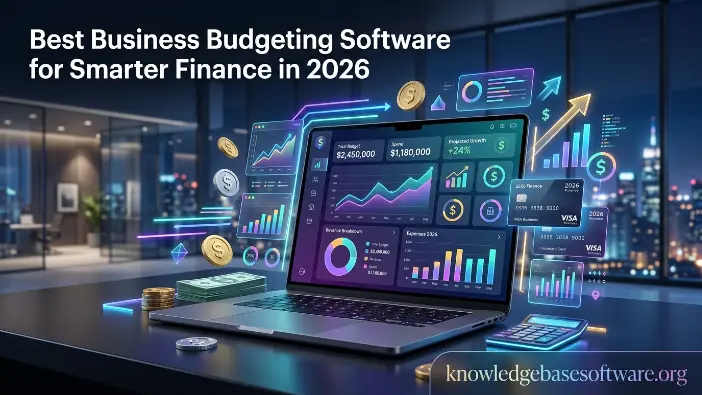
The best business budgeting software is defined by a powerful set of features that go beyond simple expense tracking and provide a complete financial management ecosystem. These tools are designed to give businesses real-time visibility into their finances, improve forecasting accuracy, and automate repetitive financial tasks, allowing teams to focus more on strategy and less on manual work.
Core Features Include:
- Real-time budget tracking and financial updates
- Advanced forecasting and scenario planning tools
- Automated expense categorization and management
- Integration with accounting platforms like QuickBooks and Xero
- Customizable dashboards and automated financial reporting
Best Use Cases for Businesses
The effectiveness of business budgeting software becomes most visible when it is applied to real-world business scenarios where financial control, forecasting, and resource allocation are critical. Different types of organizations use these tools in unique ways depending on their size, structure, and financial complexity. From small startups managing limited cash flow to large enterprises handling multi-department budgets, budgeting software provides tailored solutions that improve financial clarity, reduce risk, and support strategic growth decisions. It acts as a centralized financial system that adapts to different operational needs while ensuring consistent accuracy and transparency.
Common Use Cases Include:
- Small Businesses: Simplify expense tracking and maintain better control over limited cash flow
- Startups: Manage early-stage budgets and monitor burn rate effectively to avoid overspending
- Freelancers & Solopreneurs: Track income variability and organize personal-business financial separation
- Mid-Sized Companies: Handle departmental budgets and improve coordination across teams
- Enterprises: Manage complex, multi-layered budgets across regions and departments
- Finance Teams (FP&A): Improve forecasting accuracy and support strategic financial planning
- E-commerce Businesses: Track inventory costs, sales performance, and seasonal budgeting needs
- Project-Based Businesses: Monitor project budgets, control costs, and ensure profitability per project
How to Choose the Right Business Budgeting Software
Selecting the right business budgeting software is a critical decision that directly impacts how effectively an organization manages its financial planning, forecasting, and day-to-day budgeting operations. The ideal solution should not only match your current business needs but also support long-term growth, integrate smoothly with existing systems, and provide actionable financial insights. A well-chosen tool becomes a central part of your financial ecosystem, improving decision-making and reducing inefficiencies across all levels of the business.
Budget and Pricing Models
When evaluating business budgeting software, pricing is one of the most important factors because it directly affects both short-term affordability and long-term scalability. Most tools follow different pricing structures such as monthly or yearly subscription plans, tiered pricing levels, or custom enterprise pricing depending on company size and requirements. Each model is designed to serve different types of businesses—for example, small businesses may prefer basic subscription plans, while larger organizations often require advanced enterprise packages with customized features and dedicated support.
However, the key is not just choosing the cheapest option, but ensuring that the cost is justified by the value and features provided. A well-priced tool should include essential functions like budgeting, forecasting, reporting, and integrations without forcing businesses to pay extra for core capabilities.
Scalability
Scalability in business budgeting software refers to how well a system can adapt and expand as a company grows over time. In the early stages of a business, budgeting needs are usually simple—tracking basic income, expenses, and cash flow. However, as the business expands, financial operations become more complex, involving multiple teams, departments, locations, and revenue streams. A scalable solution ensures that the software continues to perform efficiently even as this complexity increases.
A strong budgeting platform should be able to handle larger volumes of financial data without slowing down or losing accuracy. As transactions increase and reporting requirements become more detailed, the system must remain stable and responsive.
Ease of Use
User experience plays a crucial role in whether business budgeting software is actually adopted and used effectively across an organization. Even the most feature-rich platform will fail to deliver value if employees find it confusing, slow, or difficult to navigate. In real-world business environments, tools are only as powerful as the people using them, which makes usability just as important as functionality.
A well-designed budgeting system focuses on simplicity and clarity. It provides intuitive dashboards that present complex financial data in an easy-to-understand visual format, such as charts, graphs, and summaries. This allows users to quickly interpret key financial metrics without needing advanced accounting knowledge. Clear navigation and logically structured menus also reduce the time spent searching for information, making day-to-day financial tasks much more efficient.
Integration Capabilities
Modern businesses operate within a complex digital ecosystem where multiple systems work together to manage different aspects of operations. These typically include accounting software for financial records, CRM platforms for customer management, and ERP solutions for overall business operations. In this environment, business budgeting software must be able to connect seamlessly with these tools to function effectively as part of a unified financial system.
Strong integration capabilities allow the budgeting platform to automatically sync data across all connected systems. Instead of manually transferring financial information between tools, data flows in real time, ensuring that budgets are always based on the most accurate and up-to-date figures. This significantly reduces manual data entry, which is not only time-consuming but also highly prone to human error.
Reporting & Analytics Depth
Advanced reporting and analytics are among the most powerful components of modern business budgeting software, as they transform raw financial data into meaningful, actionable insights. Instead of manually analyzing spreadsheets or static reports, businesses can use built-in analytics tools to continuously monitor performance and make faster, data-driven decisions.
High-quality budgeting platforms offer customizable reporting features that allow users to generate financial reports tailored to specific needs, such as departmental performance, project-based spending, or overall company profitability. These reports can be adjusted based on time periods, metrics, or business units, giving decision-makers complete flexibility in how they view and interpret financial information.
Common Mistakes to Avoid
When selecting or implementing business budgeting software, many organizations make avoidable mistakes that reduce the effectiveness of the tool and limit its long-term value. Even the most advanced software will fail to deliver results if it is chosen without proper planning or implemented without considering how teams will actually use it in daily operations. Understanding these common pitfalls helps businesses make smarter decisions and maximize the return on their investment.
Choosing Overly Complex Tools
One of the most frequent mistakes is selecting software that is too advanced for the company’s actual needs. While feature-rich platforms may seem attractive, they often include unnecessary complexity that slows down adoption and confuses users.
If employees find the system difficult to navigate, they are less likely to use it consistently, which leads to incomplete or inaccurate financial data. The best approach is to choose a solution that balances functionality with simplicity, ensuring that it matches the organization’s current size and financial maturity.
Ignoring Integration Needs
Another critical mistake businesses often make when adopting business budgeting software is not properly evaluating its ability to integrate with existing systems. In today’s digital business environment, most organizations depend on multiple platforms such as accounting systems, CRM tools, and ERP solutions to manage different operational functions. If the budgeting software cannot connect seamlessly with these systems, it creates disconnected data environments, often referred to as data silos.
When data silos exist, financial information becomes fragmented across different platforms, making it difficult to maintain consistency and accuracy. Teams are then forced to rely on manual data entry or repeated data transfers between systems, which not only consumes valuable time but also increases the likelihood of human error. These inconsistencies can lead to inaccurate financial reports, poor forecasting, and ultimately flawed business decisions.
Not Training Teams Properly
Another critical mistake businesses often make when adopting business budgeting software is not properly evaluating its ability to integrate with existing systems. In today’s digital business environment, most organizations depend on multiple platforms such as accounting systems, CRM tools, and ERP solutions to manage different operational functions. If the budgeting software cannot connect seamlessly with these systems, it creates disconnected data environments, often referred to as data silos.
When data silos exist, financial information becomes fragmented across different platforms, making it difficult to maintain consistency and accuracy. Teams are then forced to rely on manual data entry or repeated data transfers between systems, which not only consumes valuable time but also increases the likelihood of human error. These inconsistencies can lead to inaccurate financial reports, poor forecasting, and ultimately flawed business decisions.
Overlooking Forecasting Features
Many businesses focus only on basic budgeting functions and overlook advanced forecasting capabilities. However, forecasting is one of the most valuable aspects of modern budgeting tools, as it helps businesses predict future financial performance and prepare for different scenarios.
Ignoring these features means missing out on opportunities for better planning, risk management, and strategic decision-making. Businesses that fully utilize forecasting tools gain a significant advantage in adapting to market changes and planning for long-term growth.
Future of Business Budgeting Software
The future of business budgeting software is rapidly evolving as organizations shift toward more intelligent, automated, and data-driven financial systems. Instead of relying solely on traditional budgeting methods, companies are increasingly adopting advanced technologies that improve accuracy, speed, and strategic decision-making. These innovations are transforming budgeting tools from simple planning platforms into powerful financial intelligence systems.
AI-Driven Forecasting
One of the most significant advancements in modern business budgeting software is the integration of artificial intelligence into financial planning processes. AI-driven forecasting has transformed the way businesses analyze and interpret financial data by enabling systems to process vast amounts of historical records along with real-time inputs simultaneously.
This allows organizations to generate highly accurate predictions about future financial performance without relying solely on manual calculations or static assumptions. With AI-powered models, businesses can identify revenue trends more effectively, detect changes in customer spending behavior, and uncover hidden patterns in expenses that may not be obvious through traditional analysis.
Predictive Analytics
Predictive analytics represents a more advanced stage of financial intelligence within modern business budgeting software, moving beyond simple forecasting to actively identifying future trends, risks, and opportunities before they become visible through traditional financial reporting. Instead of relying only on historical summaries, predictive systems continuously analyze large sets of financial and operational data to uncover hidden patterns that can influence business performance.
By using techniques such as data modeling and trend analysis, financial planning software can detect subtle changes in customer behavior, shifts in spending patterns, and variations in revenue cycles. For example, it can highlight when sales are likely to increase during certain periods, when operational costs may rise unexpectedly, or when customer demand is beginning to decline.
Automation in Finance Operations
Automation has become one of the most essential components of modern business budgeting software, fundamentally changing how financial operations are managed on a daily basis. Instead of relying on manual processes, businesses are now using automated systems to handle repetitive and time-consuming tasks with greater speed and accuracy.
Routine financial activities such as expense categorization, report generation, invoice processing, and data reconciliation are increasingly being completed automatically by the system. This reduces the need for manual data entry, which not only saves time but also significantly lowers the risk of human error. As a result, finance teams can focus more on analysis and strategy rather than administrative work.
Real-Time Decision Intelligence
The future of budgeting software is also moving toward real-time decision intelligence, where businesses can access instant financial insights and act immediately. Instead of waiting for monthly or quarterly reports, decision-makers will rely on live dashboards and AI-powered recommendations to guide strategy. This shift enables organizations to respond quickly to market changes, manage risks more effectively, and maintain a stronger competitive advantage.
Overall, the evolution of budgeting tools is making financial management more proactive, intelligent, and automated, allowing businesses to operate with greater confidence and precision.
Frequently Asked Questions
What is business budgeting software used for?
Business budgeting software is used to plan, track, and manage a company’s financial resources. It helps businesses create budgets, monitor expenses, forecast future performance, and improve overall financial decision-making using real-time data.
Is budgeting software better than spreadsheets?
Yes, budgeting software is generally more efficient than spreadsheets because it offers automation, real-time updates, better accuracy, and collaboration features. Unlike spreadsheets, it reduces manual errors and scales easily as the business grows.
Can small businesses use budgeting software?
Absolutely. Many budgeting tools are designed specifically for small businesses. They help track cash flow, manage expenses, and create simple financial forecasts without requiring advanced accounting knowledge.
Does budgeting software integrate with accounting tools?
Most modern budgeting platforms integrate with accounting systems like QuickBooks, Xero, and ERP software. This ensures smooth data flow, reduces manual entry, and improves financial accuracy across systems.
What features should I look for in budgeting software?
Key features include real-time budget tracking, forecasting tools, expense management, integration capabilities, customizable dashboards, and advanced reporting. These features help businesses maintain better financial control and planning.
How does budgeting software improve financial forecasting?
It uses historical and real-time data to predict future financial outcomes. With advanced analytics and AI-driven models, businesses can anticipate revenue changes, manage risks, and plan budgets more effectively.
Conclusion
Business budgeting software has become an essential tool for modern organizations that want to manage finances with greater accuracy, efficiency, and strategic control. As businesses grow more complex, traditional methods like spreadsheets are no longer sufficient to handle real-time financial tracking, forecasting, and reporting needs. By adopting advanced budgeting solutions, companies can streamline financial planning, improve cash flow visibility, and make more informed decisions based on reliable data. Features such as automation, predictive analytics, and real-time reporting not only reduce manual effort but also help businesses respond quickly to changing market conditions.
Ultimately, the right budgeting software empowers organizations to move beyond basic financial management and toward a more proactive, data-driven approach. Whether for small businesses or large enterprises, investing in the right tool builds a stronger financial foundation and supports long-term growth and stability.